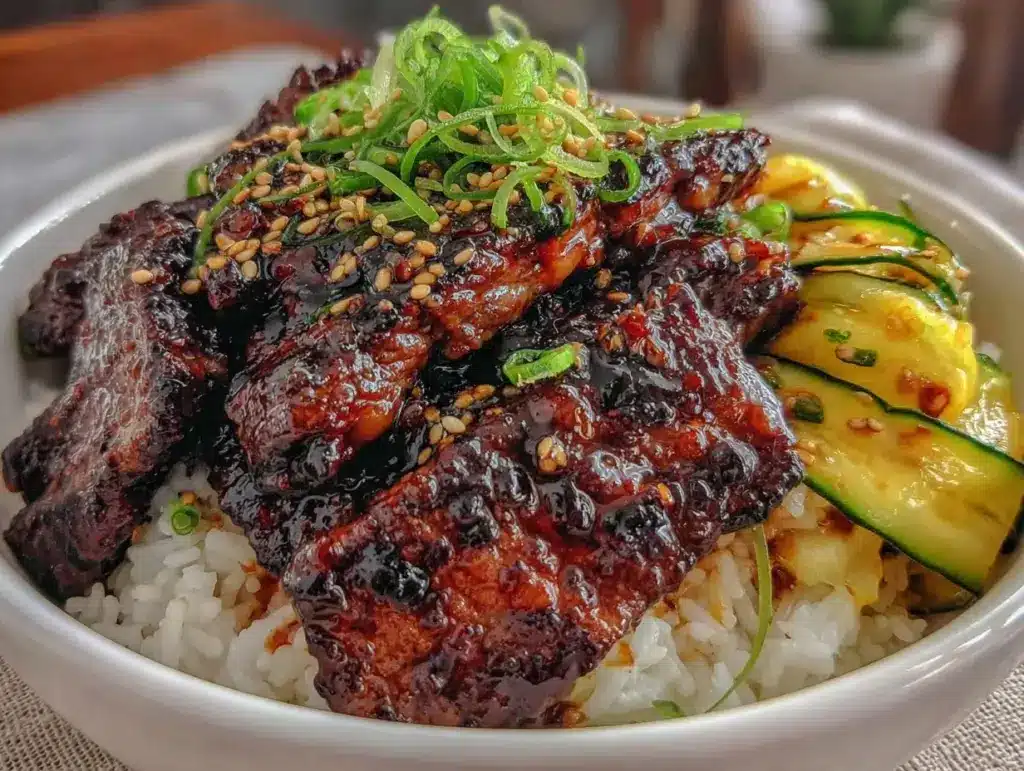
Last Tuesday, I came home from work feeling completely hollowed out. You know that specific kind of tired where your brain feels like static and your shoulders are up by your ears? I didn’t want to order takeout because I knew it would just leave me feeling sluggish and guilty. I didn’t want to cook a “proper” dinner because I didn’t have the mental energy to chop, stir, or clean up a complicated mess. I just wanted something warm, something that tasted like comfort, and something that felt like a hug in a bowl.
So, I made this Korean Beef Bulgogi Rice Bowl with Quick Pickled Cucumber. It’s become my go-to ritual for those evenings when I need to decompress. The smell of the beef sizzling with soy and sesame fills the kitchen, and suddenly, the static in my head quiets down. The quick pickled cucumbers add this bright, crunchy contrast that wakes up your palate, and the whole meal comes together in about 20 minutes. It’s not just dinner; it’s a moment of peace. I’ve made this bowl so many times now that I’ve memorized the rhythm of it. It’s the one to make when you need to take care of yourself, when you need to slow down and just focus on the sizzle of the pan and the steam rising from the rice.
Why You’ll Love This Recipe
There’s something deeply satisfying about eating a meal that feels curated just for you, especially on a day that demanded more than it gave. This bulgogi bowl hits every single note I look for when I’m cooking for self-care. It’s nourishing without being heavy, flavorful without being complicated, and it leaves me feeling grounded rather than drained.
- It’s a Sensory Reset — The combination of savory-sweet beef, earthy rice, and tart-crisp cucumber is incredible. The aroma alone is enough to lower my blood pressure. It forces me to be present in the kitchen, which is exactly what I need.
- Minimal Cleanup — I’m talking one skillet and a small bowl for the cucumbers. When I’m running on empty, I can’t deal with a mountain of dishes. This recipe respects my energy levels.
- Comforting but Light — It’s not a heavy cream sauce or a greasy fried dish. It’s clean, protein-rich, and veggie-packed. I feel energized after eating it, not like I need a nap (which is ironic, since I needed the nap before eating it!).
- The Pickles Are Magic — The quick pickled cucumbers take 5 minutes to prep and can sit while you cook. They add such a fresh, acidic punch that cuts through the richness of the beef. It’s the little detail that makes the meal feel special.
- Customizable Comfort — If you want more greens, add them. If you want extra spice, add gochujang. This bowl bends to your mood. Some days I want it mild; other days I want it with a kick. It’s flexible enough to match whatever I’m feeling.
This isn’t just about feeding my body; it’s about feeding my need for calm. It’s my answer to “I can’t deal with anything else right now.” It’s gentle, it’s delicious, and it works.
Ingredients You’ll Need
One of the best things about this bulgogi bowl is that most of the ingredients are pantry staples or easy finds. I keep soy sauce, sesame oil, and rice vinegar on hand specifically for these moments. Here’s what you’ll need to make it, along with a few notes from my kitchen.
For the Beef Bulgogi
Thinly sliced beef (1 pound / 450g) — I use flank steak or sirloin. You can ask your butcher to slice it paper-thin, or freeze it for 30 minutes to make it easier to slice yourself. Thin slices cook fast and get that perfect caramelized edge. Look for cuts labeled “bulgogi style” if you can find them—they’re already prepped for you.
Soy sauce (¼ cup / 60ml) — I prefer low-sodium soy sauce so I can control the saltiness. Regular works too, but you might want to skip adding extra salt later. It’s the backbone of the savory flavor.
Dark brown sugar (2 tablespoons) — This gives the beef a deep, molasses-like sweetness that caramelizes beautifully. White sugar works, but brown is richer and more complex. I’ve tried both, and brown sugar just feels more “comforting.”
Sesame oil (1 tablespoon) — Toasted sesame oil is essential. It smells nutty and warm. Make sure it’s toasted, not raw—it makes a huge difference in the aroma.
Garlic (3 cloves, minced) — Fresh garlic only. Jarred garlic has a sharp, metallic taste that doesn’t blend well with the gentle sweetness of the bulgogi. Minced fine so it distributes evenly.
Fresh ginger (1 teaspoon, grated) — Grate it on the small holes of a box grater. It adds a warm, spicy kick that wakes up the beef. Don’t skip this; it balances the sweetness perfectly.
Black pepper (½ teaspoon) — Freshly cracked is best. Just a pinch to add a little heat.
For the Quick Pickled Cucumbers
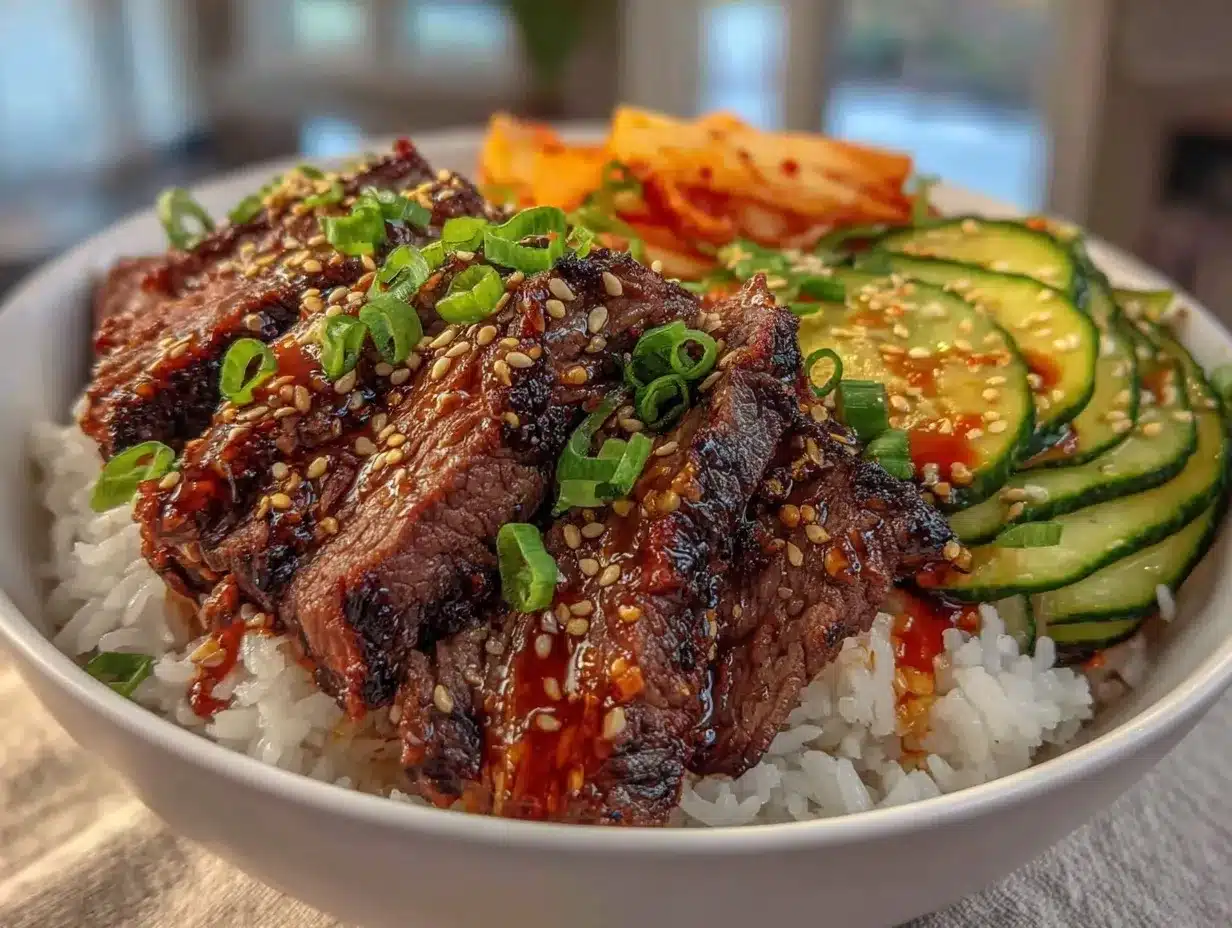
English cucumber (1 medium) — English cucumbers are less watery and have thinner skins, which makes them perfect for quick pickling. If you can’t find them, a regular cucumber peeled and seeded works too.
Rice vinegar (2 tablespoons) — Mild and slightly sweet. This is the classic vinegar for Asian pickles. White vinegar is too harsh.
Sugar (1 teaspoon) — Just a little to balance the acidity. You can use honey if you prefer, but sugar dissolves faster in the vinegar.
Salt (½ teaspoon) — Helps draw out the moisture from the cucumber so it stays crisp.
For Serving
Steamed rice (2 cups cooked) — Short-grain white rice is traditional and sticks together nicely, which is perfect for scooping up the beef. Jasmine rice works too if you prefer it fluffier. I always keep a pot of rice going when I make this.
Sesame seeds (1 tablespoon) — Toasted sesame seeds add a nice crunch and nutty aroma. Sprinkle them on top right before serving.
Green onions (2 stalks, sliced thinly) — For a fresh, oniony bite. I use both the white and green parts.
Sriracha or Gochujang (Optional) — If you like heat, a drizzle of sriracha or a spoonful of gochujang (Korean chili paste) adds a wonderful spicy depth. I keep a bottle of sriracha in the fridge specifically for these bowls.
Equipment Needed
You don’t need anything fancy for this. Just a few basic tools that I use every day.
Large skillet or wok — I use a 12-inch non-stick skillet. It needs to be wide enough to spread the beef in a single layer so it sears instead of steams. A wok works great too if you have one.
Small bowl — For mixing the quick pickled cucumbers. Any size will do.
Sharp knife — For slicing the beef and chopping the green onions. A sharp knife makes the prep easier and safer.
Rice cooker or medium pot — To cook the rice. I love my rice cooker because I can set it and forget it while I cook the beef.
Microplane or box grater — For the fresh ginger. A microplane makes it easy to get a fine grate.
How to Make It: Step-by-Step
Alright, let’s make this! I’m walking you through exactly how I do it, including the little tricks I’ve picked up over time. This process is slow and gentle, which is part of the point.
Step 1: Start the Rice (15-20 minutes)
Before you do anything else, get the rice cooking. Rinse 1 cup of short-grain rice under cold water until the water runs clear. This removes excess starch and makes the rice fluffier. Add the rinsed rice and 1 cup of water to your rice cooker or pot. If using a pot, bring to a boil, then reduce heat to low, cover, and simmer for 15 minutes. Turn off the heat and let it sit, covered, for 10 more minutes. Fluff it with a fork when it’s done. Having the rice ready takes the pressure off later.
Step 2: Make the Quick Pickled Cucumbers (5 minutes)
While the rice cooks, let’s make the pickles. Slice the English cucumber lengthwise into thin half-moons. Place them in a small bowl and sprinkle with salt and sugar. Toss them gently and let them sit for 10 minutes. This draws out the water and keeps them crisp. After 10 minutes, drain any liquid that has accumulated, then stir in the rice vinegar. Set these aside. They’ll get tastier as they sit.
Step 3: Mix the Bulgogi Marinade (2 minutes)
In a small bowl, whisk together the soy sauce, brown sugar, sesame oil, minced garlic, grated ginger, and black pepper. Stir until the sugar is mostly dissolved. The mixture should look glossy and smell amazing. Taste it—it should be sweet, salty, and a little spicy. Adjust if needed.
Step 4: Marinate the Beef (5 minutes)
Place the thinly sliced beef in a large bowl. Pour the marinade over the beef and toss until every piece is coated. Let it sit for at least 5 minutes while you finish prepping. If you have time, let it marinate for 30 minutes in the fridge, but 5 minutes is enough to get that flavor. I usually just toss it and move on to the next step.
Step 5: Cook the Beef (5-7 minutes)
Heat your large skillet over medium-high heat. You don’t need to add oil—the beef has enough fat, and the sesame oil in the marinade will help it cook. Once the pan is hot, add the beef in a single layer. Don’t crowd the pan! If your pan is small, cook in two batches. Let the beef sit for 2 minutes without moving it. This allows it to get a nice brown crust. Then, flip and cook for another 2-3 minutes until the beef is cooked through and caramelized. The sauce will bubble and thicken around the meat. It should look glossy and sticky.
Step 6: Assemble the Bowl
Take a moment to appreciate how good this smells. Now, assemble your bowl. Place a generous portion of steamed rice in the bottom of a bowl. Top with the hot bulgogi beef. Add a handful of the quick pickled cucumbers. Sprinkle with sliced green onions and toasted sesame seeds. If you like heat, drizzle with sriracha.
That’s it. It’s simple, but it feels like a treat. Eat it slowly. Let the warmth of the rice and the cool crunch of the cucumber balance each other out.
Expert Tips & Tricks
Here’s everything I’ve learned from making this dozens of times. These tips will save you from my mistakes and help you get that perfect result.
Slice the Beef Thinly
This is the most important step. Thick slices of beef will be chewy and won’t cook evenly. If your beef isn’t pre-sliced thinly, freeze it for 30 minutes. It firms up the meat and makes it much easier to slice against the grain. Slicing against the grain makes the beef tender.
Don’t Crowd the Pan
If you put too much beef in the pan at once, it will steam instead of sear. You want that caramelized, slightly crispy edge. Cook in batches if you have to. It takes an extra minute, but the texture difference is worth it.
Toast Your Sesame Seeds
Raw sesame seeds are fine, but toasted sesame seeds are incredible. Just pop them in a dry skillet over medium heat for 2-3 minutes, stirring constantly, until they smell nutty and turn lightly golden. It takes less than 5 minutes and adds so much flavor.
Use Low-Sodium Soy Sauce
Soy sauce can be very salty. Using low-sodium gives you more control over the final taste. You can always add a little more, but you can’t take it out. This is especially important if you’re using salty toppings like cheese or pickles.
Let the Pickles Sit
The quick pickled cucumbers need at least 10 minutes to absorb the vinegar and sugar. If you rush them, they’ll just be salty cucumbers. The longer they sit (up to an hour), the better they taste. I often make them in the morning and enjoy them all day.
Variations & Substitutions
Once you’ve nailed the basic version, here’s how you can mix it up. I’ve tried all of these, and they all work beautifully.
Tofu Bulgogi
Swap the beef for extra-firm tofu. Press the tofu to remove water, then slice it into strips. Marinate it in the same sauce. Cook it in the skillet until golden and crispy on all sides. It’s a hearty, plant-based option that absorbs the flavor well.
Chicken Bulgogi
Thinly sliced chicken thighs work great here. They’re juicier than breast meat and hold up well to the marinade. Cook them until they’re no longer pink in the center. It’s a lighter option that still feels rich.
Mushroom & Veggie Bowl
Add sliced mushrooms, bell peppers, or zucchini to the skillet with the beef. Cook them until tender-crisp. It adds volume and nutrients without adding too many calories. I love adding spinach at the very end—it wilts instantly.
Spicy Kick
Add 1 tablespoon of gochujang (Korean chili paste) or sriracha to the marinade. It adds a deep, fermented heat that’s delicious. Start with less if you’re sensitive to spice.
No-Cook Rice Alternative
If you don’t have time for rice, try this with a bed of fresh greens or even cauliflower rice. It’s lighter and lower in carbs. I’ve made it with cauliflower rice, and it’s surprisingly satisfying.
Gluten-Free Option
Use tamari instead of soy sauce. Everything else is naturally gluten-free. Just check your sesame oil and other condiments to ensure they’re certified gluten-free.
Serving & Storage
This bowl is best served immediately, fresh off the stove. The contrast between the hot beef and cool pickles is part of the magic. But here’s how I handle leftovers.
Refrigerator
Store the beef, rice, and pickles in separate airtight containers for up to 3 days. The beef will keep well, and the pickles will stay crisp. The rice might dry out a bit, so I reheat it with a splash of water.
Reheating
Reheat the beef in a skillet over medium heat with a splash of water to keep it moist. Microwave the rice in short bursts, stirring in between. The pickles don’t need reheating—they’re best cold or room temperature. Combining them warm is the way to go.
Freezing
I don’t recommend freezing the beef, as the texture can become mushy. The pickles also don’t freeze well. It’s best to make this fresh whenever you need that self-care moment.
Serving Suggestions
I usually serve this with a simple side of steamed edamame or a small bowl of miso soup. It’s a complete meal that feels nourishing. For dessert, I sometimes have a piece of dark chocolate or a small fudgy brownie if I’m really treating myself. But often, I just enjoy the bowl and call it a night.
Nutrition Information
I’m not a nutritionist, but here’s the breakdown if you’re tracking. This is per serving (based on 4 servings).
| Nutrient | Amount |
|---|---|
| Calories | 450 |
| Protein | 30g |
| Carbs | 45g |
| Fiber | 2g |
| Sugar | 8g |
| Fat | 18g |
| Sodium | 800mg |
It’s a balanced meal with good protein from the beef and carbs from the rice. The sodium is a bit high due to the soy sauce, so using low-sodium soy sauce helps. It’s not a diet food, but it’s nourishing and satisfying. I eat this when I need comfort, not when I’m counting calories.
Final Thoughts
This Korean Beef Bulgogi Rice Bowl with Quick Pickled Cucumber is more than just a recipe. It’s a ritual. It’s the thing I make when the world feels too loud and I need to create a little quiet in my kitchen. The sizzle of the beef, the smell of sesame, the crunch of the cucumber—it all comes together to remind me that I deserve a good meal, even on the hardest days.
It’s easy enough to make when I’m tired, but it still feels special. That’s the sweet spot. It’s not about perfection; it’s about nourishment. So the next time you come home feeling drained, skip the takeout. Put on some soft music, get the rice cooking, and make this bowl. You’ll feel better for it. And if you’re looking for more gentle, comforting meals, check out these pumpkin sage pasta or maple Dijon chicken thighs for other cozy dinners.
Happy cooking, and be gentle with yourself. You’ve got this.
Frequently Asked Questions
Can I use beef steak instead of flank steak?
Yes, you can use any cut of beef you like, but flank or sirloin are best because they’re leaner and cook quickly. If you use a tougher cut, it might be chewy. Thin slicing is key, regardless of the cut.
What if I don’t have rice vinegar?
You can use white wine vinegar or apple cider vinegar as a substitute. They’re slightly different in flavor, but they’ll work. Rice vinegar is milder and sweeter, which is why it’s traditional, but other vinegars will still give you that pickled tang.
Can I make this ahead for meal prep?
Yes! Cook the rice and beef ahead of time. Store them in separate containers. When you’re ready to eat, reheat the beef and rice, and add the pickles fresh. The pickles are best made the same day, but they’ll keep for a few days in the fridge.
Is this recipe spicy?
The basic recipe is not spicy. It’s sweet, savory, and nutty. If you want heat, add sriracha, gochujang, or red pepper flakes. You can control the spice level to your preference.
Can I use jasmine rice instead of short-grain rice?
Yes, jasmine rice works well. It’s fluffier and less sticky, which some people prefer. Short-grain rice is more traditional for bulgogi because it holds together better, but jasmine rice is delicious too.
How long do the quick pickled cucumbers last?
They’ll stay crisp and flavorful in the fridge for up to 3 days. After that, they might start to soften. They’re best eaten within the first 24 hours for maximum crunch.
Can I use a slow cooker for this?
This recipe is designed for quick stovetop cooking. The beef needs high heat to sear and caramelize. A slow cooker won’t give you that texture. I recommend sticking to the skillet for the best results.
Pin This Recipe!
Korean Beef Bulgogi Rice Bowl: Best Self-Care Meal
- Total Time: 35 minutes
- Yield: 4 servings 1x
Description
A comforting and quick Korean Beef Bulgogi Rice Bowl with quick pickled cucumbers, designed as a self-care ritual that comes together in about 20 minutes with minimal cleanup.
Ingredients
- 1 pound thinly sliced beef (flank steak or sirloin)
- 1 cup short-grain white rice
- 1 cup water (for rice)
- 1 medium English cucumber
- 2 tablespoons rice vinegar
- 1 teaspoon sugar
- 1/2 teaspoon salt
- 1/4 cup soy sauce (low-sodium preferred)
- 2 tablespoons dark brown sugar
- 1 tablespoon sesame oil
- 3 cloves garlic, minced
- 1 teaspoon fresh ginger, grated
- 1/2 teaspoon black pepper
- 1 tablespoon toasted sesame seeds
- 2 stalks green onions, sliced thinly
- Sriracha or Gochujang (optional, for heat)
Instructions
- Rinse 1 cup of short-grain rice under cold water until clear. Add to a rice cooker or pot with 1 cup of water. If using a pot, bring to a boil, reduce heat to low, cover, and simmer for 15 minutes. Turn off heat and let sit covered for 10 minutes. Fluff with a fork.
- While rice cooks, slice the cucumber into thin half-moons. Place in a small bowl, sprinkle with salt and sugar, and toss. Let sit for 10 minutes to draw out moisture. Drain any accumulated liquid, then stir in rice vinegar. Set aside.
- In a small bowl, whisk together soy sauce, brown sugar, sesame oil, minced garlic, grated ginger, and black pepper until sugar is dissolved.
- Place sliced beef in a large bowl, pour marinade over it, and toss to coat. Let marinate for at least 5 minutes.
- Heat a large skillet over medium-high heat. Add beef in a single layer (cook in batches if necessary to avoid crowding). Let sit for 2 minutes to sear, then flip and cook for another 2-3 minutes until caramelized and cooked through.
- Assemble bowls by placing steamed rice at the bottom. Top with hot bulgogi beef, quick pickled cucumbers, sliced green onions, and toasted sesame seeds. Drizzle with sriracha or gochujang if desired.
Notes
Slice beef thinly against the grain for tenderness. Freeze beef for 30 minutes if it is difficult to slice. Do not crowd the pan when cooking beef to ensure proper searing. Use low-sodium soy sauce to control saltiness. Quick pickled cucumbers can be made ahead and stored in the fridge for up to 3 days.
- Prep Time: 15 minutes
- Cook Time: 20 minutes
- Category: Main Course
- Cuisine: Korean
Nutrition
- Serving Size: 1 bowl
- Calories: 450
- Sugar: 8
- Sodium: 800
- Fat: 18
- Saturated Fat: 6
- Carbohydrates: 45
- Fiber: 2
- Protein: 30
Keywords: Korean beef, bulgogi, rice bowl, self-care meal, quick dinner, pickled cucumber, easy weeknight dinner, comfort food