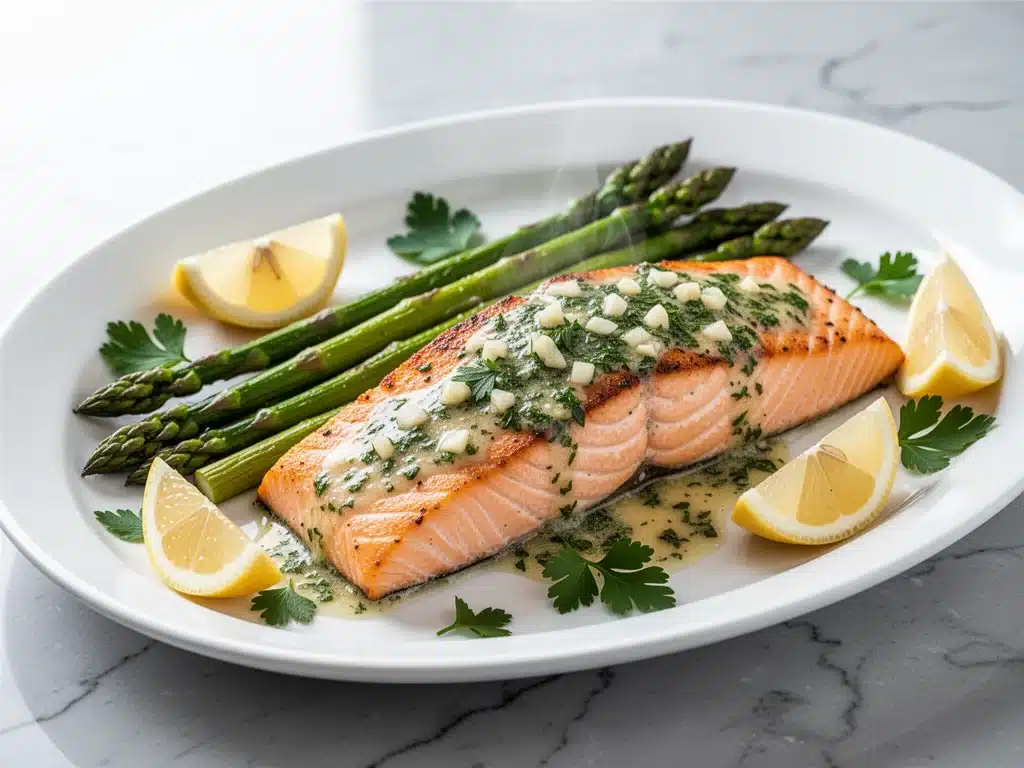
There was a Tuesday last month when I came home from work completely drained. I had that specific kind of exhaustion where the idea of chopping vegetables felt like climbing Mount Everest, but the idea of ordering takeout made my stomach turn. I needed something fast, something that didn’t involve scrubbing a frying pan, and definitely something that didn’t taste like microwaved leftovers.
So, I did what I always do when I’m lazy but trying to stay on track with my low-carb goals: I threw together a sheet pan dinner. I grabbed some salmon fillets, a bunch of asparagus that was starting to look a little sad in the crisper drawer, and a stick of butter. I tossed everything in garlic, lemon, and herbs, and shoved it in the oven.
When the timer went off, the smell was incredible. Rich, buttery, garlicky, and fresh. I took one bite of that salmon—flaky, moist, and packed with flavor—and I knew I had found my new favorite weeknight dinner. It took less than 30 minutes from start to finish, and the cleanup was literally just wiping down a baking sheet. No pots, no pans, no stress.
This Keto Garlic Butter Baked Salmon with Asparagus has become my go-to solution for those “I have no energy” nights. It’s elegant enough to serve to guests (seriously, it looks fancy), but simple enough that I make it for myself and the kids on random Wednesdays. The salmon stays tender, the asparagus gets perfectly charred, and that garlic butter sauce ties it all together in the best way possible. I’ve made this recipe at least a dozen times since that rainy Tuesday, tweaking the seasoning slightly each time, and I’m finally confident in sharing it with you.
Why You’ll Love This Recipe
I’m not going to lie to you—there are a lot of salmon recipes out there. But this specific combination of garlic butter and asparagus on a single sheet pan is just magic. Here’s why this Keto Garlic Butter Baked Salmon keeps coming back to my oven:
- Zero Effort Cleanup — This is the biggest selling point for me. Line your baking sheet with parchment paper or foil, and you’re done. No greased skillets, no stained casserole dishes. Just throw it in the trash. It’s a game-changer for busy parents.
- 30 Minutes or Less — From the moment you take the salmon out of the fridge to the moment you’re sitting down to eat, it’s about 25-30 minutes. That’s faster than most delivery apps. I’ve timed it. It’s real.
- Healthy Fats That Keep You Full — On keto, you need good fats to stay satiated. The butter and olive oil in this recipe provide healthy fats that keep you feeling full for hours, so you’re not hunting for snacks an hour after dinner. Plus, salmon is packed with Omega-3s, which are great for your heart and brain.
- Naturally Low Carb — Both salmon and asparagus are naturally low in carbohydrates, making this dish perfectly aligned with a keto or low-carb lifestyle without needing any weird substitutes or fake ingredients.
- Restaurant Quality at Home — When you get good salmon and finish it with fresh lemon and herbs, it tastes like something you’d pay $30 for at a nice restaurant. But it costs a fraction of that and comes from your own kitchen.
It’s reliable, it’s delicious, and it doesn’t require you to be a professional chef. It just requires you to want to eat something good without the hassle.
Ingredients You’ll Need
One of the best things about this Keto Garlic Butter Baked Salmon with Asparagus is the simplicity of the ingredient list. You probably have most of this already in your fridge or pantry. Here’s what you need and why each part matters:
For the Salmon
Salmon fillets (4 pieces, about 6 ounces each) — This is the star. Look for wild-caught Alaskan salmon if you can find it and afford it—it’s leaner and has a better texture than farmed. But if budget is tight, farmed salmon works fine too. Just make sure the fillets are roughly the same thickness so they cook evenly. If you have one huge fillet and one tiny one, cut the big one in half.
Extra virgin olive oil (2 tablespoons) — I use this to coat the salmon before adding the butter. It helps conduct the heat and keeps the fish moist. Don’t skimp on the quality here; good olive oil makes a real difference in flavor.
Unsalted butter (4 tablespoons, melted) — This is where the richness comes from. I prefer unsalted butter because it lets you control the sodium level. Melt it in the microwave or a small saucepan—it makes it easier to drizzle over everything.
Garlic (4-5 cloves, minced) — Yes, that many cloves. Fresh garlic is non-negotiable for this recipe. Jarred garlic has a metallic aftertaste that really clashes with the delicate flavor of salmon. Mince it yourself. If you’re feeling extra lazy, you can use a garlic press, but make sure it’s fresh.
Fresh lemon (1 large) — You’ll need both the zest and the juice. The zest adds a bright, aromatic punch, and the juice cuts through the richness of the butter. Squeeze it fresh. Bottled lemon juice tastes like cleaning fluid and will ruin this dish.
Dried dill (1 teaspoon) — Dill and salmon are a classic pairing for a reason. It adds a fresh, grassy note that balances the savory garlic. If you’re allergic to dill, fresh parsley works, but dill is my go-to.
Sea salt and black pepper — To taste. I use flaky sea salt for the final touch, but kosher salt works great for seasoning before cooking.
For the Asparagus
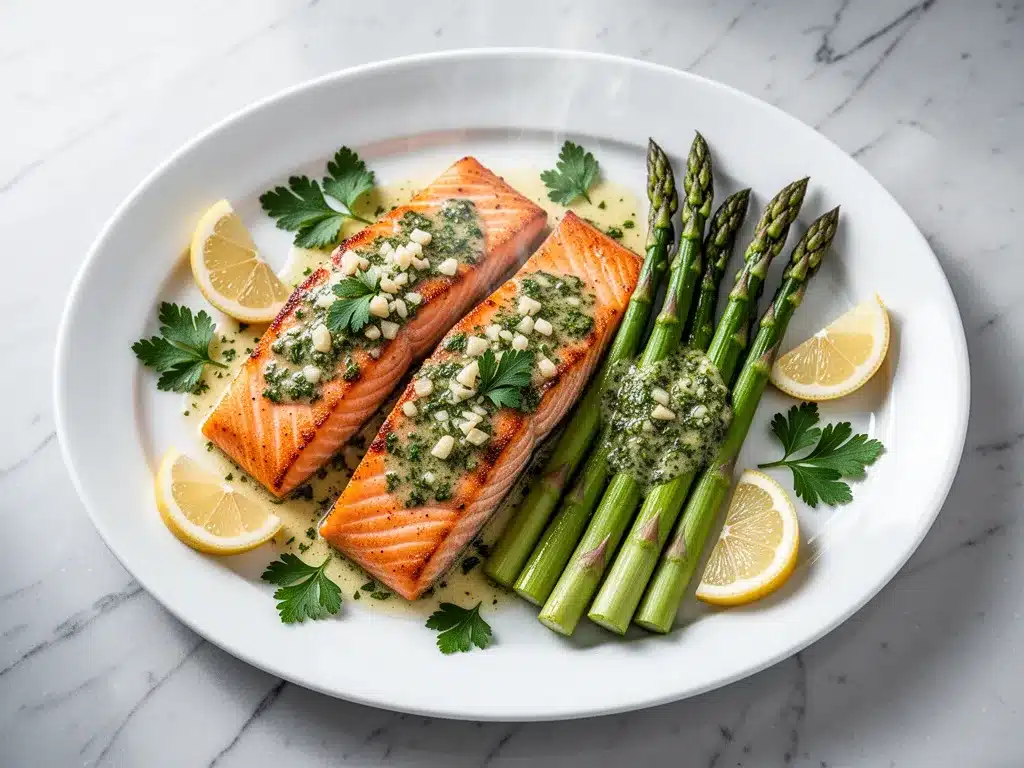
Asparagus spears (1 bunch, about 1 pound) — Look for spears that are medium-thick. If they’re too thin, they’ll burn before the salmon cooks. If they’re too thick, they’ll be woody. Snap off the woody ends before you start. You can also peel the bottom inch if the stalks are particularly tough.
Extra virgin olive oil (1 tablespoon) — Just a light toss to help them roast and get that nice char.
Equipment Needed
You don’t need anything fancy to make this Keto Garlic Butter Baked Salmon with Asparagus. Here’s the simple toolkit I use:
Large baking sheet — A standard 18×13 inch rimmed baking sheet is perfect. I use a heavy-duty one because it distributes heat evenly, preventing hot spots that can burn the fish. If you don’t have a large one, you might need to use two pans, but one is easier.
Parchment paper or aluminum foil — Essential for the easy cleanup mentioned earlier. I prefer parchment paper because nothing sticks to it, not even the buttery garlic sauce.
Small mixing bowl — Just a small ramekin or bowl to whisk together the melted butter, olive oil, garlic, lemon zest, and dill. It makes combining the sauce super quick.
Pastry brush or spoon — To drizzle the garlic butter mixture over the salmon and asparagus. I like using a brush for the salmon to get an even coat, but a spoon works fine too.
Sharp knife and cutting board — For mincing the garlic and trimming the asparagus. A sharp knife makes trimming the asparagus much easier and safer.
How to Make It: Step-by-Step
Alright, let’s get cooking! This process is incredibly straightforward, but there are a few small tricks that ensure your salmon comes out perfectly moist and your asparagus gets that perfect char. Here’s exactly how I do it.
Step 1: Prep Your Oven and Pan (2 minutes)
Preheat your oven to 400°F (200°C). While the oven is heating up, line your large baking sheet with parchment paper or aluminum foil. I always grease the foil or parchment lightly with a little olive oil just to be extra safe, though it’s usually not necessary.
Step 2: Prep the Asparagus (3 minutes)
Take your bunch of asparagus and rinse it under cold water. Pat it dry with a paper towel—dry asparagus roasts better than wet asparagus. Now, take one spear and bend it gently. It will naturally snap where the woody part ends and the tender part begins. Use that as a guide to trim the rest of the bunch. You can line them up and cut them all at once with a knife, which is faster.
Step 3: Season the Salmon (2 minutes)
Pat the salmon fillets dry with paper towels. This is important! Moisture is the enemy of good searing and flavor absorption. Place the fillets on the prepared baking sheet, leaving a little space between them. Sprinkle both sides lightly with sea salt and black pepper.
Step 4: Make the Garlic Butter Sauce (2 minutes)
In your small mixing bowl, combine the melted butter, olive oil, minced garlic, lemon zest, and dried dill. Whisk it together until it’s well blended. Taste it—if it smells amazing (it should), you’re ready. If you like it spicy, add a pinch of red pepper flakes here.
Step 5: Assemble the Sheet Pan (3 minutes)
Drizzle the 1 tablespoon of olive oil over the asparagus and toss to coat. Arrange the asparagus on one side of the baking sheet. It’s okay if they overlap a little, but try to keep them in a single layer as much as possible so they roast instead of steam.
Now, take half of the garlic butter mixture and drizzle it over the asparagus, using your brush or spoon to coat them evenly. Then, drizzle the remaining half over the salmon fillets. Make sure you get under the edges of the fish with the brush so the flavor penetrates.
Step 6: Bake (15-18 minutes)
Place the baking sheet in the preheated oven. Bake for 15-18 minutes. The exact time depends on the thickness of your fillets. A general rule of thumb is 4-6 minutes per inch of thickness. You’ll know it’s done when the salmon flakes easily with a fork and is opaque throughout. The asparagus should be tender-crisp and slightly browned at the tips.
Pro Tip: Do not overcook the salmon! It continues to cook slightly after you take it out of the oven. If it looks almost done but isn’t quite flaky, give it another 2 minutes. It’s better to be slightly under than dry.
Step 7: Finish and Serve (2 minutes)
Remove the pan from the oven. Squeeze fresh lemon juice over everything—that’s the final touch that brightens the whole dish. Garnish with fresh parsley or extra dill if you have it. Serve immediately while hot.
Expert Tips & Tricks
I’ve made this recipe dozens of times, and I’ve learned a few hard-won lessons. Here’s how to avoid common mistakes and get the best results every time.
Don’t Crowd the Pan
If you have really thick asparagus spears or large salmon fillets, you might need to use two baking sheets. Overcrowding causes steam, which means your asparagus will be soggy instead of crisp, and your salmon will steam instead of bake. Give them room to breathe.
Room Temperature Salmon
If you have time, take the salmon out of the fridge 15-20 minutes before cooking. Cold salmon hitting a hot oven can cook unevenly. If you forget, don’t worry—it’ll still be good, just might need an extra minute or two.
The Lemon Zest Trick
Zest the lemon before you juice it. It’s much easier, and you don’t get those bitter white pith bits in your juice. Also, use a fine microplane grater for the zest—it distributes the flavor more evenly than a coarse grater.
Check for Doneness
Use a fork to gently twist a piece of the salmon. If it flakes apart easily, it’s done. If it’s still translucent in the center, it needs more time. I also keep an instant-read thermometer handy—145°F (63°C) is the safe internal temperature for fish, though many chefs prefer pulling it at 135°F (57°C) for a juicier result.
Leftover Asparagus
If you have leftover asparagus that didn’t get sauced, don’t throw it out! Toss it with a little more garlic butter and reheat it in the oven for 5 minutes. It makes a great side dish for lunch the next day.
Variations & Substitutions
Once you’ve mastered the basic Keto Garlic Butter Baked Salmon with Asparagus, here are some fun ways to mix it up. I’ve tried all of these, and they’re all delicious.
Herb Variations
Don’t have dill? No problem. Fresh parsley, thyme, or even Italian seasoning work beautifully with salmon and asparagus. I’ve made this with fresh thyme leaves, and it adds a lovely earthy note.
Spicy Kick
Add ½ teaspoon of red pepper flakes or a dash of cayenne pepper to the garlic butter mixture. It adds a nice heat that contrasts with the rich butter. I like this version when I’m craving something bold.
Vegetable Swap
Not a fan of asparagus? Broccoli florets or zucchini spears work just as well. Broccoli takes a bit longer to cook, so you might want to roast it for 5 minutes before adding the salmon. Zucchini cooks quickly, so add it at the same time as the salmon.
Dietary Modifications
Dairy-Free: Swap the butter for olive oil or ghee (clarified butter). Ghee has a similar rich flavor to butter but is lactose-free.
Gluten-Free: This recipe is naturally gluten-free, so no changes needed! Just make sure your seasonings are certified gluten-free if you have celiac disease.
Paleo: Use ghee or coconut oil instead of butter, and ensure your dill and other spices are paleo-compliant. This fits perfectly into a paleo lifestyle.
Serving & Storage
This dish is best served immediately while the salmon is hot and flaky. I usually pair it with a simple green salad or cauliflower rice to keep it low-carb and filling.
Side Dish Ideas:
- Cauliflower rice (sautéed with garlic and butter)
- Zucchini noodles (zoodles) with pesto
- A simple arugula salad with lemon vinaigrette
- Roasted Brussels sprouts (if you want more veggies)
Storage:
Store leftovers in an airtight container in the refrigerator for up to 3 days. The salmon will stay moist, and the asparagus will still be good, though it may soften slightly.
Reheating:
Reheat gently in the oven at 350°F for 10-15 minutes, or in the microwave at 50% power in 30-second intervals. Avoid high heat, which can dry out the salmon. I usually eat the salmon cold or at room temperature from the fridge—it’s actually quite good!
Freezing:
I don’t recommend freezing this dish. The asparagus will become mushy upon thawing, and the salmon can become dry. It’s best enjoyed fresh.
Nutrition Information
I’m not a nutritionist, but here’s the breakdown if you’re tracking macros. This is per serving (1 fillet with asparagus), based on 4 servings:
- Calories: 380
- Protein: 34g
- Carbs: 4g (2g fiber, 2g net carbs)
- Fat: 26g
- Sodium: 320mg
This is a high-protein, high-fat, low-carb meal, perfect for keto. The healthy fats from the salmon and butter will keep you satisfied, and the low carb count helps maintain ketosis. If you’re not on keto, it’s still a nutritious, omega-3-rich dinner option.
Final Thoughts
So there you have it—my favorite way to eat salmon on a busy weeknight. This Keto Garlic Butter Baked Salmon with Asparagus is my answer to “what’s for dinner?” when I’m tired, stressed, or just don’t want to think about cooking. It’s healthy, it’s delicious, and it’s incredibly easy to make.
I hope you give it a try. Make it your own by adding your favorite herbs or swapping in different vegetables. The best recipes are the ones you adapt to your taste. If you make this, I’d love to hear how it turns out! Drop a comment below and let me know if you loved it as much as I do. And if you have any questions, don’t hesitate to ask—I’m here to help.
Happy cooking! I hope your kitchen smells as good as mine did that rainy Tuesday.
Frequently Asked Questions
Can I use frozen salmon instead of fresh?
Yes, you can, but you need to thaw it completely first. Place the frozen fillets in the fridge the night before, or submerge them in cold water for 30-60 minutes until thawed. Pat them very dry before seasoning. Frozen salmon can release more water, so drying it well is crucial to avoid steaming.
How do I know when the salmon is done?
The easiest way is to check the texture. Gently press the top of the fillet with a fork or your finger. If it flakes easily and feels firm but not hard, it’s done. You can also use a meat thermometer—insert it into the thickest part. At 145°F (63°C), it’s safe to eat, but many people prefer it at 135°F (57°C) for a juicier result.
Can I make this in an air fryer?
Absolutely! This works great in an air fryer. Cook at 400°F for 8-10 minutes. The asparagus might cook faster, so you could add it halfway through, or just toss everything in together if your air fryer basket is large enough. Keep an eye on it, as air fryers vary in power.
Why is my salmon dry?
Overcooking is the most common culprit. Salmon cooks very quickly, and it’s easy to leave it in too long. Also, if your fillets are very thin, they’ll cook faster. Check them early. Another reason could be using low-quality salmon that’s already dry. Try to buy fresh, firm fillets from a trusted fishmonger.
Can I add other vegetables to the sheet pan?
Yes! Cherry tomatoes, bell peppers, and zucchini all work well. Just be mindful of cooking times. Tomatoes cook quickly, so add them in the last 5-10 minutes. Bell peppers take longer, so you might want to roast them for 5 minutes before adding the salmon. Broccoli and cauliflower take the longest, so start them first.
Is this recipe good for meal prep?
It’s decent for meal prep, but the asparagus doesn’t reheat as well as the salmon. I recommend prepping the salmon and sauce ahead of time, but roasting the asparagus fresh if possible. If you must prep everything, store them separately and reheat gently. The salmon holds up better than the asparagus in the fridge.
What kind of lemon works best?
Eureka or Lisbon lemons are the standard supermarket lemons and work perfectly. Meyer lemons are sweeter and less acidic, which some people prefer. Just make sure the lemons are fresh and have thin skins for easy zesting. Avoid bottled lemon juice—it has preservatives that change the flavor.
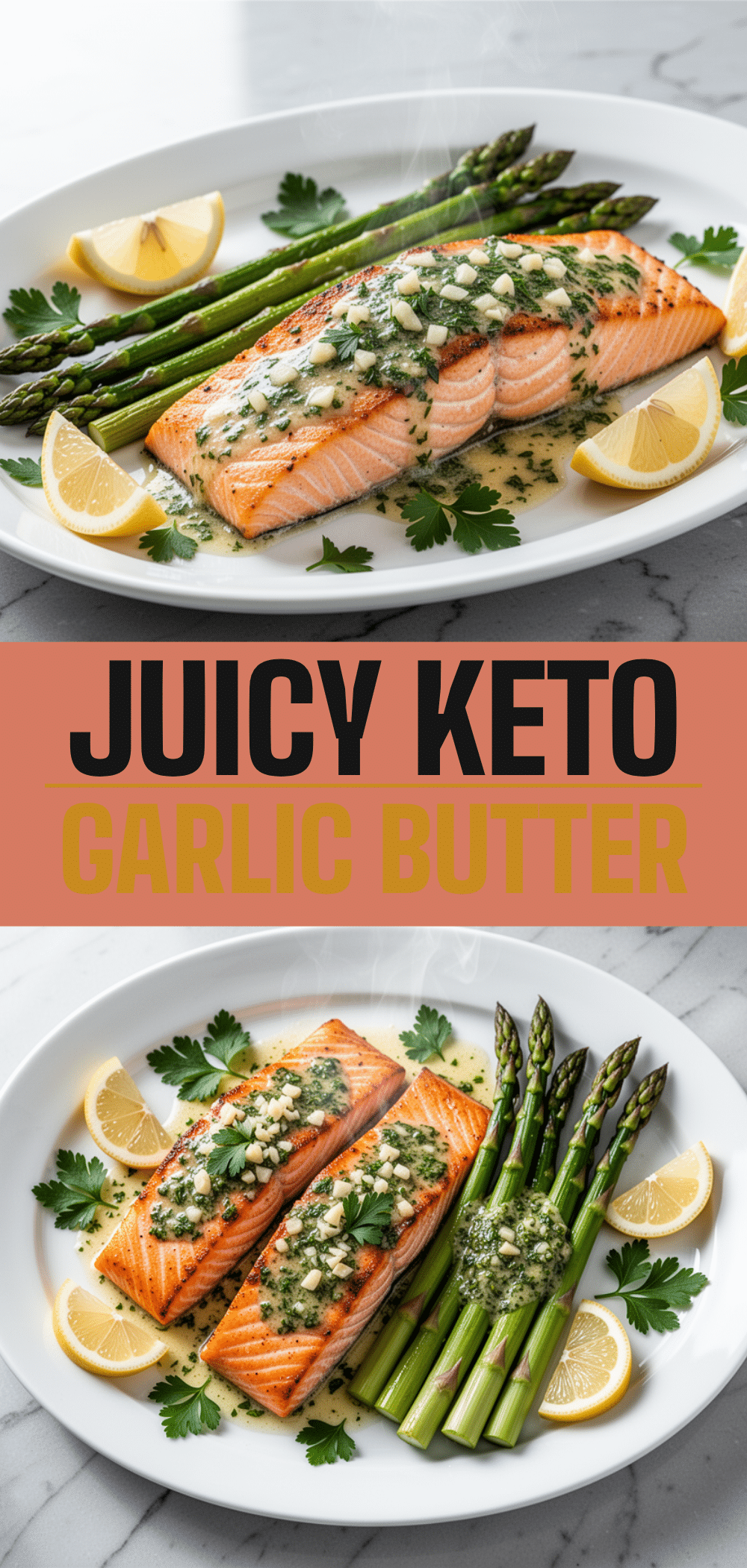
Pin This Recipe!
Keto Garlic Butter Baked Salmon with Asparagus
- Total Time: 30 minutes
- Yield: 4 servings 1x
Description
A quick, elegant, and low-carb weeknight dinner featuring flaky salmon and charred asparagus roasted on a single sheet pan with a rich garlic butter sauce.
Ingredients
- 4 salmon fillets (about 6 ounces each)
- 3 tablespoons extra virgin olive oil (divided)
- 4 tablespoons unsalted butter, melted
- 4–5 cloves garlic, minced
- 1 large lemon (zest and juice)
- 1 teaspoon dried dill
- Sea salt and black pepper to taste
- 1 bunch asparagus spears (about 1 pound)
Instructions
- Preheat oven to 400°F (200°C). Line a large 18×13 inch rimmed baking sheet with parchment paper or aluminum foil.
- Rinse asparagus and pat dry. Snap off or trim the woody ends of the spears.
- Pat salmon fillets dry with paper towels and place on the prepared baking sheet. Season both sides lightly with sea salt and black pepper.
- In a small bowl, whisk together the melted butter, 2 tablespoons olive oil, minced garlic, lemon zest, and dried dill.
- Drizzle 1 tablespoon olive oil over the asparagus and toss to coat. Arrange asparagus on one side of the baking sheet.
- Drizzle half of the garlic butter mixture over the asparagus and the remaining half over the salmon fillets, ensuring the sauce gets under the edges of the fish.
- Bake for 15-18 minutes, or until the salmon flakes easily with a fork and is opaque throughout, and asparagus is tender-crisp.
- Remove from oven, squeeze fresh lemon juice over everything, and garnish with fresh parsley or extra dill if desired. Serve immediately.
Notes
Do not overcrowd the pan to ensure proper roasting. For best results, use wild-caught Alaskan salmon. If using frozen salmon, thaw completely and pat very dry. Salmon continues to cook slightly after removal from the oven, so it is better to be slightly undercooked than dry. Internal temperature should reach 145°F (63°C) for safety, though 135°F (57°C) is preferred for juiciness.
- Prep Time: 10 minutes
- Cook Time: 18 minutes
- Category: Main Course
- Cuisine: American
Nutrition
- Serving Size: 1 salmon fillet with
- Calories: 380
- Sugar: 2
- Sodium: 320
- Fat: 26
- Saturated Fat: 10
- Carbohydrates: 4
- Fiber: 2
- Protein: 34
Keywords: keto, low carb, salmon, asparagus, sheet pan dinner, garlic butter, weeknight dinner, healthy fats, omega-3, gluten-free