It was a Sunday morning, and my husband was looking at me with that specific expression that says, “I love you, but please stop making me eat bland carbohydrates.” We had just finished breakfast, and the air in the kitchen was thick with the smell of burnt toast and regret. I was trying to be a good hostess, pulling out my trusted 8×8 glass baking dish to make cornbread. You know the type: square, dense, slightly dry, and utterly forgettable. It’s the cornbread you eat because it’s there, not because you want it.
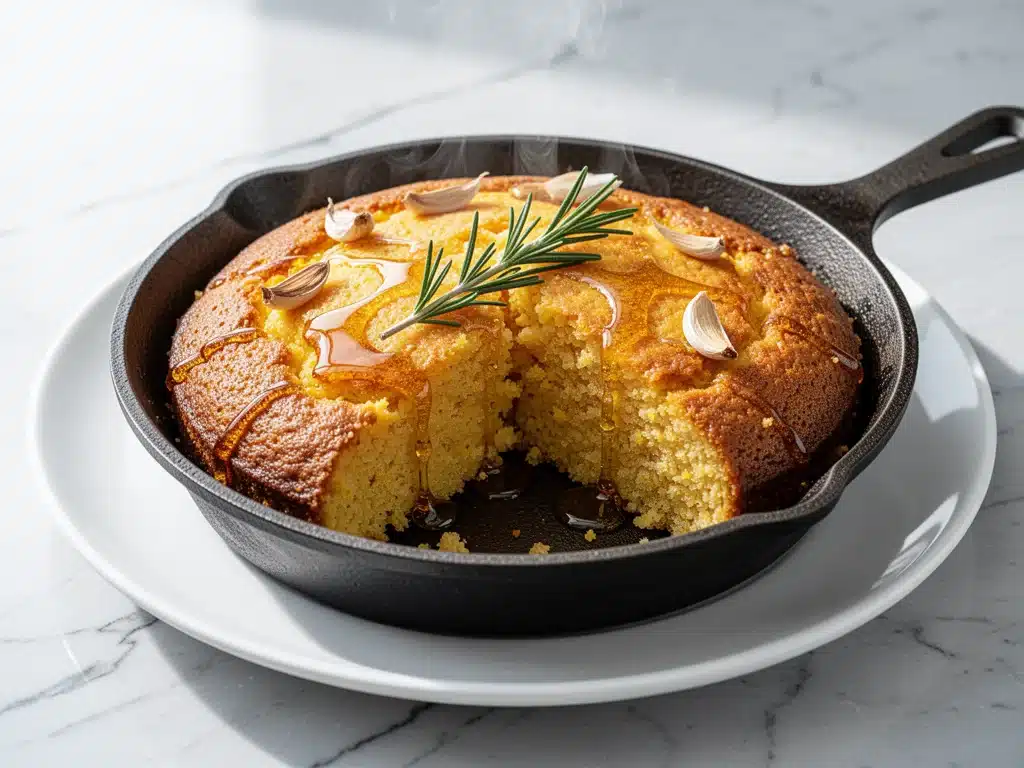
But then I remembered a trip I took to Georgia five years ago. I was sitting on a porch with peeling white paint, watching the rain hit the tin roof, and the woman running the small café next door handed me a slice of cornbread. It wasn’t square. It was round, thick, and sizzling in a heavy black skillet. The edges were crispy and dark, almost charred in the best way possible. The inside was moist and buttery, and she drizzled honey over it that soaked right into the warm crust. I ate that slice in three bites. I didn’t even think about it. It was just… perfect.
That moment stuck with me. So, last week, when my husband asked for “something nice” for dinner, I decided to stop playing it safe. I pulled out my oldest cast iron skillet—the one that’s seasoned with decades of love and a few too many burnt onions—and made buttery garlic skillet cornbread with honey drizzle. I added fresh garlic to the batter (yes, garlic in cornbread) and brushed the top with more garlic-infused butter before it went into the oven. The smell that came out of the oven was unlike anything I’ve ever baked. It was savory, sweet, warm, and incredibly inviting.
I brought it to the table, and my husband took one bite. He didn’t say anything for a full minute. Then he said, “You need to make this every week.” And honestly? He’s right. This isn’t just cornbread. It’s a experience. It’s the kind of side dish that makes people ask for the recipe before they’ve even finished their main course. If you’re tired of dry, square cornbread, you’re going to love this. I’ve tested this skillet cornbread at least ten times, tweaking the garlic-to-honey ratio until it was absolutely flawless. Trust me, once you try this, you’ll never go back to the baking dish version.
Why You’ll Love This Buttery Garlic Skillet Cornbread
There are about a dozen reasons I keep making this recipe, but here are the big ones that will convert you from a square-pan skeptic to a skillet believer.
The Crispy-Soft Texture Combo — This is the holy grail of cornbread. Because it’s baked in a hot cast iron skillet, the edges get incredibly crispy and slightly charred, while the center stays moist and tender. I’ve tried every method out there, and nothing compares to that contrast. It’s like getting two desserts in one.
Savory Meets Sweet — I know, I know. Garlic in cornbread? It sounds weird if you’ve only ever had sweet cornbread. But the savory garlic balances the sweetness of the honey perfectly. It’s not a dessert; it’s a sophisticated side dish that pairs beautifully with everything from cast iron ribeye steak to roasted chicken. The garlic adds depth, while the honey adds that sticky, comforting finish.
One Pan, Less Mess — Seriously, if you can mix batter in a bowl, you can make this. No fancy equipment needed. Just a skillet, a mixing bowl, and an oven. I make this on weeknights when I’m tired, and it feels like a gourmet treat. My teenage son can even make it if I give him five minutes of supervision.
Stays Fresh Longer — Square pan cornbread dries out by noon. This skillet version, thanks to the buttery crust and honey glaze, stays moist for days. I’ve had leftovers for lunch three days later, and it was still good. In fact, some people argue it tastes better the next day, as the flavors meld together. I deliberately make extra for this reason.
Customizable Heat Level — Want it spicy? Add a diced jalapeño to the batter. Want it mild? Stick to the garlic and honey. I’ve served this to my vegetarian sister, my spicy-food-loving brother, and my picky nephew (who just ate the honey part). Everyone found something to love.
This is my go-to when I need a side dish that feels special but doesn’t require a lot of effort. No complicated techniques, no weird ingredients, just reliable, delicious food that makes everyone happy. And if you’re looking for other easy comfort foods, you might also enjoy my crispy hash brown breakfast casserole—it’s another one-pan wonder that’s perfect for feeding a crowd.
Ingredients You’ll Need
Here’s the best part: you probably have most of these ingredients already. This isn’t a recipe that requires a special trip to the store. I’m particular about three things here—the cornmeal, the butter, and the honey—and I’ll tell you exactly why they matter.
Yellow Cornmeal (1 cup / 120g) — This is the star. Don’t use fine cornmeal if you can help it; you want that gritty, satisfying texture. I always use Stone Mill cornmeal because it has a fresh, nutty flavor. If you use super-fine cornmeal, the bread will be more cake-like, which is fine, but it won’t have that authentic rustic feel. Also, make sure it’s not self-rising unless you adjust the leavening.
All-Purpose Flour (½ cup / 60g) — Just a little bit to help bind the bread. It keeps it from crumbling apart when you cut it. Don’t skip it, or you’ll end up with a crumbly mess.
Baking Powder (1 tablespoon) — Fresh baking powder is crucial. If yours is older than six months, throw it out and buy new. Old baking powder makes cornbread dense and flat. I keep a fresh canister in my pantry specifically for this.
Baking Soda (½ teaspoon) — This reacts with the buttermilk to create lift. It’s essential for that fluffy interior. Again, make sure it’s fresh.
Salt (1 teaspoon) — Kosher salt is best because it’s easier to control. I use Diamond Crystal. If you use table salt, reduce to ¾ teaspoon because it’s denser.
Granulated Sugar (2 tablespoons) — Just a touch to balance the savory garlic. You don’t want it sweet, just balanced. If you prefer less sweet, reduce to 1 tablespoon.
Eggs (2 large, room temperature) — Room temperature eggs blend into the batter more evenly. I take them out of the fridge 15 minutes before I start. Cold eggs can cause the butter to seize up if you’re not careful.
Buttermilk (1 cup / 240ml) — This is non-negotiable for tender cornbread. The acid in the buttermilk tenderizes the gluten. If you don’t have buttermilk, make your own by adding 1 tablespoon of lemon juice or white vinegar to 1 cup of milk and letting it sit for 5 minutes. It’s a lifesaver.
Unsalted Butter (¼ cup / 56g, melted) — For the batter. I use high-quality European-style butter if I can find it, because the higher fat content makes the bread richer. Melt it and let it cool slightly before adding.
Extra Butter (2 tablespoons) — For greasing the skillet and brushing the top. This is what creates that crispy, golden crust. Don’t skimp here.
Garlic (3 cloves, minced) — Yes, three cloves. Don’t be shy. Fresh garlic only. No jarred garlic in this recipe. I mince it finely so you get little bursts of flavor in every bite. If you’re sensitive to garlic, reduce to 1 clove, but you’ll miss out on the best part.
Honey (¼ cup / 80ml) — For the drizzle. Use good quality honey. I like wildflower or clover honey because it has a floral note that pairs well with the corn. Avoid overly sweet, artificial-tasting honey.
Optional Add-ins:
– Jalapeños (1, diced) — For heat. Add to the batter if you like it spicy.
– Cilantro (2 tablespoons, chopped) — For freshness. Sprinkle on top after baking.
– Corn Kernels (½ cup, fresh or frozen) — Adds sweetness and texture. I use frozen because it’s convenient.
Pro Tip: I always buy my cornmeal in small batches because it goes rancid faster than regular flour. Keep it in an airtight container in the fridge or freezer to keep it fresh.
Equipment Needed
You don’t need fancy equipment for this. Here’s what I actually use, and what you can substitute if you don’t have it.
10-inch Cast Iron Skillet — This is the most important tool. Cast iron retains heat beautifully, which creates that crispy crust. I use a Lodge skillet because it’s affordable and durable. If you don’t have cast iron, use an oven-safe stainless steel or ceramic skillet. Avoid non-stick if you can help it, because it won’t get as crispy.
Mixing Bowl — Any large bowl works. I use a glass bowl because I can see the consistency of the batter.
Whisk — For mixing the wet ingredients. A fork works too, but a whisk is faster.
Measuring Cups and Spoons — Standard stuff. Dollar store versions work fine. Just make sure they’re accurate.
Pastry Brush — For brushing the top with butter. I use a silicone brush because it’s easy to clean. A regular brush works too.
Knife and Cutting Board — For mincing the garlic and dicing jalapeños if you’re using them.
Oven Mitts — Cast iron gets incredibly hot. Don’t skip these. I’ve learned this the hard way with a burned thumb.
Optional but nice:
– Crème fraîche or sour cream — For serving. Adds a tangy contrast to the sweet honey.
– Sharp Chef’s Knife — For cutting the cornbread into wedges. A dull knife will crush the crust.
How to Make It: Step-by-Step
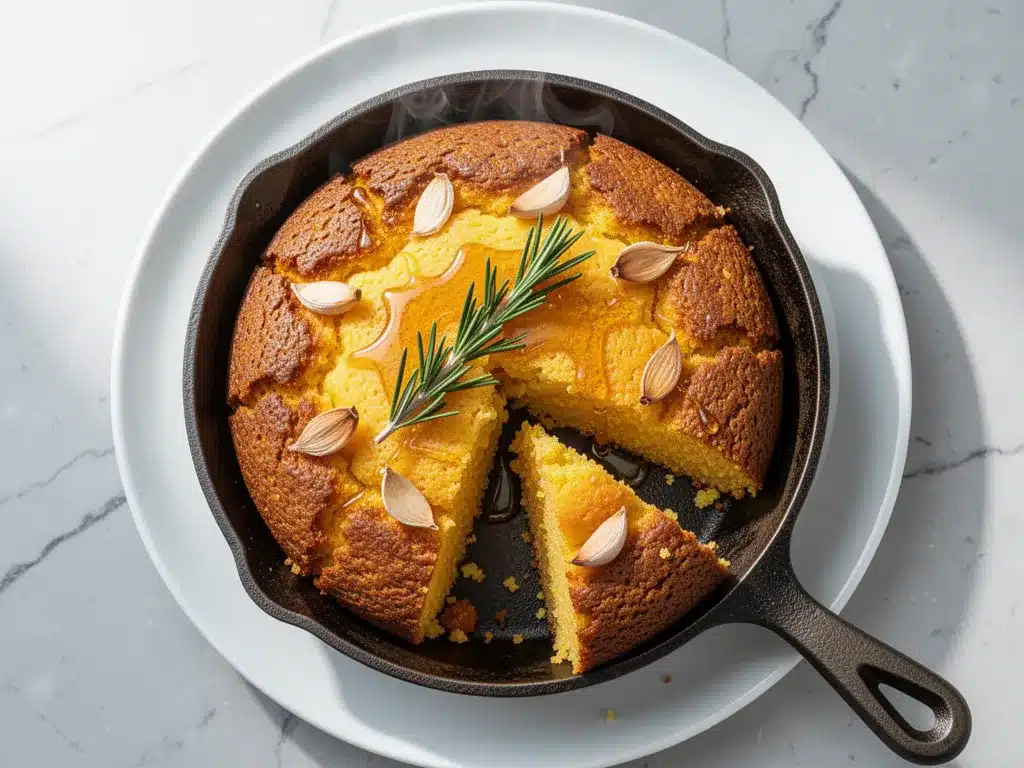
Alright, let’s make this! I’m walking you through exactly how I do it, including the little tricks I’ve picked up over the years. This process is straightforward, but attention to detail makes all the difference.
Step 1: Prep Your Oven and Skillet (5 minutes)
Preheat your oven to 400°F (200°C). This is crucial. You want the oven hot enough to create steam and crisp the edges immediately. While the oven heats, place your cast iron skillet inside to warm up. This sounds counterintuitive, but a hot skillet prevents sticking and helps the cornbread rise evenly. If you don’t want to heat the skillet in the oven, just melt the 2 tablespoons of butter in the skillet on the stove over medium heat, then remove from heat.
Step 2: Mix the Dry Ingredients (3 minutes)
In a large mixing bowl, whisk together the cornmeal, all-purpose flour, baking powder, baking soda, salt, and sugar. Make sure there are no lumps. If your cornmeal is coarse, you might want to sift it, but usually, a good whisk is enough. Set this aside.
Step 3: Mix the Wet Ingredients (3 minutes)
In a separate bowl or large measuring cup, whisk together the buttermilk, melted butter, eggs, and minced garlic. The garlic should be finely minced so it distributes evenly. Whisk until the butter is fully incorporated and the mixture looks smooth. Don’t worry if it looks a little separated at first; it will come together in the next step.
Step 4: Combine Wet and Dry (2 minutes)
Pour the wet ingredients into the dry ingredients. Stir gently with a spatula or wooden spoon until just combined. Do not overmix! Overmixing develops gluten, which makes the cornbread tough. It’s okay if there are a few lumps. The batter should be thick and slightly lumpy. If you want to add jalapeños or corn kernels, fold them in now.
Step 5: Pour into Skillet (2 minutes)
Carefully remove the hot skillet from the oven (or use the one with melted butter). Pour the batter into the skillet. It will sizzle—that’s a good sign! Spread the batter evenly with your spatula. If you heated the skillet in the oven, the batter will start cooking immediately on the bottom, which helps create that crust.
Step 6: Bake (20-25 minutes)
Place the skillet back in the oven. Bake for 20-25 minutes, or until the top is golden brown and a toothpick inserted into the center comes out clean. The edges should be crispy and pulling away from the sides of the skillet. If the top is browning too quickly, cover it loosely with aluminum foil after 15 minutes.
Step 7: The Honey Drizzle (2 minutes)
Remove the skillet from the oven. While the cornbread is still hot, drizzle the honey evenly over the top. The heat will help the honey soak in slightly, but leave some of it on top for that sticky, beautiful finish. Let it cool for 5 minutes before cutting. This allows the structure to set so it doesn’t crumble.
Step 8: Serve
Cut into wedges and serve warm. I usually serve this straight from the skillet at the dinner table—it looks rustic and stays warm. Add a dollop of crème fraîche or sour cream on the side if you want a tangy contrast.
Total Time: About 35 minutes (10 minutes prep, 25 minutes baking)
Expert Tips & Tricks
Here’s everything I’ve learned from making this dozens of times. These tips will save you from my mistakes and ensure your cornbread is perfect every time.
Don’t Overmix the Batter
This is the #1 mistake people make. Overmixing makes the cornbread dense and tough. Stir until just combined. Lumps are okay. I’ve ruined several batches by trying to make the batter smooth. Trust me, lumps mean tender cornbread.
Hot Skillet, Crispy Crust
Heating the skillet in the oven (or with melted butter) creates an immediate sear on the bottom of the cornbread. This prevents sticking and creates that irresistible crispy edge. I learned this from a chef friend, and it’s changed my life.
Fresh Garlic Only
Jarred garlic has a metallic taste that doesn’t work well in baked goods. Fresh garlic, minced finely, adds a subtle warmth that complements the corn. If you’re worried about overpowering the flavor, start with 2 cloves and add more next time.
Room Temperature Buttermilk
Cold buttermilk can cause the melted butter to solidify into chunks. Let your buttermilk sit out for 15 minutes before using. It blends more evenly into the batter.
Let It Cool Slightly
I know it’s tempting to dig in immediately, but letting the cornbread cool for 5 minutes allows the structure to set. If you cut it too soon, it will crumble. Patience pays off.
Common Mistakes (and how to avoid them):
Mistake: Cornbread is dry.
Fix: You overbaked it. Check it at 20 minutes. The toothpick should come out with a few moist crumbs, not completely clean. Also, make sure you’re using fresh buttermilk.
Mistake: Cornbread is dense.
Fix: You overmixed the batter. Stir gently. Also, check your baking powder. If it’s old, it won’t leaven properly.
Mistake: Cornbread stuck to the skillet.
Fix: Your skillet wasn’t hot enough when you added the batter, or you didn’t use enough butter. Make sure to grease the skillet well.
Pro Tricks I’ve Learned:
For Extra Flavor
Add a pinch of smoked paprika to the dry ingredients. It adds a subtle smokiness that pairs beautifully with the honey.
For Better Texture
Let the batter rest for 10 minutes before baking. This allows the cornmeal to hydrate, resulting in a more tender crumb.
Make-Ahead Strategy
You can mix the dry and wet ingredients separately and store them in the fridge overnight. Combine and bake in the morning. It saves time and tastes just as good.
Variations & Substitutions
Once you’ve nailed the basic version, here’s how you can mix it up. I’ve tried all of these, and they’re all delicious.
Spicy Jalapeño Version
Add 1 diced jalapeño (seeds removed for less heat) to the batter. This adds a nice kick that balances the sweet honey. My brother loves this version.
Corn and Cilantro
Add ½ cup of corn kernels and 2 tablespoons of chopped cilantro. This adds freshness and sweetness. It’s like a fiesta in your mouth.
Herb-Infused Butter
Instead of plain butter, mix chopped rosemary or thyme into the melted butter before brushing the top. It adds an earthy, aromatic note.
Lighter Version
Use Greek yogurt instead of buttermilk, and reduce the butter in the batter to 2 tablespoons. It’s lighter but still moist. I make this when I’m trying to be “healthy,” though I don’t usually feel it.
Gluten-Free
Use a 1:1 gluten-free flour blend instead of all-purpose flour. Make sure the blend contains xanthan gum. I’ve used Bob’s Red Mill GF blend, and it works great.
Dairy-Free
Use dairy-free milk and dairy-free butter. There are many good options on the market now. The texture will be slightly different, but still tasty.
Vegan
Use flax eggs (2 tablespoons ground flaxseed mixed with 6 tablespoons water) instead of eggs, and dairy-free butter and milk. It’s not exactly the same, but it’s a good option for vegans.
Serving & Storage
How to Serve:
I usually serve this straight from the skillet at the dinner table—it looks rustic and stays warm. But here are other ways I’ve enjoyed it:
Side Dishes:
– Smoky chipotle shredded beef barbacoa bowls (the cornbread soaks up the sauce perfectly)
– Simple green salad with balsamic vinaigrette
– Roasted broccoli or green beans
– Authentic chicken fried rice (for a fusion twist)
Toppings Bar:
When I have guests, I put out: extra honey, jalapeño slices, crème fraîche, fresh cilantro, and hot sauce. Everyone customizes their wedge.
Wine Pairing:
I’m not a wine expert, but my wine-snob friend says a crisp Sauvignon Blanc or a light Pinot Noir works great with this. It cuts through the richness of the butter.
Storage Instructions:
Refrigerator:
Store in an airtight container for up to 4 days. The cornbread will firm up in the fridge, but it’s still good.
Reheating:
Best method: Wrap in foil and warm in a 350°F oven for 10 minutes. This restores the moisture.
Microwave method: Heat for 30 seconds. It will get soft, but it’s quick.
Avoid: Reheating in a toaster oven without foil, as it will dry out the edges.
Freezing:
This freezes well! Wrap individual wedges in plastic wrap and then in foil. Freeze for up to 3 months. Thaw at room temperature and warm in the oven. I often freeze extra batches for quick meals.
Meal Prep:
Make the batter ahead and store in the fridge for up to 24 hours. Bake when ready. This saves time in the morning.
Nutrition Information
I’m not a nutritionist, but here’s the breakdown if you’re tracking. Keep in mind that these are estimates and can vary based on specific brands and measurements.
Per Serving (based on 8 servings):
– Calories: 280
– Protein: 5g
– Carbs: 35g
– Fiber: 2g
– Sugar: 10g
– Fat: 14g
– Saturated Fat: 7g
– Cholesterol: 50mg
– Sodium: 350mg
– Calcium: 80mg
What’s Good:
– Good source of carbohydrates for energy
– Contains calcium from buttermilk
– Honey has antioxidants
What to Know:
– Higher in calories from butter and honey
– Contains dairy and gluten
– Moderate sodium (use low-sodium baking powder to reduce)
My Take:
Look, this is comfort food with butter and honey. It’s not a diet recipe. But it’s way better than store-bought, costs less, and I know exactly what’s in it. When I want to make it lighter, I use the Greek yogurt version and reduce the honey. But usually? I just eat a reasonable portion and enjoy it.
Final Thoughts
So that’s my go-to buttery garlic skillet cornbread with honey drizzle! I’ve probably talked your ear off at this point, but when you make a recipe this often, you have a lot to say about it. This has saved weeknight dinners more times than I can count. It’s my answer to “what’s for dinner” when I’m tired, don’t want takeout, and still want something that tastes really good. My kids are happy, my husband’s happy, and I’m happy because I’m not stressed about cooking.
Make it yours! Try different add-ins, swap in your favorite vegetables, adjust the garlic (though more is always better in my opinion). The best recipes are the ones you adapt to your family’s tastes. And if you’re looking for other easy, comforting dishes, check out my cinnamon-spiced canned pears for a simple dessert, or my frozen mango passionfruit slushie for a refreshing drink.
If you make this, drop a comment and let me know what you think! I love hearing how recipes turn out in your kitchen. And if something doesn’t work, tell me that too—I’m here to help troubleshoot. Happy cooking! And I hope your kitchen smells half as good as mine does right now.
Frequently Asked Questions
Can I use self-rising cornmeal?
Yes, but you need to adjust the recipe. If you use self-rising cornmeal, omit the baking powder and baking soda, and reduce the salt to ½ teaspoon. Self-rising cornmeal already contains leavening agents and salt, so adding more will make the cornbread taste bitter and rise too much, then collapse.
Why did my cornbread turn out crumbly?
This usually happens if you overmix the batter or use too much flour. Stir just until combined. Also, make sure you’re measuring your flour correctly. If you scoop the flour directly with the cup, you’ll pack it in and use too much. Spoon the flour into the cup and level it off with a knife.
Can I make this in a muffin tin?
Yes! Grease the muffin tin well and fill each cup ¾ full. Bake at 375°F (190°C) for 15-18 minutes. They’ll be smaller and cook faster, so keep an eye on them. This is a great way to make individual portions.
How do I reheat leftovers without it getting dry?
Wrap the cornbread in aluminum foil and warm it in a 350°F oven for 10-15 minutes. This restores the moisture. If you microwave it, add a damp paper towel over the cornbread to create steam. Avoid reheating in a toaster oven without foil, as it will dry out the edges.
Can I use milk instead of buttermilk?
You can, but the cornbread will be less tender. To make a buttermilk substitute, add 1 tablespoon of lemon juice or white vinegar to 1 cup of milk and let it sit for 5 minutes. It will curdle slightly, which is exactly what you want. This mimics the acidity of buttermilk.
Why is my cornbread sticking to the skillet?
Your skillet wasn’t hot enough when you added the batter, or you didn’t use enough butter. Make sure to preheat the skillet in the oven, or melt the butter in the skillet on the stove before adding the batter. Also, make sure your cast iron is well-seasoned. If it’s not, the cornbread will stick.
Can I freeze this cornbread?
Yes, this freezes beautifully! Wrap individual wedges in plastic wrap and then in foil. Freeze for up to 3 months. Thaw at room temperature and warm in the oven. I often freeze extra batches for quick meals.
Pin This Recipe!
Buttery Garlic Skillet Cornbread with Honey Drizzle
- Total Time: 35 minutes
- Yield: 8 servings 1x
Description
A savory-sweet skillet cornbread featuring crispy, charred edges and a moist, buttery interior infused with fresh garlic and finished with a sticky honey drizzle.
Ingredients
- 1 cup (120g) yellow cornmeal
- ½ cup (60g) all-purpose flour
- 1 tablespoon baking powder
- ½ teaspoon baking soda
- 1 teaspoon kosher salt
- 2 tablespoons granulated sugar
- 2 large eggs, room temperature
- 1 cup (240ml) buttermilk
- ¼ cup (56g) unsalted butter, melted
- 2 tablespoons extra butter (for greasing and brushing)
- 3 cloves garlic, minced
- ¼ cup (80ml) honey (for drizzle)
- Optional: 1 diced jalapeño, 2 tablespoons chopped cilantro, ½ cup corn kernels
Instructions
- Preheat oven to 400°F (200°C). Place a 10-inch cast iron skillet in the oven to heat up, or melt 2 tablespoons of butter in the skillet on the stove over medium heat.
- In a large mixing bowl, whisk together the cornmeal, all-purpose flour, baking powder, baking soda, salt, and sugar until no lumps remain.
- In a separate bowl, whisk together the buttermilk, melted butter, eggs, and minced garlic until smooth.
- Pour the wet ingredients into the dry ingredients. Stir gently with a spatula until just combined; do not overmix. Fold in optional add-ins like jalapeños or corn if desired.
- Carefully remove the hot skillet from the oven (or use the one with melted butter) and pour the batter into it. It should sizzle. Spread evenly.
- Bake for 20-25 minutes until the top is golden brown and a toothpick inserted into the center comes out clean. Cover loosely with foil if browning too quickly.
- Remove from oven and immediately drizzle honey evenly over the hot cornbread.
- Let cool for 5 minutes to set the structure, then cut into wedges and serve warm.
Notes
Do not overmix the batter to ensure a tender texture. Heating the skillet before adding batter creates a crispy crust. Let the cornbread cool for 5 minutes before cutting to prevent crumbling. For a gluten-free version, use a 1:1 gluten-free flour blend. For dairy-free, use plant-based butter and milk alternatives.
- Prep Time: 10 minutes
- Cook Time: 25 minutes
- Category: Side Dish
- Cuisine: American
Nutrition
- Serving Size: 1 wedge
- Calories: 280
- Sugar: 10
- Sodium: 350
- Fat: 14
- Saturated Fat: 7
- Carbohydrates: 35
- Fiber: 2
- Protein: 5
Keywords: skillet cornbread, garlic cornbread, honey cornbread, cast iron recipes, southern cornbread, easy side dish, comfort food