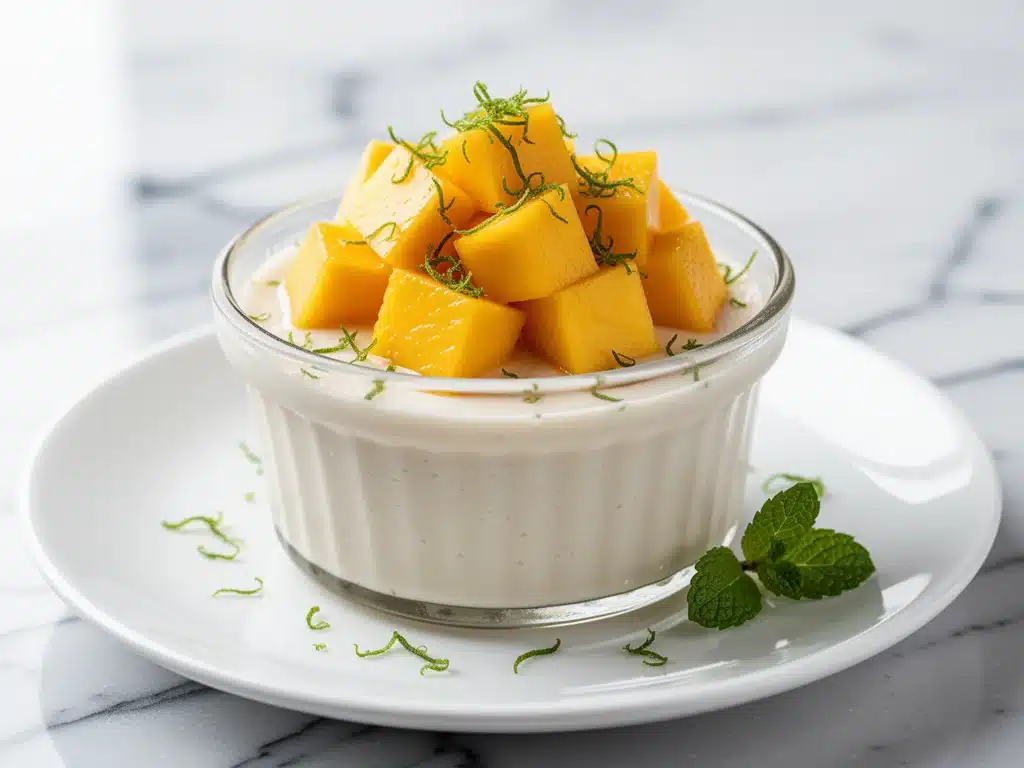
It was one of those humid July evenings where the air feels like a warm blanket you can’t take off. I had just finished hosting a small get-together for some friends who are picky about dairy, gluten, and anything that feels “too heavy” after a BBQ. The grill was still smoking, the citronella candles were lit, and everyone was waiting to see what I’d serve for dessert. Usually, this is the part where I panic and raid the freezer for ice cream, but this time, I had a secret weapon ready in the fridge.
I’ve been obsessed with panna cotta for years—the way it jiggles, the way it melts on your tongue—but traditional versions are heavy on cream and eggs. For a hot summer night, that just felt wrong. So, I started tinkering. I wanted something that tasted like a vacation but was actually light enough to eat after a full meal. I swapped heavy cream for full-fat coconut milk, added fresh mango puree, and finished it with a sharp lime zest that cut through the sweetness like a knife.
The result? Dairy-free coconut mango panna cotta that was so good, my dairy-loving friends asked for the recipe before they even finished their plates. It’s silky, it’s refreshing, and it’s completely no-bake. I’ve made this at least a dozen times since that night, tweaking the mango-to-coconut ratio until it was perfect. It’s become my go-to summer dessert because it’s elegant enough for guests but easy enough to whip up on a Tuesday when I just want something sweet without the hassle.
What I love most is that it doesn’t require any special skills or fancy equipment. You just blend, pour, and wait. It’s the kind of dessert that makes you look like a pro in the kitchen without actually doing any real work. If you’ve ever been intimidated by gelatin or worried about dietary restrictions, this recipe is your answer. It’s creamy, it’s tropical, and it’s going to change how you think about summer desserts.
Why You’ll Love This Dairy-Free Coconut Mango Panna Cotta
There are about ten reasons I keep making this, but here are the big ones that have it firmly planted in my regular rotation.
It’s Actually Dairy-Free (And Tastes It) — A lot of “dairy-free” desserts taste like coconut oil or have a weird aftertaste. Not this one. Using full-fat coconut milk gives it that rich, creamy mouthfeel that you expect from traditional panna cotta, but without the lactose. My friends who are lactose intolerant literally cannot tell the difference.
Zero Oven Required — It’s 95 degrees outside. Do you really want to turn on your oven? Didn’t think so. This recipe is entirely no-bake. You spend about 15 minutes active time blending and pouring, and then the fridge does all the heavy lifting. It’s perfect for hot days when you don’t want to heat up the kitchen.
Make-Ahead Friendly — This is my secret weapon for entertaining. I can make this three days in advance. In fact, it tastes better the next day because the flavors have had time to meld. I can prep it while my guests are still arriving, pop it in the fridge, and then focus on hanging out with them instead of stressing over dessert.
Light but Satisfying — After a heavy BBQ meal, you don’t want a dense chocolate cake. This panna cotta is light, airy, and refreshing. The mango adds natural sweetness, and the lime zest adds a bright finish that cleanses the palate. It feels indulgent but doesn’t leave you feeling sluggish.
Gluten-Free Naturally — There are no flours, no crusts, no cross-contamination worries. It’s just coconut milk, mango, sugar, and gelatin. It’s safe for celiacs and gluten-sensitive friends, which takes the pressure off when hosting diverse groups.
This recipe has completely changed how I approach summer entertaining. It’s reliable, it’s delicious, and it always gets compliments. I’ve served it to picky kids and food snobs alike, and everyone asks for seconds.
Ingredients You’ll Need
Here’s the best part: you probably have most of this already, or it’s super easy to grab. I’m particular about a few ingredients here, so let’s break down exactly what you need and why.
Full-Fat Coconut Milk (2 cans, 13.5 oz each / 380g total) — This is the base. Do not use the light version. You need the thick, rich cream from the top of the can. If you buy the cartons labeled “coconut milk beverage,” it won’t work—it’s too watery. Look for cans with no additives. Shake them well before opening, or if you prefer, chill them overnight and scoop out the solid cream.
Very Ripe Mangoes (2 large / about 400g flesh) — Fresh mangoes make a huge difference here. They should be sweet and fragrant. If you can’t find fresh ones, high-quality frozen mango chunks work too, but thaw them completely and drain excess liquid first. I use a food processor to puree them until smooth.
Unflavored Gelatin Powder (2 teaspoons / 7g) — This is what sets the panna cotta. I use powdered gelatin because it dissolves more easily than sheets. Bloom it in cold water first (more on that in the steps). It’s flavorless, so you won’t taste it—just the texture.
Lime Zest (1 large lime / about 2 teaspoons zest) — This is the game-changer. The citrus cuts through the richness of the coconut. Use an organic lime if you can, since you’re using the peel. Grate only the green part, not the white pith, which is bitter.
Lime Juice (2 tablespoons / 30ml) — Freshly squeezed. Bottled juice has a weird chemical taste that ruins the delicate flavor. Squeeze it yourself—it takes 30 seconds.
Granulated Sugar (3 tablespoons / 40g) — Adjust based on how sweet your mangoes are. Taste the puree before adding sugar. If the mangoes are super sweet, you might only need 2 tablespoons. I like a little sweetness to balance the lime.
Vanilla Extract (1 teaspoon / 5ml) — Pure vanilla, not imitation. It adds a warm background note that makes the dessert feel more complex.
Pinch of Salt — Just a tiny pinch to enhance all the flavors. Don’t skip it.
Optional Garnish — Fresh mango cubes, mint leaves, or a drizzle of coconut cream for extra elegance. I usually keep it simple with just a lime wedge.
Equipment Needed
You don’t need fancy equipment for this. Here’s what I actually use.
Food Processor or Blender — To puree the mango until silky smooth. A high-speed blender like a Vitamix works great, but a standard blender or food processor is fine too. You want no chunks.
Small Saucepan — For heating the coconut milk and blooming the gelatin. A small one is perfect since we’re only dealing with a couple of cups of liquid.
Mixing Bowls — One medium bowl for mixing the gelatin, one larger bowl for combining everything.
Measuring Cups and Spoons — Standard stuff. Dollar store versions work fine.
4-6 Ramekins or Serving Glasses — I use small ramekins for individual portions. They look cute and are easy to serve. You can also use mason jars or even wine glasses if you’re feeling fancy. Just make sure they’re clean and dry.
Whisk — For blending the ingredients smoothly. A small whisk is easiest.
Microplane or Zester — For the lime zest. A microplane gives you fine, fluffy zest that disperses evenly. A box grater works too, but be careful not to get the white pith.
Refrigerator — Obviously. You need space for the ramekins to set undisturbed.
How to Make It: Step-by-Step
Alright, let’s make this! I’m walking you through exactly how I do it, including the little tricks I’ve picked up.
Step 1: Bloom the Gelatin (5 minutes)
In a small bowl, sprinkle the gelatin powder over 3 tablespoons of cold water. Stir gently and let it sit for 5-10 minutes. It will turn into a spongy, gel-like mass. This is called “blooming” and it’s crucial for getting a smooth texture. If you skip this, the gelatin might clump up in the warm milk. Set this aside.
Step 2: Puree the Mango (5 minutes)
While the gelatin blooms, prep your mango. Peel and chop the mango flesh into chunks. Add them to your food processor or blender. Blend until completely smooth. If it’s too thick, add a splash of water or lime juice to help it blend. You want a silky puree with no fibers or chunks. Taste it now—if it’s not sweet enough, add a teaspoon of sugar and blend again.
Step 3: Warm the Coconut Milk (3-4 minutes)
Open your cans of coconut milk. If you chilled them overnight, scoop out the solid cream. If not, shake well and pour into a small saucepan. Add the sugar, salt, and vanilla extract. Heat over medium-low heat, stirring constantly. You don’t want to boil it—just warm it until the sugar is dissolved and it’s hot to the touch, about 120-130°F (50-55°C). This is important because gelatin needs warmth to dissolve but will break down if boiled.
Step 4: Dissolve the Gelatin (2 minutes)
Remove the saucepan from heat. Add the bloomed gelatin mixture to the warm coconut milk. Whisk vigorously for about 1-2 minutes until the gelatin is completely dissolved and no granules remain. It should look clear and smooth. If you see any undissolved bits, strain the mixture through a fine-mesh sieve. This step ensures your panna cotta is silky, not grainy.
Step 5: Combine and Flavor (2 minutes)
Stir in the mango puree and lime juice. Then, add the lime zest. Whisk everything together until well combined. Taste it one more time. Adjust sugar or lime if needed. It should taste bright, sweet, and tropical. If it tastes bland, it will taste bland after setting, so don’t be shy with the lime.
Step 6: Pour and Chill (4-6 hours)
Ladle the mixture into your ramekins or serving glasses. Cover them loosely with plastic wrap or lids. Place them in the refrigerator. Let them set for at least 4 hours, but overnight is best. They should be firm to the touch but still have a slight jiggle. If they’re still liquid after 4 hours, give them another hour. Patience is key here!
Step 7: Serve
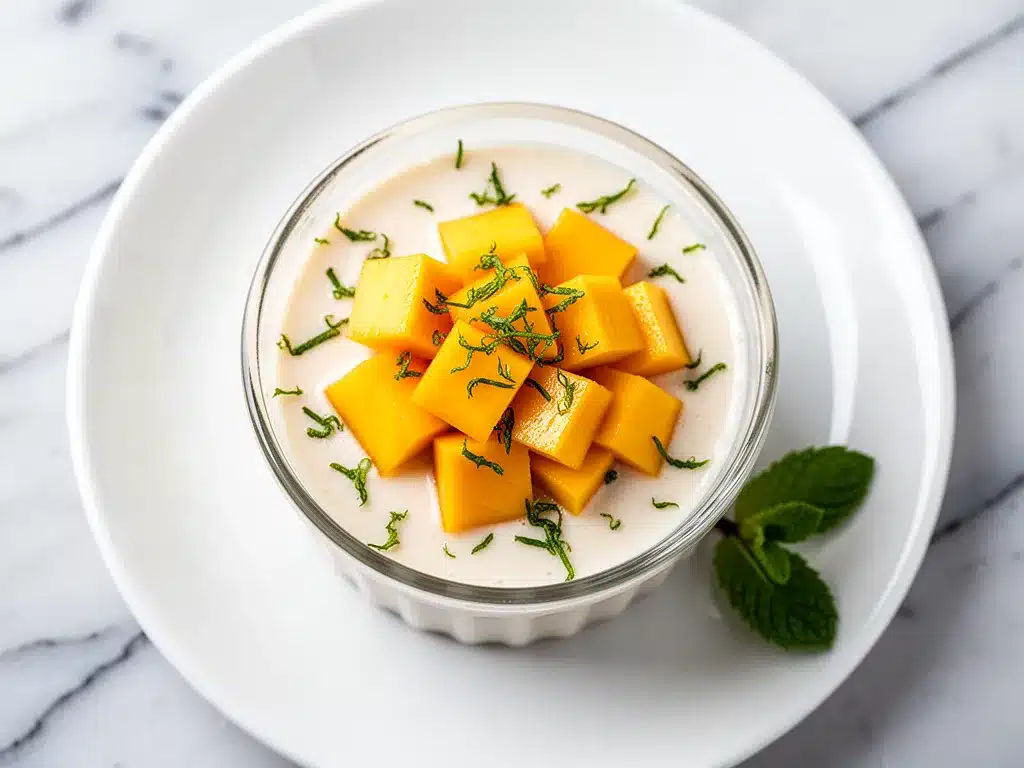
When ready to serve, top with fresh mango cubes, a sprig of mint, or a dollop of whipped coconut cream. They can be served straight from the fridge. If you want to unmold them, dip the ramekin in hot water for 10 seconds and invert onto a plate. But honestly? Eating them out of the glass is just as fun.
Total Time: About 15 minutes active, plus 4+ hours chilling.
Expert Tips & Tricks
Here’s everything I’ve learned from making this dozens of times. These tips will save you from my mistakes.
Don’t Boil the Coconut Milk — I learned this the hard way. Once I boiled the coconut milk, the texture got slightly grainy. Keep it warm, not hot. If you’re unsure, use a thermometer. 120°F is the sweet spot.
Strain for Perfection — If you’re worried about lumps, strain the mixture through a sieve before pouring into glasses. It’s an extra step, but it guarantees a restaurant-quality smooth texture. I do this when I’m entertaining and want it to look flawless.
Choose the Right Mango — Alphonso or Ataulpo (Honey) mangoes are best because they’re sweeter and less fibrous. If you use Tommy Atkins, you might need to blend longer and strain more carefully. The texture of the mango matters.
Room Temperature Lime — A room-temperature lime gives you more juice and zest. If your limes are cold from the fridge, roll them on the counter before cutting to release the oils.
Don’t Rush the Setting — If you take them out too early, they’ll be soupy. Trust the process. 4 hours is the minimum, but 6-8 hours is ideal. If you’re in a hurry, you can freeze them for 30 minutes to speed it up, but it might affect the texture slightly.
Common Mistake: Watery Panna Cotta
Fix: This usually means the gelatin wasn’t fully dissolved or the coconut milk was too cold when you added it. Make sure the milk is warm enough to dissolve the gelatin completely. Also, check your gelatin expiration date—old gelatin loses its power.
Pro Trick: Layered Effect
If you want a pretty layered look, pour half the coconut mixture, chill until set, then pour the mango layer on top. It’s more work but looks stunning.
Variations & Substitutions
Once you’ve nailed the basic version, here’s how you can mix it up. I’ve tried all of these.
Passionfruit Swirl
Swap half the mango for passionfruit puree. The tartness pairs beautifully with coconut. I love this version in the summer. It’s like a tropical cocktail in dessert form.
Berry Panna Cotta
Replace mango with strawberries or raspberries. Blend them with a little sugar and lime juice. It’s a classic combo and looks gorgeous with the white coconut base.
Chocolate Coconut
Add 2 tablespoons of cocoa powder to the warm coconut milk. It’s rich and decadent. Great for when you want something less fruity and more chocolatey.
Matcha Green Tea
Whisk 1 teaspoon of matcha powder into the warm coconut milk before adding the gelatin. It’s earthy and sophisticated. My friends who love Asian flavors go crazy for this.
Dietary Modifications:
Vegan Option
Replace gelatin with agar-agar. Use 1 teaspoon of agar powder bloomed in water, then dissolve in the warm coconut milk. Note: Agar sets firmer than gelatin, so use slightly less if you want a softer texture. It’s a bit trickier to master, but it works.
Sugar-Free
Use monk fruit or erythritol instead of sugar. Taste as you go, as these sweeteners can have a different intensity. The mango already has natural sugar, so you might not need much.
Different Fruits:
You can use peaches, nectarines, or even watermelon (blend and strain well). Just adjust the sweetness based on the fruit’s natural sugar content.
Serving & Storage
How to Serve:
I usually serve these straight from the ramekins. They look rustic and stay cold. But here are other ways I’ve enjoyed them:
Toppings Bar:
When I have guests, I put out: fresh mango cubes, toasted coconut flakes, mint leaves, and a drizzle of honey or agave. Everyone customizes their bowl.
Drink Pairing:
A chilled glass of sparkling water with lime, or a light white wine like Sauvignon Blanc. It cuts the richness perfectly.
Storage Instructions:
Refrigerator:
Store covered in the fridge for up to 5 days. They actually get firmer and more flavorful as they sit. I make them on Sunday for the week.
Freezing:
Honestly, this doesn’t freeze well. The texture of the coconut milk can separate when thawed, and the gelatin can get weird. Make it fresh or store in the fridge. If you must freeze, thaw slowly in the fridge, but expect some texture changes.
Pro Tip:
If you’re making these for a party, make them the day before. They’ll be perfectly set and you’ll have one less thing to worry about on the day of the event.
Nutrition Information
I’m not a nutritionist, but here’s the breakdown if you’re tracking.
Per Serving (based on 6 servings):
- Calories: 180
- Protein: 2g
- Carbs: 22g
- Fiber: 2g
- Sugar: 18g
- Fat: 10g
- Saturated Fat: 9g
- Cholesterol: 0mg
- Sodium: 15mg
What’s Good:
– Naturally dairy-free and gluten-free
– Good source of Vitamin C from mango and lime
– Lower in calories than traditional cream-based desserts
– No artificial additives
What to Know:
– Higher in natural sugars from mango
– Coconut milk is high in saturated fat, but it’s plant-based
– Moderate calories, but very satisfying in small portions
My Take:
Look, this is a dessert. It’s sweet and rich. It’s not a health food, but it’s cleaner than most store-bought options. When I want to make it lighter, I use less sugar and add more fruit. But usually? I just enjoy a small portion and let myself savor it.
Final Thoughts
So that’s my dairy-free coconut mango panna cotta! I’ve probably talked your ear off at this point, but when you make a recipe this often, you have a lot to say about it.
This has saved summer dinners more times than I can count. It’s my answer to “what’s for dessert” when I want something elegant but easy. My friends are happy, my family is happy, and I’m happy because I’m not stressed about cooking.
Make it yours! Try different fruits, adjust the sweetness, or add a splash of rum for an adult version. The best recipes are the ones you adapt to your tastes.
If you make this, drop a comment and let me know what you think! I love hearing how recipes turn out in your kitchen. And if something doesn’t work, tell me that too—I’m here to help troubleshoot.
Happy cooking! And I hope your kitchen smells half as good as mine does right now.
Frequently Asked Questions
Can I use coconut cream instead of coconut milk?
Yes! Coconut cream is thicker and richer. If you use it, you might want to thin it out with a little water or almond milk to match the consistency of coconut milk. It will make a richer panna cotta, which is delicious but heavier.
Why did my panna cotta not set?
This usually happens if the gelatin wasn’t fully dissolved or if the mixture was too cold when you added the gelatin. Make sure the coconut milk is warm (not hot) when you add the bloomed gelatin. Also, check that your gelatin isn’t expired—old gelatin loses its setting power.
Can I make this vegan?
Absolutely. Replace the gelatin with agar-agar. Use about 1 teaspoon of agar powder bloomed in water, then dissolve it in the warm coconut milk. Note that agar sets firmer and more brittle than gelatin, so use slightly less if you want a softer texture. It’s a bit trickier, but it works!
How long does this last in the fridge?
It lasts up to 5 days in the refrigerator. In fact, it tastes better after 24 hours as the flavors meld. Just keep it covered to prevent it from absorbing other fridge smells.
Can I use frozen mango?
Yes, frozen mango works great. Just thaw it completely and drain any excess liquid before blending. The flavor might be slightly less bright than fresh, but it’s still delicious and more affordable.
What if I don’t have a food processor?
You can use a blender. Just blend in smaller batches if needed. Make sure to blend until completely smooth, then strain through a sieve to remove any fibers. The texture is key, so don’t skip the straining step if you’re using a blender.
Can I add alcohol to this?
Yes! A splash of rum, coconut rum, or champagne works beautifully. Add it to the warm coconut milk mixture before pouring into the glasses. Just be aware that alcohol can interfere with setting, so don’t add more than 2 tablespoons per batch.
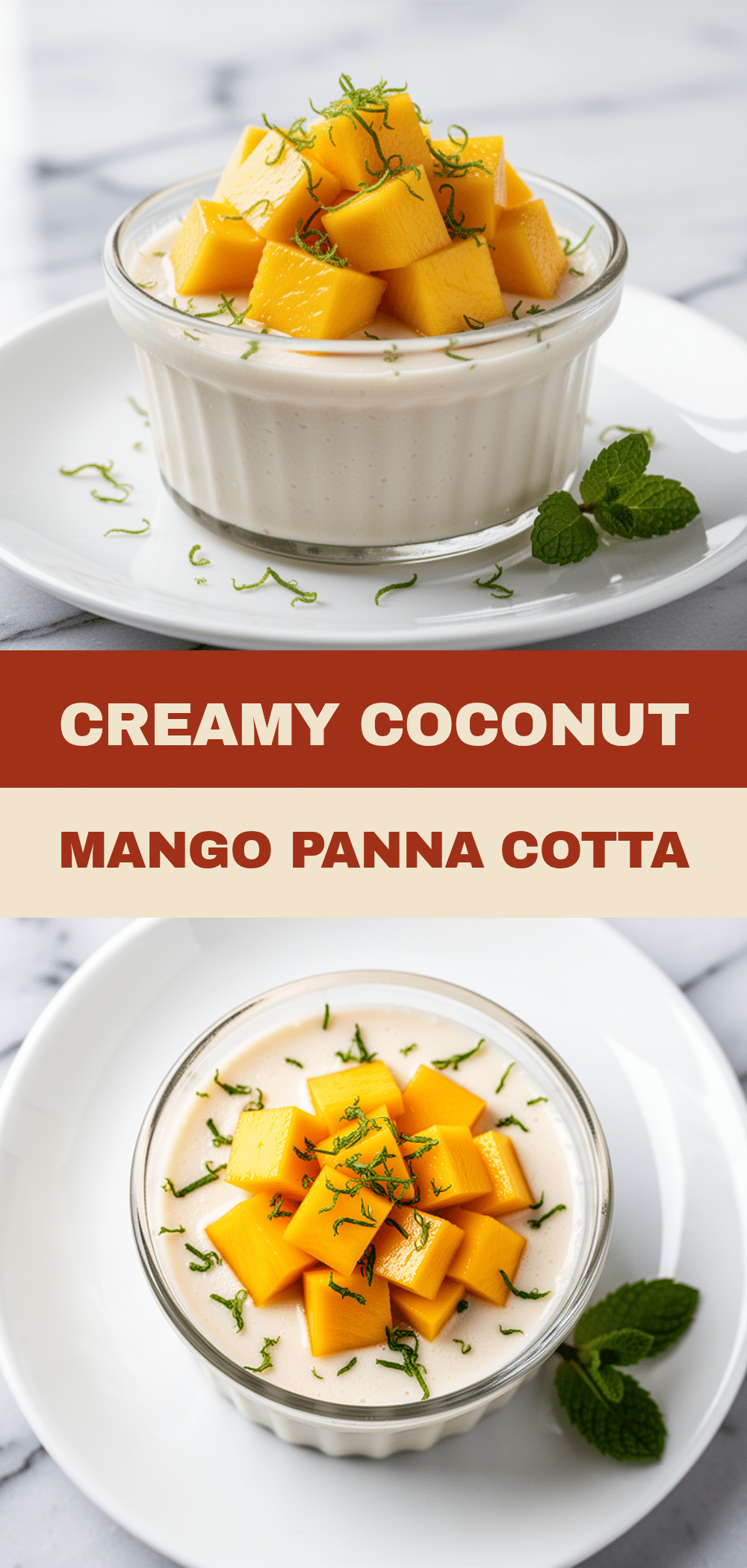
Pin This Recipe!
Dairy-Free Coconut Mango Panna Cotta
- Total Time: 4 hours 25 minutes
- Yield: 4-6 servings 1x
Description
A silky, refreshing, and completely no-bake dessert that swaps heavy cream for full-fat coconut milk. This dairy-free and gluten-free panna cotta features fresh mango puree and lime zest for a tropical flavor profile that is light enough for summer evenings.
Ingredients
- 2 cans (13.5 oz each) full-fat coconut milk
- 2 large very ripe mangoes (about 400g flesh)
- 2 teaspoons unflavored gelatin powder
- 3 tablespoons cold water (for blooming gelatin)
- 1 large lime (zest and juice)
- 3 tablespoons granulated sugar
- 1 teaspoon vanilla extract
- Pinch of salt
Instructions
- Bloom the gelatin: Sprinkle gelatin powder over 3 tablespoons of cold water in a small bowl and let sit for 5-10 minutes until it forms a spongy mass.
- Puree the mango: Peel and chop mangoes, then blend in a food processor or blender until completely smooth. Add a splash of water or lime juice if needed to help blending.
- Warm the coconut milk: Pour coconut milk into a small saucepan. Add sugar, salt, and vanilla extract. Heat over medium-low heat, stirring constantly, until warm (120-130°F) and sugar is dissolved. Do not boil.
- Dissolve the gelatin: Remove saucepan from heat. Add the bloomed gelatin mixture and whisk vigorously for 1-2 minutes until completely dissolved and smooth. Strain if necessary to remove any undissolved bits.
- Combine and flavor: Stir in the mango puree, lime juice, and lime zest. Taste and adjust sweetness or lime if needed.
- Pour and chill: Ladle mixture into ramekins or serving glasses. Cover loosely and refrigerate for at least 4 hours, or overnight, until set.
- Serve: Top with fresh mango cubes, mint leaves, or coconut cream. Serve chilled directly from the ramekins or unmold by dipping in hot water.
Notes
Do not boil the coconut milk as it can affect the texture. Ensure gelatin is fully dissolved to avoid graininess. For a vegan version, substitute gelatin with agar-agar. The dessert tastes better after sitting overnight as flavors meld. Do not freeze as texture may separate.
- Prep Time: 15 minutes
- Cook Time: 10 minutes
- Category: Dessert
- Cuisine: Tropical
Nutrition
- Serving Size: 1 ramekin
- Calories: 180
- Sugar: 18
- Sodium: 15
- Fat: 10
- Saturated Fat: 9
- Carbohydrates: 22
- Fiber: 2
- Protein: 2
Keywords: dairy-free, gluten-free, no-bake, panna cotta, mango, coconut, summer dessert, vegan option, healthy dessert


