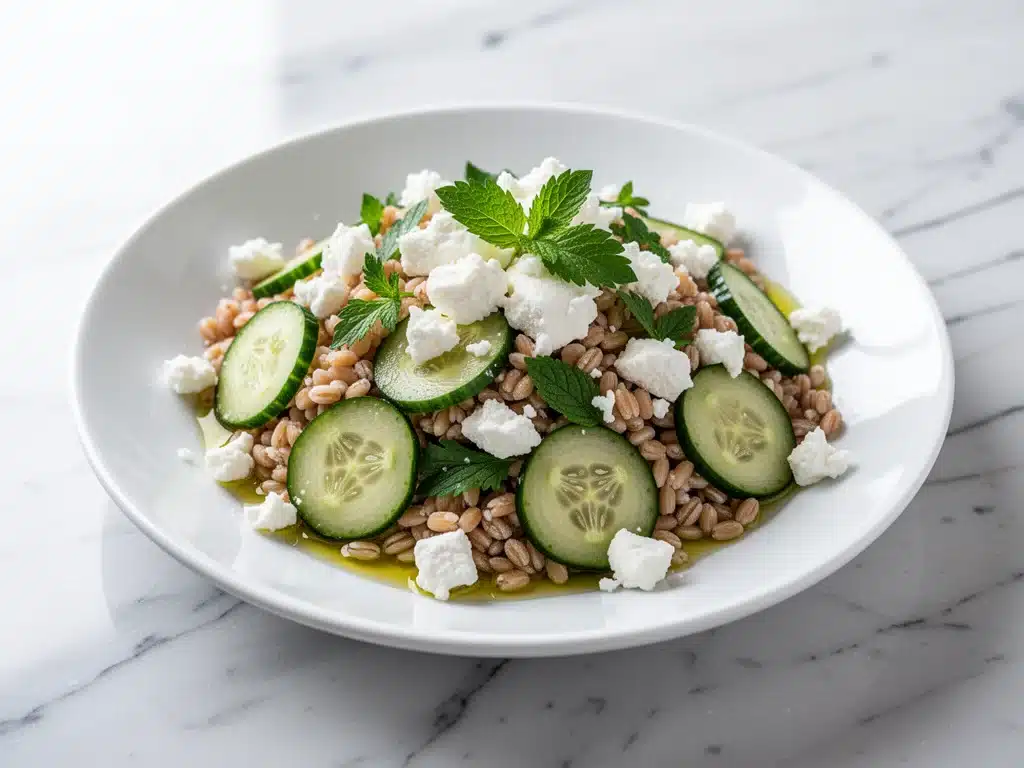
I still remember the Tuesday that changed everything. It was mid-September, the kind of day where the heat hasn’t quite left the house but the kids are already back in school, and I’m standing in my kitchen at 6:30 PM feeling completely defeated. The fridge was mostly empty, the pantry was a graveyard of random spices, and I had exactly zero energy to cook a “real” dinner. I was one step away from ordering takeout for the third time that week—a decision I immediately regretted every single time.
Then I saw a bag of farro sitting next to the rice. I’d bought it on a whim months ago, convinced I was going to become a grain-obsessed foodie who meal-prepped on Sundays. Spoiler alert: I’m not. That bag of farro had been staring at me like a judgmental roommate for months.
Instead of letting it collect dust, I threw it in a pot. While it cooked, I chopped a cucumber, crumbled some feta, and whisked together a dressing with olive oil, lemon, and enough oregano to satisfy my Mediterranean cravings. I tossed it all together, added some cherry tomatoes I’d been hiding in the crisper drawer, and let it cool. Ten minutes later, I was eating a bowl of cold, crunchy, tangy salad that tasted nothing like the sad desk lunches I’d been surviving on.
It was fresh. It was fast. And best of all, it didn’t require me to stand over a hot stove.
That accidental dinner turned into a ritual. Now, whenever I’m too tired to cook but too stubborn to order out, I make this Mediterranean Farro Salad with Cucumber and Feta. It’s the ultimate busy weeknight hack. It comes together in about 15 minutes of active time (once the farro is pre-cooked), it tastes better the next day, and it’s the kind of dish that makes people ask for the recipe before they’ve even finished their first bite.
I’ve tested this salad in every season. In summer, it’s light and refreshing. In winter, I warm the farro slightly and add roasted sweet potatoes. But the core recipe? It’s stayed the same. Because sometimes, the best dinner isn’t the one that looks fancy on Instagram. It’s the one that actually gets on the table.
Why You’ll Love This Recipe
There are about ten reasons I keep making this salad, but if you’re looking for the big wins, here they are. This isn’t just another side dish; it’s a full meal solution that doesn’t require a degree in culinary arts.
It’s Actually Fast — Seriously, if you buy pre-cooked farro or use a pressure cooker, this is a 15-minute meal. I’m talking start-to-finish fast. I’ve made this after picking up the kids from soccer practice when I was running on fumes. It doesn’t get easier than this.
Zero Stress Cooking — There’s no sautéing, no roasting at high heat, no timing multiple components. You cook the grain, you chop the veggies, you whisk the dressing. That’s it. No standing over a hot skillet waiting for garlic to not burn. This is low-effort, high-reward cooking.
It Tastes Better Tomorrow — I don’t know if it’s magic or chemistry, but this salad always improves overnight. The farro absorbs the lemony dressing, the feta mellows out, and everything melds together. I deliberately make double batches on Sunday so I have lunch sorted for three days straight.
It’s Packed with Protein and Fiber — Farro is a nutty, chewy ancient grain that’s way more filling than white rice or quinoa. Paired with feta cheese and plenty of veggies, this keeps you full until dinner. No 3 PM sugar crash here.
Versatile as Hell — Running out of cucumbers? Use bell peppers. No feta? Try goat cheese or even chopped nuts. I’ve made this with roasted chickpeas, fresh basil, dried cranberries, and even leftover rotisserie chicken. It’s a blank canvas that works with whatever you have.
Budget-Friendly — You don’t need expensive ingredients. Farro is cheap, seasonal veggies are affordable, and feta goes a long way because it’s salty and flavorful. This feeds a family of four for a fraction of the cost of a restaurant salad.
This is my go-to when I need dinner to just work. No complicated techniques, no weird ingredients, just reliable, delicious food that makes everyone happy. And honestly? It feels like a treat, even though it’s basically just grains and veggies.
Ingredients You’ll Need
Here’s the best part: you probably have most of this already. This isn’t a recipe that requires a trip to three different specialty stores. It’s built on pantry staples and fresh basics.
For the Farro Base
Farro (2 cups / 400g dry) — This is the star. I use pearled farro because it cooks faster (about 20-25 minutes). Whole grain farro is nuttier but takes 40+ minutes, so if you’re in a rush, stick with pearled. It has a lovely chew that holds up to dressing without getting mushy.
Water or Low-Sodium Broth (4 cups / 960ml) — You can cook the farro in water, but I swear by vegetable broth. It adds a subtle savory depth that makes the plain grain taste way more interesting. Just make sure it’s low-sodium so you can control the salt later.
Salt (1 teaspoon) — For seasoning the cooking water. Don’t skip this. Plain farro tastes like cardboard.
For the Crunch and Freshness
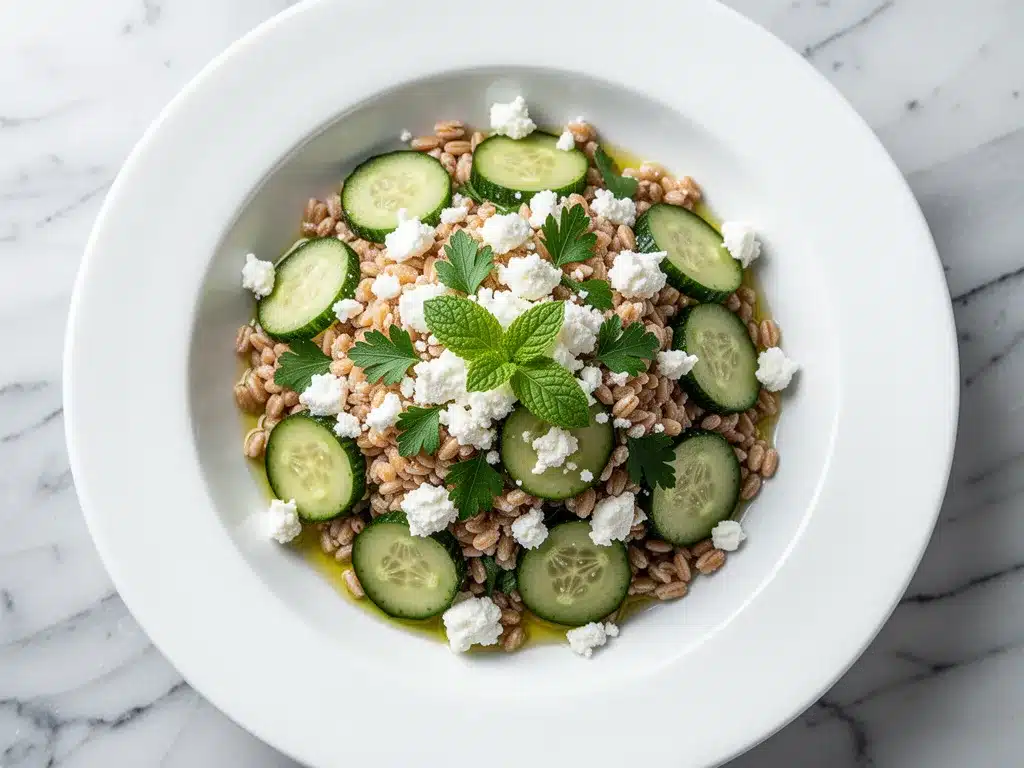
Cucumber (1 large English cucumber / about 300g) — English cucumbers are best because they have fewer seeds and thinner skins. You don’t even need to peel them. Dice them into small, bite-sized pieces. If you only have regular cucumbers, peel them first to avoid bitterness.
Cherry Tomatoes (1 pint / 200g) — Halved or quartered, depending on size. I use whatever color I have—red, yellow, or mixed. They add bursts of sweetness that balance the salty feta. If you’re out of season, good-quality grape tomatoes work too.
Red Onion (1 small / about 50g) — Thinly sliced or diced. If raw onion is too sharp for you, soak the slices in cold water for 10 minutes before adding. It tones down the bite. I love the crunch, but you can swap it for green onions if you prefer a milder flavor.
Kalamata Olives (½ cup / 75g, pitted) — These add that authentic Mediterranean saltiness. Chopped roughly. If you’re not a fan of olives, you can skip them, but they really tie the flavor profile together. I rarely skip them.
For the Creamy, Tangy Finish
Feta Cheese (1 cup / 150g, crumbled) — The salty, creamy counterpoint to the veggies. I buy a block and crumble it myself because pre-crumbled feta often has potato starch added and doesn’t crumble as nicely. But honestly? Either works. I’m not that picky.
Fresh Parsley (½ cup, chopped) — Flat-leaf parsley is best. It adds a fresh, grassy note that brightens up the whole dish. Dried parsley just doesn’t cut it here. Fresh is non-negotiable for me.
For the Lemon-Oregano Dressing
Extra Virgin Olive Oil (¼ cup / 60ml) — Use a good quality one. This is one of the few flavors you really taste, so don’t use the cheap stuff. It should taste fruity and peppery.
Fresh Lemon Juice (3-4 tablespoons / 45-60ml) — About 2 lemons. Fresh squeezed is key. Bottled lemon juice has a weird metallic taste that ruins the brightness. Squeeze it yourself—it takes 30 seconds.
Dried Oregano (1 teaspoon) — Mediterranean oregano is stronger than Mexican oregano, so check the label. If you only have Mexican, use half the amount. It’s the backbone of the flavor profile.
Honey (1 teaspoon) — Just a touch to balance the acidity of the lemon. You don’t want it sweet, just rounded out. Skip it if you’re avoiding sugar, but I recommend it.
Garlic (1 clove, minced) — Fresh only. I know some people hate raw garlic, but in this dressing, it’s subtle. If you’re sensitive, omit it or use garlic powder (½ teaspoon).
Black Pepper (½ teaspoon) — Freshly cracked. Lots of it.
Equipment Needed
You don’t need fancy equipment for this. Here’s what I actually use.
Medium Saucepan with Lid — I use a 3-quart pot. It needs to hold the farro and water comfortably. Any pot with a tight-fitting lid works. I don’t need anything fancy.
Large Mixing Bowl — Something big enough to toss everything together. I use a 6-quart bowl so I have room to mix without splashing. Glass or ceramic works well.
Small Jar or Bowl — For whisking the dressing. I love using a small mason jar because I can just shake it. No whisking required. Super easy.
Sharp Knife and Cutting Board — For chopping veggies. A dull knife makes chopping cucumbers a nightmare. Keep it sharp.
Colander — For draining the farro. Or just tilt the pot carefully—I do this when I’m being lazy, but a colander is safer.
Measuring Cups and Spoons — Standard stuff. Dollar store versions work fine.
Optional but nice:
– Microplane — For zesting the lemon. Adds extra aroma.
– Salad Tongs — Makes tossing easier than a spoon.
How to Make It: Step-by-Step
Alright, let’s make this! I’m walking you through exactly how I do it, including the little tricks I’ve picked up. This process is simple, but timing matters a bit.
Step 1: Cook the Farro (20-25 minutes)
Start by rinsing the farro under cold water. This removes any dust or debris. In your saucepan, combine the farro, water or broth, and salt. Bring it to a boil over high heat. Once it’s boiling, reduce the heat to low, cover with the lid, and simmer for 20-25 minutes. Check the package for exact timing, but you want the farro to be tender with a slight chew. If it’s still hard, add a splash more water and cook for 5 more minutes. Once done, drain any excess water and spread the farro on a baking sheet or large plate to cool. You can speed this up by putting it in the fridge for 10 minutes, but it doesn’t need to be ice cold—just cool enough to handle.
Step 2: Prep the Veggies (5 minutes)
While the farro cools, chop everything up. Dice the cucumber into small cubes. Halve the cherry tomatoes. Thinly slice the red onion. Chop the olives. Mince the garlic. Chop the parsley. Try to keep the pieces roughly the same size so every bite has a bit of everything. If you’re using a food processor, be careful not to puree the veggies—pulse just until chopped.
Step 3: Make the Dressing (2 minutes)
In a small jar, combine the olive oil, lemon juice, honey, minced garlic, dried oregano, and black pepper. Screw the lid on tight and shake vigorously for 15-20 seconds. The dressing should look emulsified and slightly creamy. Taste it. Does it need more salt? More lemon? Adjust to your liking. This is your flavor base, so get it right.
Step 4: Toss It All Together (3 minutes)
In your large mixing bowl, add the cooled farro, chopped veggies, olives, and crumbled feta. Pour the dressing over everything. Use tongs or a large spoon to toss gently but thoroughly. You want every grain of farro and every piece of veggie coated. Add a pinch more salt and pepper if needed. The salad should look glossy and vibrant.
Step 5: Let It Rest (Optional but Recommended)
If you have time, let the salad sit in the fridge for 15-30 minutes before serving. This allows the farro to absorb the dressing and the flavors to meld. It’s not strictly necessary, but it makes a noticeable difference. The farro acts like a sponge, soaking up that lemony goodness.
Total Time: About 30 minutes (20 minutes active cooking, 10 minutes cooling/chopping). If you use pre-cooked farro, this drops to 15 minutes.
Expert Tips & Tricks
Here’s everything I’ve learned from making this dozens of times. These tips will save you from my mistakes.
Don’t Overcook the Farro
Farro should be chewy, not mushy. If you overcook it, it turns into a sad, sticky mess. Undercook it slightly—it will continue to absorb liquid from the dressing as it sits. I usually take mine off the heat 2 minutes before the package says it’s done.
Cool the Farro Properly
If you toss hot farro with fresh veggies and feta, the feta will melt into a weird clump, and the tomatoes will get soggy. Spread the farro out on a flat surface to cool quickly. I put it in the fridge for 10 minutes to speed things up. Patience pays off.
Use Good Olive Oil
This is one of the few places where cheap olive oil will show. Since the dressing is simple, the oil is a main flavor. Use something you’d eat on bread. It should have a fruity, peppery finish.
Crumb the Feta Yourself
Pre-crumbled feta often has anti-caking agents that make it dry and dusty. Buy a block and crumble it with your fingers. It’s creamier, saltier, and tastes fresher. Plus, it’s satisfying to do.
Adjust the Salt
Feta and olives are already salty. Taste the salad before adding extra salt. You might not need any. I usually add a pinch of black pepper and a squeeze of lemon instead.
Make-Ahead Strategy
This salad keeps well in the fridge for up to 4 days. In fact, it tastes better on day two. The farro absorbs more dressing, becoming creamier. Store it in an airtight container. If it looks dry when you take it out, add a splash of lemon juice or olive oil and toss it again.
Pro Trick: Toast the Farro
Before adding water, toast the dry farro in the pot for 2-3 minutes until it smells nutty. This adds a deeper flavor to the final dish. I do this whenever I have an extra minute.
Variations & Substitutions
Once you’ve nailed the basic version, here’s how you can mix it up. I’ve tried all of these.
Protein-Packed
Add 1 can of drained and rinsed chickpeas or white beans. Or shred in some leftover rotisserie chicken. This turns it into a heartier main course. I love adding chickpeas for extra fiber.
Summer Berry Version
Swap the cucumbers for halved strawberries or peaches. Add some fresh mint instead of parsley. It’s sweet, savory, and perfect for warm nights. Sounds weird, but trust me.
Roasted Veggie Twist
Add roasted red peppers, zucchini, or eggplant. Roast them at 400°F for 20 minutes, let them cool, and toss them in. Adds a smoky, warm element. Great for fall.
Nutty Crunch
Add ½ cup of toasted pine nuts, walnuts, or almonds. They add great texture and healthy fats. I love pine nuts, but they’re pricey. Walnuts are a good budget alternative.
Dietary Modifications:
– Gluten-Free: Swap farro for quinoa or buckwheat. Quinoa is the closest substitute in terms of texture.
– Dairy-Free: Skip the feta or use a vegan feta alternative. Nutritional yeast can add a cheesy flavor.
– Vegan: Use vegetable broth, skip the feta, add chickpeas for protein. Use maple syrup instead of honey.
Serving & Storage
How to Serve:
I usually serve this straight from the bowl at the dinner table—it looks rustic and stays cool. But here are other ways I’ve enjoyed it:
Side Dishes:
– Grilled chicken or fish (lemon-herb marinade works great)
– Garlic bread or pita wedges
– Simple mixed greens with vinaigrette
– Hummus and crudites
Toppings Bar:
When I have guests, I put out: extra feta, red pepper flakes, fresh lemon wedges, toasted pine nuts. Everyone customizes their bowl.
Storage Instructions:
Store in an airtight container in the fridge for up to 4 days. The farro will absorb the dressing, so it might look drier on day 3 or 4. Just add a splash of olive oil or lemon juice and toss before serving. It won’t freeze well because the veggies get soggy. Make it fresh or store in the fridge.
Nutrition Information
I’m not a nutritionist, but here’s the breakdown if you’re tracking.
Per Serving (based on 6 servings):
– Calories: 280
– Protein: 8g
– Carbs: 35g
– Fiber: 5g
– Sugar: 4g
– Fat: 12g
– Saturated Fat: 4g
– Cholesterol: 15mg
– Sodium: 320mg
– Calcium: 120mg
What’s Good:
– High in fiber from farro and veggies
– Good source of healthy fats from olive oil
– Contains calcium from feta
– Packed with vitamins from fresh produce
What to Know:
– Moderate in calories
– Contains dairy and gluten
– Sodium can vary based on feta and olives used
My Take:
Look, this is a healthy, balanced meal. It’s not diet food, but it’s way better than takeout. When I want to make it lighter, I reduce the feta and add more veggies. But usually? I just eat a reasonable portion and enjoy it. It’s nutrient-dense and satisfying.
Final Thoughts
So that’s my go-to Mediterranean Farro Salad! I’ve probably talked your ear off at this point, but when you make a recipe this often, you have a lot to say about it.
This has saved weeknight dinners more times than I can count. It’s my answer to “what’s for dinner” when I’m tired, don’t want takeout, and still want something that tastes really good. My kids are happy, my husband’s happy, and I’m happy because I’m not stressed about cooking.
Make it yours! Try different add-ins, swap in your favorite vegetables, adjust the garlic (though more is always better in my opinion). The best recipes are the ones you adapt to your family’s tastes.
If you make this, drop a comment and let me know what you think! I love hearing how recipes turn out in your kitchen. And if something doesn’t work, tell me that too—I’m here to help troubleshoot.
Happy cooking! And I hope your kitchen smells half as good as mine does right now.
Frequently Asked Questions
Can I use quinoa instead of farro?
Yes! Quinoa is a great substitute. It cooks faster (about 15 minutes) and has a similar texture, though it’s less chewy. Use the same ratio of water to quinoa. Just be careful not to overcook it, as quinoa can get mushy easily.
Why did my farro turn out mushy?
Farro absorbs a lot of water. If you used too much liquid or cooked it too long, it’ll be soft. Next time, use less water (1.5 cups water to 1 cup farro) and check it 5 minutes before the package time. It should be tender but still have a bite.
Can I make this ahead for a party?
Absolutely. This salad actually benefits from being made ahead. You can make it 24 hours in advance. Just store it in the fridge and bring it to room temperature before serving. The flavors will be even better. I do this for potlucks all the time.
Is farro healthy?
Yes! Farro is an ancient grain packed with fiber, protein, and vitamins like B vitamins and iron. It has a lower glycemic index than white rice, so it won’t spike your blood sugar as much. It’s a great whole grain choice.
Can I freeze this salad?
I don’t recommend it. The cucumbers and tomatoes will get watery and soggy when thawed. The farro might also change texture. It’s best eaten fresh or stored in the fridge for a few days.
What kind of feta is best?
I prefer sheep’s milk feta for its tangy, salty flavor. Cow’s milk feta is milder and creamier. Either works, but sheep’s milk has that authentic Mediterranean kick I love. Just be mindful of the salt content.
Can I add meat to this?
Of course! Grilled chicken, shrimp, or even leftover steak work great. I like to season the meat with lemon and oregano to match the salad. It turns it into a full, hearty meal.
Pin This Recipe!
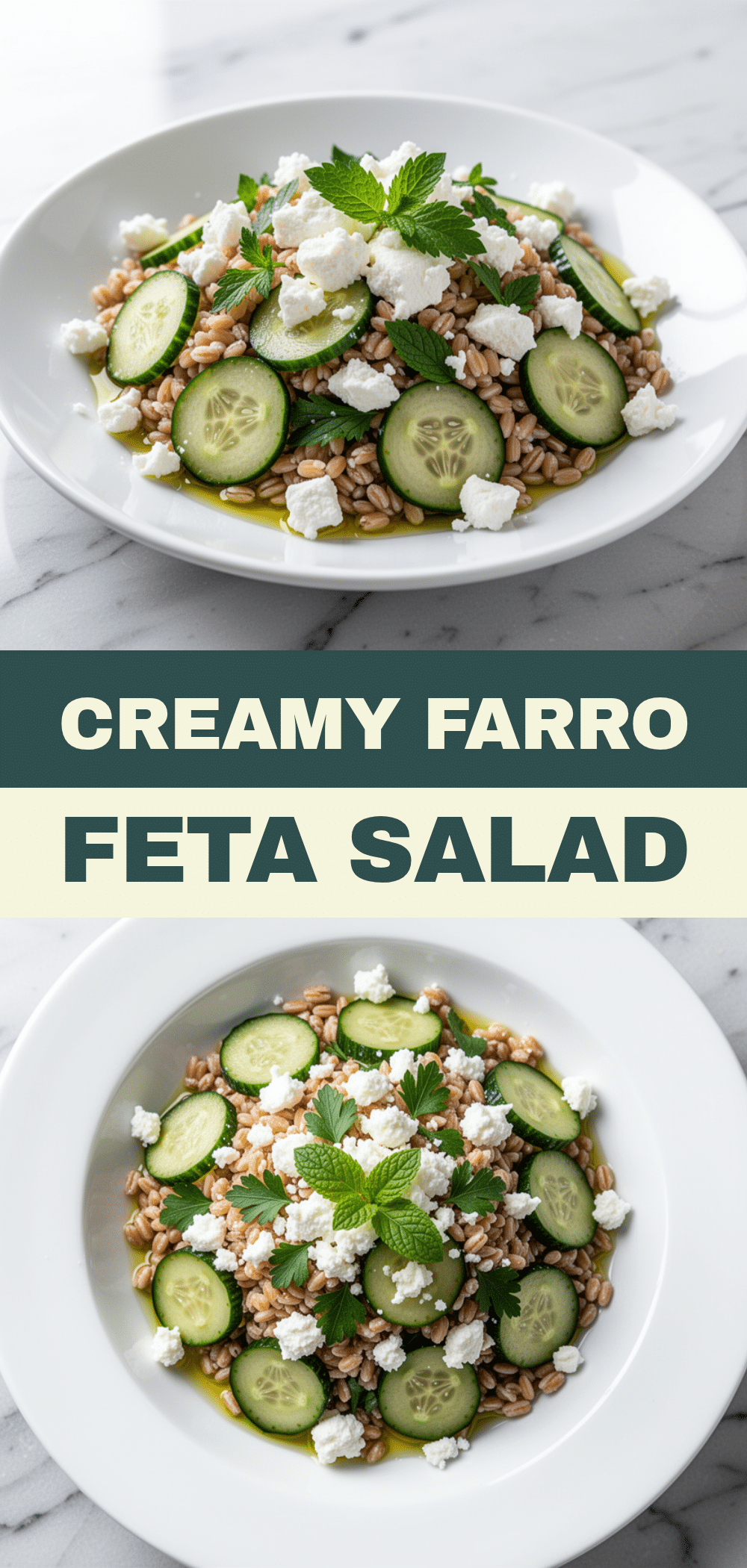
Mediterranean Farro Salad with Cucumber and Feta
- Total Time: 35 minutes
- Yield: 6 servings 1x
Description
A quick, healthy, and versatile weeknight salad featuring chewy farro, crisp cucumbers, tangy feta, and a bright lemon-oregano dressing. It comes together in about 15-30 minutes and tastes even better the next day.
Ingredients
- 2 cups pearled farro (400g)
- 4 cups water or low-sodium vegetable broth (960ml)
- 1 teaspoon salt (for cooking water)
- 1 large English cucumber (300g), diced
- 1 pint cherry tomatoes (200g), halved or quartered
- 1 small red onion (50g), thinly sliced
- ½ cup Kalamata olives (75g), pitted and chopped
- 1 cup feta cheese (150g), crumbled
- ½ cup fresh flat-leaf parsley, chopped
- ¼ cup extra virgin olive oil (60ml)
- 3–4 tablespoons fresh lemon juice (45-60ml)
- 1 teaspoon dried oregano
- 1 teaspoon honey
- 1 clove garlic, minced
- ½ teaspoon black pepper, freshly cracked
Instructions
- Rinse the farro under cold water. In a medium saucepan, combine farro, water or broth, and salt. Bring to a boil over high heat.
- Reduce heat to low, cover with a lid, and simmer for 20-25 minutes until tender with a slight chew. Drain any excess water.
- Spread the cooked farro on a baking sheet or large plate to cool completely. For faster cooling, refrigerate for 10 minutes.
- While farro cools, prepare the vegetables: dice the cucumber, halve the tomatoes, slice the red onion, chop the olives, mince the garlic, and chop the parsley.
- In a small jar or bowl, whisk together olive oil, lemon juice, honey, minced garlic, dried oregano, and black pepper until emulsified.
- In a large mixing bowl, combine the cooled farro, prepared vegetables, olives, and crumbled feta.
- Pour the dressing over the salad and toss gently but thoroughly to coat all ingredients.
- Taste and adjust seasoning with additional salt or pepper if needed.
- Let the salad rest in the refrigerator for 15-30 minutes before serving to allow flavors to meld (optional but recommended).
Notes
For best results, use pearled farro as it cooks faster than whole grain farro. Cool the farro completely before adding feta to prevent melting. The salad improves overnight as the farro absorbs the dressing. If using pre-cooked farro, total time reduces to 15 minutes. For a gluten-free version, substitute farro with quinoa or buckwheat. For dairy-free/vegan, omit feta and use maple syrup instead of honey.
- Prep Time: 15 minutes
- Cook Time: 20 minutes
- Category: Main Course
- Cuisine: Mediterranean
Nutrition
- Serving Size: 1 bowl
- Calories: 280
- Sugar: 4
- Sodium: 320
- Fat: 12
- Saturated Fat: 4
- Carbohydrates: 35
- Fiber: 5
- Protein: 8
Keywords: farro salad, mediterranean recipe, healthy weeknight dinner, vegetarian main course, meal prep, gluten-free option, high fiber salad, cucumber feta salad