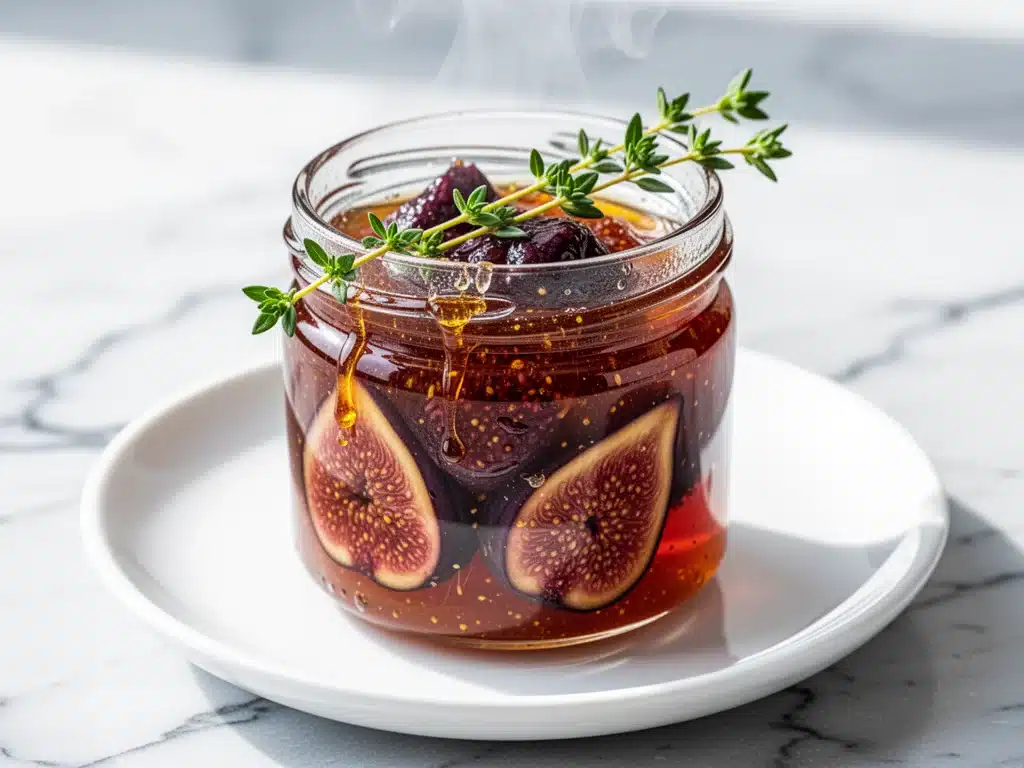
I was standing in my kitchen at 7 AM on a rainy Sunday, staring at a bag of dried figs I’d bought three months ago and completely forgotten about. I wasn’t hungry. I wasn’t even particularly interested in breakfast. But I had this sudden, irrational craving for something sweet that felt complicated, like I’d spent hours making it, but I only had twenty minutes to do it.
That’s when I found the recipe. Or rather, I improvised it. I had honey, fresh thyme from the windowsill, and those sad-looking dried figs. I threw them in a small saucepan, turned the heat to medium, and waited. What came out of that pot wasn’t just jam. It was this deep, jewel-toned, fragrant spread that tasted like autumn in a jar. It was smoky from the thyme, floral from the honey, and rich enough to make my husband stop mid-yawn and ask what kind of magic I’d pulled off.
That was the moment I fell in love with small-batch fig jam. I’ve made it maybe a dozen times since then, tweaking the ratios until it was perfect. And here’s the truth: you don’t need a fancy kitchen, a candy thermometer, or even a garden full of fresh figs. You just need three main ingredients and a willingness to let things simmer.
This small-batch fig jam is my go-to for weekends when I want to feel like a gourmet chef without actually cooking dinner. It’s the best 3-ingredient recipe I’ve ever tried, and I say that as someone who has burned sugar, overcooked fruit, and ruined perfectly good toast in the past. This method? It’s foolproof. It’s fast. And it tastes incredible.
Why You’ll Love This Small-Batch Fig and Honey Jam
There are about ten reasons I keep making this jam, but let’s be honest—you probably have one main reason you’re here: you want something that tastes fancy but is stupid simple. Here’s why this recipe has earned a permanent spot in my routine.
- It’s Actually Small-Batch — Seriously, we’re talking about a single jar. Maybe two if you’re really generous. This means you don’t need to process it in a boiling water bath for 20 minutes to preserve it for winter. You can eat it fresh, right away. It’s perfect for when you just want a taste of something special without committing to a month’s supply.
- Three Ingredients (Yes, Three) — Dried figs, honey, and fresh thyme. That’s it. I know, it sounds too simple to work, but the magic is in the reduction. The figs break down, the honey caramelizes slightly, and the thyme infuses everything with this herbal, savory note that cuts through the sweetness. It’s balance in a jar.
- Lightning Fast — From start to finish, this takes about 20 minutes. The active time is maybe 5 minutes (chopping figs, stirring). The rest is just waiting for the bubbles. I’ve made this while getting my kids ready for school, and it was done before the bus arrived.
- Impress Everyone — I’ve served this to my food-snobby sister, my neighbor who claims he “doesn’t eat sweet jams,” and my dad (who thinks jam is just sugary sludge). Everyone was shocked that it wasn’t store-bought. The thyme is the secret weapon. It makes it feel sophisticated, like something you’d buy at a farmers market for $8.
- Uses Pantry Staples — You probably have dried figs and honey. If you don’t have fresh thyme, dried works in a pinch, but fresh is worth the trip to the store. This is a recipe you can throw together on a whim because the ingredients don’t spoil quickly.
This small-batch fig jam has completely changed my morning routine. It’s no longer just toast with butter. It’s toast with this deep, complex, aromatic spread that makes me feel like I’m having brunch at a Parisian café. And the best part? It costs less than $5 to make.
Ingredients You’ll Need
Here’s the best part: you probably have most of this already. This small-batch fig jam relies on high-quality ingredients because there’s nowhere to hide. If your figs taste cardboard-y, your jam will too. So let’s talk about what to look for.
The Base
Dried figs (1 cup / 150g) — This is your star. I prefer Mission figs or Calimyrna figs. They’re plump, sweet, and have a nice chew. Look for ones that are dark and slightly sticky to the touch. Avoid ones that are rock-hard or have white crystals on the outside (that’s sugar bloom, and it means they’re old). I buy mine in bulk from the health food store, but a small box from the grocery store works fine too.
Raw honey (½ cup / 170g) — Use a good quality honey. I like wildflower or clover honey because they have distinct flavors. Manuka is too strong and expensive for this. Avoid “honey blends” or corn syrup mixes. You want pure honey. The flavor of the honey will shine through, so don’t skimp on quality.
Fresh thyme (2 tablespoons, leaves only) — This is the non-negotiable. Fresh thyme adds this piney, earthy aroma that makes the jam feel adult. I grow mine in a pot on the windowsill. If you don’t have fresh, you can use 1 teaspoon of dried thyme, but it won’t be as vibrant. Strip the leaves off the stems—don’t use the woody stems in the jam.
The Liquid (Optional but Recommended)
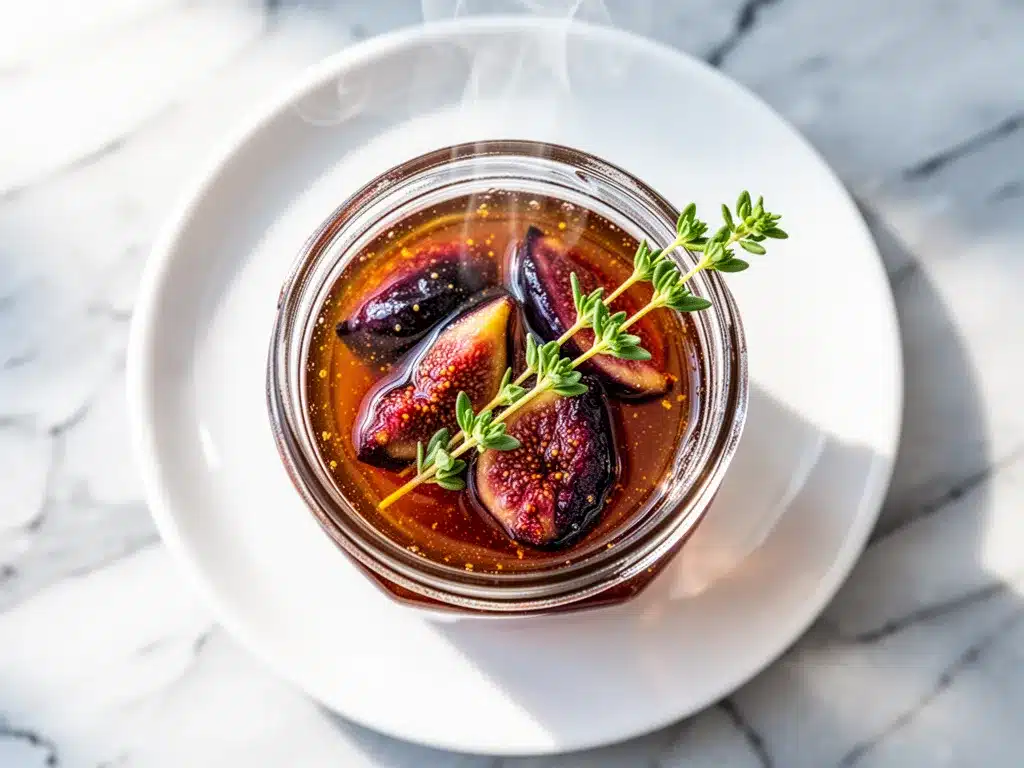
Water (¼ cup / 60ml) — This helps the figs rehydrate and break down. If your figs are very soft, you might not need much. If they’re tough, you’ll need the full amount. I usually start with ¼ cup and add more if it looks too thick.
Lemon juice (1 teaspoon) — I know I said three ingredients, but a splash of lemon juice brightens the flavor and helps the pectin set slightly. It’s optional, but I highly recommend it. It cuts the heaviness of the honey.
What About Pectin?
You don’t need any added pectin. Figs have natural pectin, and because we’re reducing this small batch, it thickens beautifully on its own. If you want a firmer set, just simmer a minute longer. If you like it looser (more like a syrup), stop earlier. This is your jam, so adjust to your preference.
Equipment Needed
You don’t need fancy equipment for this. Here’s what I actually use, and what you can swap if you don’t have it.
- Small saucepan — I use a 2-quart saucepan. It needs to be heavy-bottomed so the honey doesn’t burn. My oldest, slightly dented saucepan works perfectly. Non-stick is fine too, but stainless steel is better for reducing.
- Wooden spoon — For stirring. Silicone works too. Don’t use metal if you’re using a non-stick pan.
- Knife and cutting board — To chop the figs. A sharp knife makes this easier. Dull knives slip, and slipping on sticky figs is not fun.
- Measuring cups and spoons — Standard stuff. I use glass measuring cups for the honey because they’re easier to clean.
- Mortar and pestle (optional) — If you want a smoother jam, you can crush the figs with a mortar and pestle. But a fork works fine for mashing.
- Fork — For mashing the figs if you don’t have a mortar and pestle. I usually just mash them against the side of the pan with the back of my spoon.
- Jar — A small glass jar, like a 8oz mason jar or a repurposed pasta sauce jar. Clean and dry.
That’s it. No blender, no food processor, no canning pots. Just a saucepan and a spoon. If you can boil water, you can make this.
How to Make It: Step-by-Step
Alright, let’s make this small-batch fig jam! I’m walking you through exactly how I do it, including the little tricks I’ve picked up so you don’t end up with a sticky mess.
Step 1: Prep the Figs (3 minutes)
Rinse the dried figs under cool water to remove any dust. Pat them dry with a paper towel. If the figs are very large, cut them in half. If they’re small, you can leave them whole, but chopping them helps them break down faster. I usually chop them into quarters. This increases the surface area and helps them release their juices.
Step 2: Combine Ingredients (1 minute)
Put the chopped figs, honey, water, and thyme leaves into the saucepan. If you’re using lemon juice, add it now. Give it a quick stir to coat the figs in the honey. The honey will be thick, so don’t worry if it doesn’t mix perfectly yet. It will melt down.
Step 3: Simmer and Break Down (10-12 minutes)
Turn the heat to medium. Let the mixture come to a gentle simmer. You’ll see bubbles forming around the edges. Stir occasionally, scraping the bottom of the pan to prevent the honey from burning. The figs will start to soften and swell. This is where the magic happens. The kitchen will start to smell incredible—sweet, floral, and herbal.
Step 4: Mash and Reduce (5-7 minutes)
Once the figs are soft (about 10 minutes in), use the back of your wooden spoon to mash them against the side of the pan. You don’t need a smooth puree; I like a bit of texture. Leave some chunks. Continue to simmer and stir. The mixture will thicken as the water evaporates. Watch it closely here. If it starts to look too dry or sticky, add a splash more water. If it’s still runny, keep going.
Step 5: The Test (1 minute)
How do you know it’s done? Do the “plate test.” Put a small plate in the freezer. When you think the jam is ready, take the plate out and drop a spoonful of jam onto it. Let it cool for 30 seconds. Push it with your finger. If it wrinkles and doesn’t run back together, it’s done. If it’s still liquid, cook for another 2-3 minutes.
Step 6: Cool and Jar (5 minutes)
Remove the saucepan from the heat. Pick out the thyme stems if you used whole sprigs (if you used leaves, leave them in). Let the jam cool for 5 minutes. It will thicken further as it cools. Spoon it into your clean jar. Seal it tight.
Total Time: About 20 minutes (5 minutes active, 15 minutes simmering)
Troubleshooting:
- Too thick? Add a teaspoon of warm water and stir. It will loosen up.
- Too thin? Return to heat and simmer for another 2-3 minutes. Remember, it thickens as it cools.
- Burnt taste? If the bottom burned, don’t try to save it. Scrape off the top layer, but if it tastes bitter, start over. Medium heat is key.
Expert Tips & Tricks
Here’s everything I’ve learned from making this jam dozens of times. These tips will save you from my mistakes.
- Don’t Rush the Simmer — I know you want to eat it now, but low and slow is better. High heat will burn the honey and make the jam taste caramelized in a bad way. Medium-low is the sweet spot.
- Use Good Honey — I can’t stress this enough. If you use cheap, processed honey, your jam will taste like sugar water. Use raw, unfiltered honey. The flavor difference is night and day.
- Fresh Thyme Only — Dried thyme is dusty and lacks aroma. Fresh thyme infuses the jam with this bright, piney scent. If you don’t have fresh, use a teaspoon of dried, but know that it won’t be the same.
- Texture is Personal — Some people like smooth jam, some like chunky. I like chunky. Mash it to your preference. If you want it smoother, use an immersion blender for 10 seconds.
- Storage is Simple — Because this is a small batch and high in sugar/honey, it keeps well in the fridge for up to 2 weeks. No canning required. Just keep it in a sealed jar.
Variations & Substitutions
Once you’ve nailed the basic version, here’s how you can mix it up. I’ve tried all of these, and they’re all good.
- Fig and Balsamic Jam — Swap the thyme for 1 tablespoon of balsamic vinegar. This adds a tangy, sweet complexity that’s amazing on cheese boards.
- Fig and Orange Jam — Add the zest of one orange and 2 tablespoons of orange juice. This makes it brighter and more citrusy. Great with yogurt.
- Fig and Rosemary Jam — Swap thyme for fresh rosemary. Use only 1 teaspoon, as rosemary is stronger. This is very savory and pairs well with roasted meats.
- Fig and Maple Jam — Swap honey for pure maple syrup. This gives it a deeper, woodsy flavor. I like this version in the fall.
- Smooth Fig Jam — After simmering, blend the jam with an immersion blender or in a food processor until smooth. Strain through a sieve if you want it completely smooth.
Dietary Modifications
Vegan: Use maple syrup instead of honey. Everything else is naturally vegan.
Gluten-Free: This is naturally gluten-free. Just check your honey and figs for cross-contamination if you’re sensitive.
Sugar-Free: This is hard to do with figs, as they’re naturally high in sugar. You can use a sugar substitute, but the texture and flavor will be different. I don’t recommend it for this recipe.
Serving & Storage
I usually serve this straight from the jar at the breakfast table—it looks rustic and stays warm. But here are other ways I’ve enjoyed it:
How to Serve
- Toast — Thick-cut sourdough toast with butter and this jam. It’s my favorite way to eat it.
- Yogurt — Swirled into plain Greek yogurt with some granola. Adds sweetness and depth.
- Cheese Board — Served with brie, gouda, or cheddar. The thyme pairs beautifully with soft cheeses.
- Glaze — Brushed over roasted chicken or pork before the end of cooking. The sugars caramelize and create a sticky glaze.
- Ice Cream — Drizzled over vanilla ice cream. It’s like a fancy dessert topping.
Storage Instructions
Refrigerator: Store in an airtight glass jar for up to 2 weeks. The jam will thicken in the fridge—totally normal. Just let it sit at room temperature for 10 minutes before serving if you want it spreadable.
Freezing: Yes, you can freeze this jam. Spoon it into freezer-safe containers or ice cube trays. It will keep for up to 3 months. Thaw in the fridge overnight. The texture might be slightly looser, but it’s still delicious.
Shelf Life: Because this is a small batch and high in sugar, it preserves itself. But because it’s fresh and not canned, treat it like any fresh condiment. If it smells off or has mold, throw it out.
Nutrition Information
I’m not a nutritionist, but here’s the breakdown if you’re tracking. This is per 1 tablespoon serving.
- Calories: 45
- Protein: 0g
- Carbs: 11g
- Fiber: 1g
- Sugar: 10g
- Fat: 0g
- Sodium: 1mg
What’s Good: Low in fat, no cholesterol, and has some fiber from the figs. It’s a natural sweetener compared to refined sugar jams.
What to Know: High in natural sugars. If you’re watching your sugar intake, enjoy in moderation. But honestly, it’s a better alternative to processed jams.
Final Thoughts
So that’s my go-to small-batch fig jam! I’ve probably talked your ear off at this point, but when you make a recipe this often, you have a lot to say about it.
This has saved my mornings more times than I can count. It’s my answer to “what’s for breakfast” when I’m tired, don’t want to cook eggs, and still want something that tastes really good. My kids are happy, my husband’s happy, and I’m happy because I’m not stressed about cooking.
Make it yours! Try different herbs, swap the honey for maple syrup, or add some citrus zest. The best recipes are the ones you adapt to your family’s tastes.
If you make this, drop a comment and let me know what you think! I love hearing how recipes turn out in your kitchen. And if something doesn’t work, tell me that too—I’m here to help troubleshoot.
Happy cooking! And I hope your kitchen smells half as good as mine does right now.
Frequently Asked Questions
Can I use fresh figs instead of dried?
You can, but the ratio changes. Fresh figs have more water, so you’ll need more of them. I’d use 3 cups of fresh figs instead of 1 cup of dried. You’ll also need to simmer them longer to reduce the water content. But honestly, dried figs are easier and more consistent for this small-batch method. I stick with dried.
Why did my jam turn out too runny?
Usually means you didn’t simmer it long enough. The jam thickens as it cools, so don’t judge it while it’s hot. Do the plate test to be sure. If it’s still runny after cooling, return it to the heat and simmer for another 5 minutes.
Can I make this ahead for a gift?
Absolutely! This makes a great gift. Just make sure the jars are clean and dry. Label them with the date and ingredients. They’ll keep for 2 weeks in the fridge. You can also freeze them for longer storage. I’ve given these as housewarming gifts, and everyone loves them.
Can I use dried thyme?
You can, but fresh is better. If you use dried, use 1 teaspoon instead of 2 tablespoons of fresh. Add it at the beginning so it has time to infuse. But I strongly recommend fresh thyme if you can get it. The flavor difference is significant.
How do I reheat leftover jam?
You usually don’t need to reheat it. Just let it sit at room temperature for 10 minutes to soften. If it’s too thick to spread, microwave it for 10 seconds. Don’t overheat it, or it will become runny.
Can I double this recipe?
Yes, but you’ll need a larger saucepan. Double the ingredients and cook in a 4-quart pot. The cooking time will be slightly longer because there’s more volume. Stir more frequently to prevent burning.
Is this jam safe to eat without canning?
Yes, because it’s a small batch and high in sugar and acid (from the lemon juice and figs), it’s safe to eat fresh in the fridge. It’s not shelf-stable at room temperature, so always store it in the fridge. If you want to can it, you can, but it’s not necessary for this quantity.
Pin This Recipe!
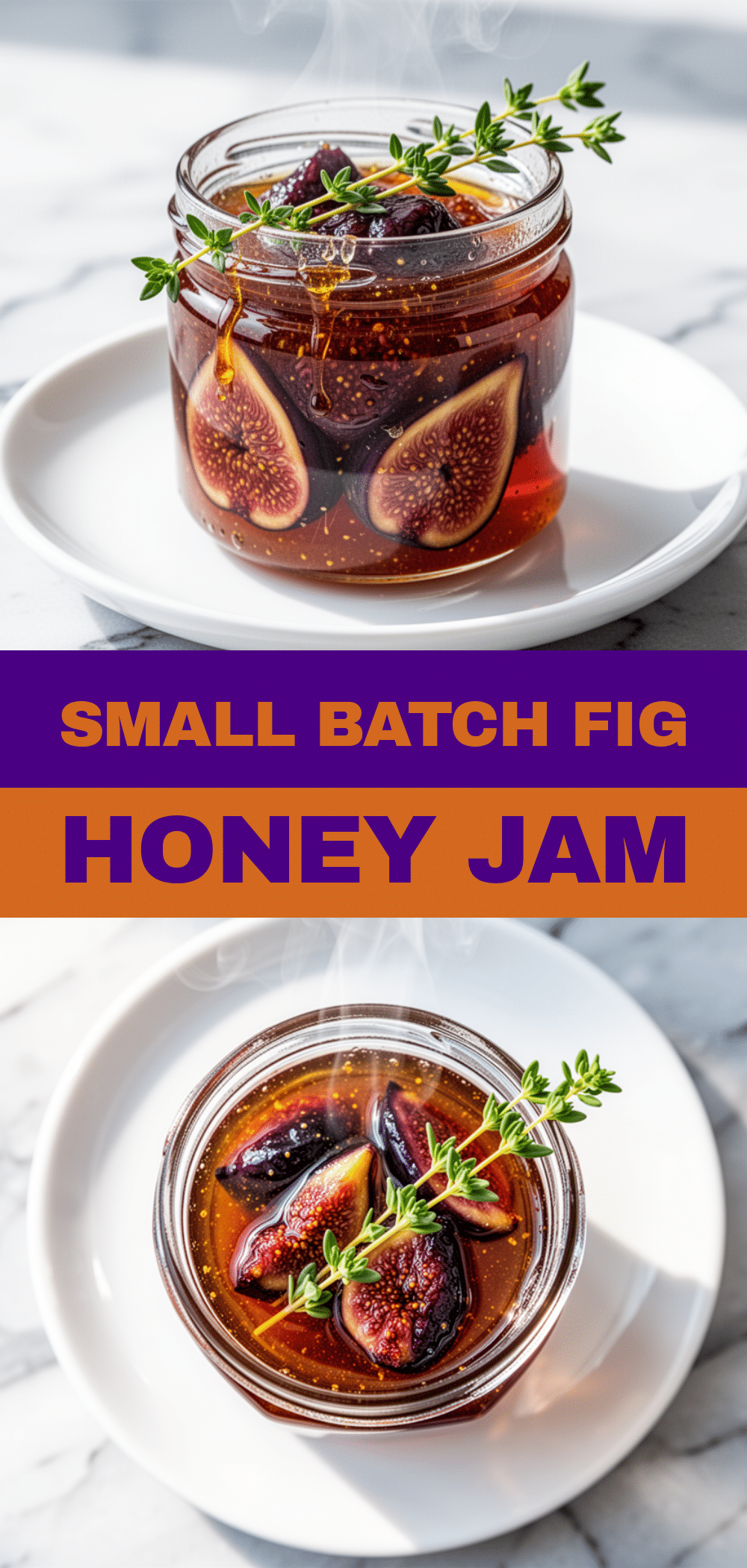
Small-Batch Fig Jam: Best 3-Ingredient Recipe
- Total Time: 20 minutes
- Yield: 1 jar (approx. 8 oz) 1x
Description
A foolproof, lightning-fast small-batch fig jam made with just dried figs, honey, and fresh thyme. This gourmet-style spread is ready in 20 minutes and requires no fancy equipment or canning.
Ingredients
- 1 cup (150g) dried figs (Mission or Calimyrna)
- ½ cup (170g) raw honey
- 2 tablespoons fresh thyme leaves
- ¼ cup (60ml) water
- 1 teaspoon lemon juice (optional)
Instructions
- Rinse dried figs under cool water and pat dry. Chop into quarters to increase surface area.
- Combine chopped figs, honey, water, thyme leaves, and lemon juice (if using) in a small, heavy-bottomed saucepan.
- Turn heat to medium and bring to a gentle simmer. Stir occasionally to prevent burning.
- Once figs are soft (about 10 minutes), mash them against the side of the pan with the back of a spoon, leaving some texture.
- Continue to simmer and stir for 5-7 minutes until the mixture thickens. Perform the ‘plate test’ to check consistency: place a spoonful on a chilled plate; if it wrinkles when pushed, it is done.
- Remove from heat and let cool for 5 minutes. Remove thyme stems if whole sprigs were used.
- Spoon the warm jam into a clean glass jar and seal tightly.
Notes
Use high-quality raw honey for the best flavor. Fresh thyme is preferred over dried for a brighter aroma. The jam will thicken further as it cools. If too thick, add a teaspoon of warm water. If too thin, simmer for another 2-3 minutes. Store in the refrigerator for up to 2 weeks.
- Prep Time: 5 minutes
- Cook Time: 15 minutes
- Category: Condiments
- Cuisine: American
Nutrition
- Serving Size: 1 tablespoon
- Calories: 45
- Sugar: 10
- Sodium: 1
- Carbohydrates: 11
- Fiber: 1
Keywords: fig jam, small batch jam, 3 ingredient recipe, honey jam, thyme jam, quick breakfast, vegan option, gluten-free