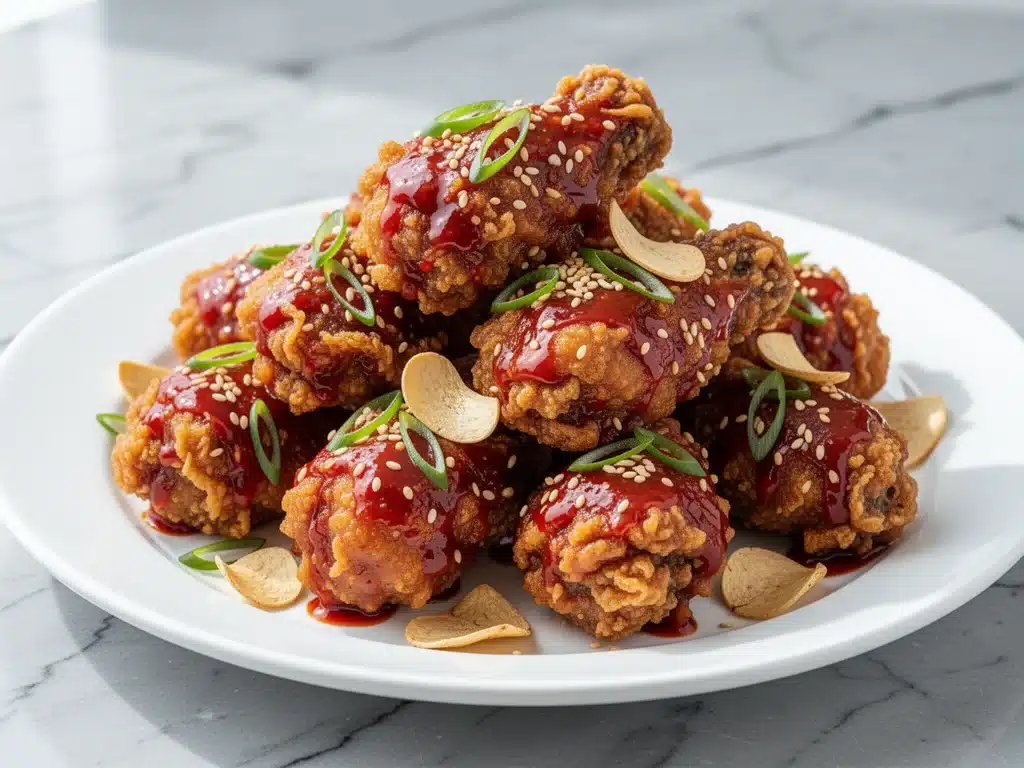
There was a specific Tuesday in November when I ordered takeout Korean fried chicken for the third time that month. I was tired, it was raining, and I just wanted something hot and crispy without the effort of cooking. But when the cardboard box arrived, the chicken wasn’t crispy. It was soggy. The sauce had soaked through the breading, turning it into a chewy, warm mess. I stared at the chicken, fork hovering, and realized I had two choices: eat it anyway or accept defeat. I ate it. It was terrible.
That night, after the last bite was gone (and immediately regretted), I went online looking for a solution. Every recipe I found seemed to require a deep fryer I didn’t own, or ingredients I couldn’t pronounce. But then I found a technique used by street vendors in Seoul: a double-fry method with a cornstarch slurry. I tried it the next weekend. I didn’t just make chicken; I made the best chicken I’d ever eaten. It shattered when you bit into it. It stayed crispy for hours. It was better than takeout, and it cost a fraction of the price.
This Extra-Crunchy Korean Fried Chicken recipe has become my ultimate comfort food. It’s not just dinner; it’s an event. I make it for game days, for lazy Sunday brunches, and sometimes just because I need a hug in food form. The secret isn’t fancy equipment—it’s patience and the right starch. Once you master this double-fry technique, you’ll never order takeout again. And if you’re looking for other ways to satisfy your craving for crispy, savory goodness, you might also enjoy these crunchy baked coconut shrimp or this garlic parmesan charcuterie board for a full spread.
Why You’ll Love This Extra-Crunchy Korean Fried Chicken
I’ve tested this recipe more times than I care to admit (around 15 times, give or take), and the results are consistently mind-blowing. Here’s why this homemade version beats any restaurant delivery:
- The Crunch Factor — Seriously, it’s like eating glass (but delicious). The double-fry method creates a lattice-like structure of bubbles in the crust that holds the sauce without getting soggy. I’ve left leftovers on the counter for four hours, and they were still crisp. Try that with takeout.
- Perfectly Balanced Sauce — Most restaurant sauces are too sweet or too spicy. This glaze hits the sweet-spicy-savory trifecta perfectly. It’s sticky, glossy, and clings to every nook and cranny of the chicken.
- Double-Fry Magic — Yes, you fry it twice. It sounds intense, but it takes less than 10 minutes total active time for the second fry. The first fry cooks the chicken through; the second fry creates that shatteringly crisp exterior. It’s non-negotiable if you want restaurant-quality results.
- Customizable Heat — Want it mild? Use half the gochujang. Want it fiery? Double it. You control the spice level, which is crucial for feeding picky kids alongside heat-loving adults.
- Feeds a Crowd Cheaply — Chicken thighs are affordable, and this recipe stretches easily. I can feed six hungry adults with three pounds of chicken and a few dollars worth of sauce ingredients. It’s way cheaper than delivery fees and tips.
This is my go-to when I want to impress friends or just treat myself to something special. It feels fancy, but it’s actually very forgiving. Even if your chicken isn’t perfectly uniform in size, the sauce and crunch will save the day.
Ingredients You’ll Need
Here’s the best part: you probably have most of the sauce ingredients already. The chicken prep requires a few specific items, but nothing exotic. I’m particular about the starch here—regular flour just doesn’t give you that crunch.
For the Chicken
Chicken thighs (3 pounds / 1.4 kg) — Boneless, skinless thighs are non-negotiable. They stay juicy. Breast meat dries out too fast under high heat. If you must use breasts, cut them into small, uniform chunks.
Coarse salt (1 tablespoon) — For seasoning the chicken before frying. Kosher salt works too.
Black pepper (1 teaspoon) — Freshly cracked is best.
Garlic (4 cloves, minced) — Fresh garlic only. Jarred garlic has a weird metallic taste that clashes with the sweet sauce.
Ginger (1 tablespoon, grated) — Fresh ginger adds brightness. Pre-grated ginger in a tube is okay in a pinch, but fresh is better.
Cornstarch (1 cup / 120g) — This is the secret weapon. It creates a light, airy crust. Do not substitute with potato starch or flour unless you want a heavy, doughy coating.
Vegetable oil (for frying) — You need about 4-5 cups. Canola or peanut oil work well because of their high smoke points.
For the Glaze
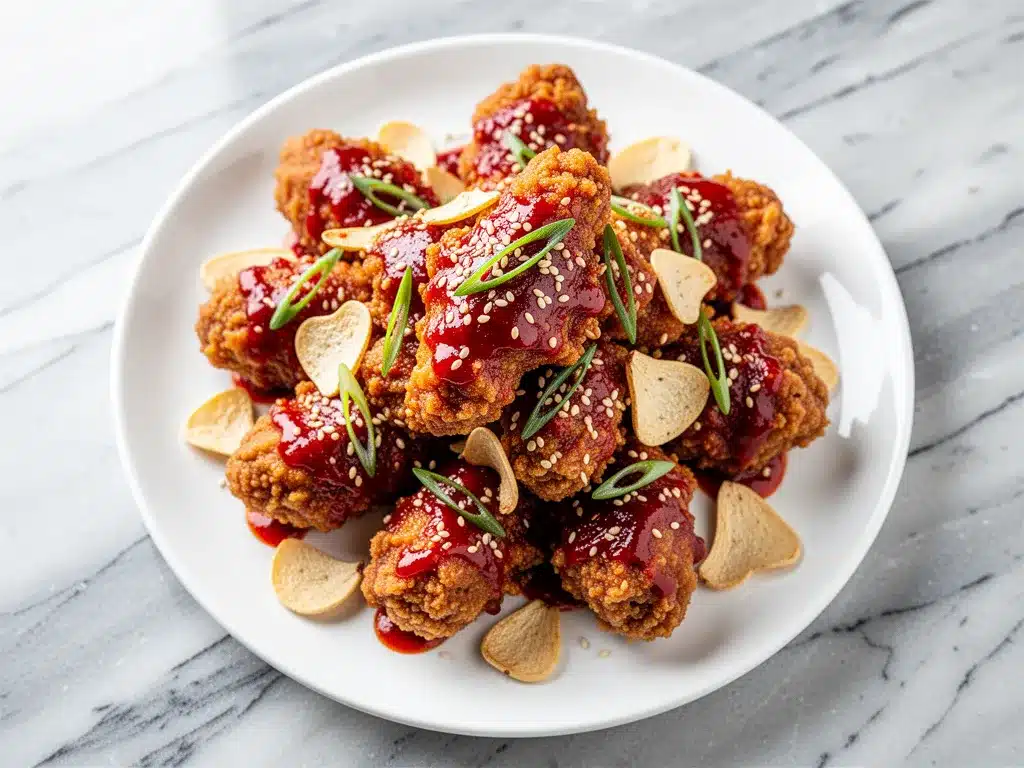
Gochujang (2 tablespoons) — Korean fermented chili paste. You can find this in the Asian section of most supermarkets or online. It’s spicy and savory. If you can’t find it, mix 1 tbsp chili flakes with 1 tbsp miso paste, but the flavor will be different.
Soy sauce (3 tablespoons) — Use low-sodium if you’re watching salt. Regular works too, but taste before adding extra salt later.
Apple juice (1/4 cup / 60ml) — This adds natural sweetness and helps balance the heat. Pear juice works too. Some people use honey, but apple juice gives a more authentic, subtle sweetness.
Rice vinegar (2 tablespoons) — Adds necessary acidity to cut through the richness. Do not substitute with white vinegar—it’s too harsh.
Maple syrup (1 tablespoon) — Just a touch to deepen the color and add a caramel note. Honey works, but maple is smoother.
Sesame oil (1 teaspoon) — Toasted sesame oil. It adds that nutty aroma that defines Korean fried chicken.
Sesame seeds (1 tablespoon) — For garnish. Toast them in a dry pan for 2 minutes for extra flavor.
Green onions (2 stalks, sliced) — For garnish. Adds freshness and color.
Equipment Needed
You don’t need fancy equipment for this. Here’s what I actually use.
Large heavy-bottomed pot or Dutch oven — I use a 6-quart Dutch oven. It holds heat well, which is crucial for maintaining oil temperature. A regular pot works too, but you’ll need to monitor the heat more closely.
Candy thermometer — This is your best friend. You need to know when the oil is at 325°F and 375°F. Guessing leads to greasy or burnt chicken. I use an instant-read thermometer for quick checks.
Wire rack and baking sheet — To drain the chicken after frying. Never drain on paper towels—it traps steam and makes the bottom soggy. The rack allows air circulation.
Large mixing bowls — One for the chicken, one for the cornstarch.
Slotted spoon or spider strainer — For removing chicken from the oil. A regular spoon works if you’re careful.
Small saucepan — For simmering the glaze.
How to Make It: Step-by-Step
Alright, let’s make this! I’m walking you through exactly how I do it, including the little tricks I’ve picked up over the years.
Step 1: Prep the Chicken (10 minutes)
Pat the chicken thighs completely dry with paper towels. Moisture is the enemy of crispiness. If the chicken is wet, the cornstarch won’t stick, and the oil will splatter. Cut the thighs into uniform 1-inch pieces. Season them generously with salt and pepper. In a separate bowl, mix the minced garlic, grated ginger, and cornstarch. Toss the chicken pieces in the cornstarch mixture until evenly coated. Shake off any excess. The coating should look dry and powdery.
Step 2: First Fry (10-12 minutes)
Heat the oil in your pot to 325°F (160°C). This is a lower temperature to cook the chicken through without burning the coating. Fry the chicken in batches—don’t overcrowd the pot! If you crowd it, the oil temperature drops, and the chicken absorbs oil instead of crisping. Fry for 6-8 minutes until cooked through and lightly golden. Remove with a slotted spoon and place on the wire rack. Let them rest for at least 5 minutes. This step is crucial for the double-fry method.
Step 3: Second Fry (3-4 minutes)
Turn up the heat to bring the oil to 375°F (190°C). Fry the chicken again, in batches, for 2-3 minutes. Watch closely! The chicken should turn a deep golden brown and feel very firm when you touch it. This second fry creates that shatteringly crisp crust. Remove and drain on the wire rack.
Step 4: Make the Glaze (5 minutes)
While the chicken rests, combine the gochujang, soy sauce, apple juice, rice vinegar, maple syrup, and sesame oil in a small saucepan over medium heat. Whisk until smooth. Simmer for 2-3 minutes until the sauce thickens slightly and becomes glossy. It should coat the back of a spoon. Remove from heat.
Step 5: Toss and Serve
Place the hot, crispy chicken in a large bowl. Pour the glaze over the chicken. Toss quickly and gently until every piece is coated. The heat from the chicken will help the sauce adhere. Garnish with toasted sesame seeds and sliced green onions. Serve immediately while the crunch is at its peak.
Expert Tips & Tricks
Here’s everything I’ve learned from making this dozens of times. These tips will save you from my mistakes.
Oil Temperature is Everything — If the oil is too cool, the chicken will be greasy. If it’s too hot, the outside burns before the inside cooks. Use a thermometer. If you don’t have one, drop a small piece of cornstarch into the oil. If it sizzles gently, it’s ready. If it smokes immediately, it’s too hot.
Don’t Skip the Rest — Letting the chicken rest after the first fry allows the crust to set. If you fry immediately, the coating might fall off. This 5-minute pause is worth it.
Batch Frying — Always fry in small batches. Overcrowding the pot lowers the oil temperature drastically. It’s tempting to cook it all at once, but it results in uneven cooking and soggy chicken.
Glaze Consistency — The glaze should be thick enough to coat the chicken but thin enough to pour. If it’s too thick, add a splash of water. If it’s too thin, simmer it longer. You want it to drip off slowly.
Serve Immediately — Korean fried chicken is best eaten right after tossing. If you let it sit in the sauce for too long, it will lose some crunch. If you need to hold it, keep the chicken on the wire rack in a 200°F oven and toss it with sauce right before serving.
Variations & Substitutions
Once you’ve nailed the basic version, here’s how you can mix it up. I’ve tried all of these.
Mild Version — Reduce gochujang to 1 tablespoon and add an extra tablespoon of apple juice. Great for kids or spice-averse adults.
Spicy Version — Double the gochujang and add 1 teaspoon of gochugaru (Korean chili flakes) to the glaze. Warning: This is hot.
Honey Garlic — Swap gochujang for 2 tablespoons of honey and 1 tablespoon of minced garlic. Add a splash of soy sauce. It’s sweeter and less spicy.
Soy Garlic — Skip the gochujang entirely. Use 4 tablespoons soy sauce, 2 tablespoons honey, 1 tablespoon rice vinegar, and 1 tablespoon minced garlic. Simple and savory.
Bone-In Chicken — You can use bone-in drumsticks or wings. Increase frying time by 2-3 minutes for the first fry and 1-2 minutes for the second fry. The crunch is even better with bones.
Gluten-Free — This recipe is naturally gluten-free if you use gluten-free soy sauce (tamari) and ensure your gochujang is certified GF (some brands contain wheat).
Serving & Storage
I usually serve this straight from the bowl at the dinner table—it looks rustic and stays warm. But here are other ways I’ve enjoyed it:
Side Dishes — Steamed white rice is the classic pairing. It soaks up the extra sauce. I also love this with creamy southern coleslaw for a cool, crunchy contrast. Roasted broccoli or a simple cucumber salad works too.
Wine Pairing — Not a wine expert, but a crisp Pinot Grigio or a slightly sweet Riesling cuts through the richness and heat beautifully.
Storage — Store leftovers in an airtight container in the fridge for up to 3 days. The chicken will lose some crunch, but it’s still good.
Reheating — The best way to reheat is in an air fryer or oven at 400°F for 5-7 minutes. This restores the crunch. Microwave it, and it will be soggy. If you must microwave, do it in short bursts and let it rest.
Freezing — You can freeze the fried chicken (without sauce) for up to 1 month. Thaw in the fridge and reheat in the oven. Do not freeze the sauced chicken—it will get mushy.
Nutrition Information
I’m not a nutritionist, but here’s the breakdown if you’re tracking.
Per Serving (based on 6 servings):
- Calories: 450
- Protein: 28g
- Carbs: 35g
- Fiber: 1g
- Sugar: 18g
- Fat: 22g
- Saturated Fat: 4g
- Cholesterol: 110mg
- Sodium: 680mg
What’s Good: High protein from the chicken. The sauce adds some sugar, but it’s balanced by the savory elements.
What to Know: Higher in calories and fat due to frying. Sodium is moderate to high depending on soy sauce usage. Use low-sodium soy sauce to reduce salt.
My Take: Look, this is fried chicken. It’s not a diet food. But it’s way better than takeout, costs less, and I know exactly what’s in it. When I want to make it lighter, I bake it instead of frying (though the crunch isn’t the same). But usually? I just enjoy a reasonable portion and love it.
Final Thoughts
So that’s my go-to Extra-Crunchy Korean Fried Chicken! I’ve probably talked your ear off at this point, but when you make a recipe this often, you have a lot to say about it. This has saved weeknight dinners more times than I can count. It’s my answer to “what’s for dinner” when I’m tired, don’t want takeout, and still want something that tastes really good. My kids are happy, my husband’s happy, and I’m happy because I’m not stressed about cooking.
Make it yours! Try different add-ins, swap in your favorite vegetables, adjust the garlic (though more is always better in my opinion). The best recipes are the ones you adapt to your family’s tastes. If you make this, drop a comment and let me know what you think! I love hearing how recipes turn out in your kitchen. And if something doesn’t work, tell me that too—I’m here to help troubleshoot.
Happy cooking! And I hope your kitchen smells half as good as mine does right now.
Frequently Asked Questions
Can I bake this instead of frying?
You can, but the crunch won’t be the same. To bake, toss the coated chicken in a little oil and bake at 400°F on a wire rack for 25-30 minutes, flipping halfway. For extra crunch, broil for the last 2 minutes. It’s healthier, but it lacks that authentic shatteringly crisp texture.
Why did my chicken get soggy?
Usually, this happens because the oil temperature dropped too low during frying, or you didn’t use the wire rack to drain. Always fry in batches to maintain heat, and always use a rack. Also, don’t toss the chicken in the sauce too early—wait until it’s hot and crispy.
Can I use chicken breast?
Yes, but be careful. Breast meat cooks faster and can dry out. Cut it into smaller, uniform pieces and reduce the frying time by 1-2 minutes for each fry. Thighs are juicier and more forgiving, so I recommend them.
Where can I buy gochujang?
Most large supermarkets have an Asian aisle where you’ll find gochujang. Look for brands like Sempio or CJ. If you can’t find it, check online retailers. It keeps in the fridge for months.
How spicy is this recipe?
It’s medium-hot. Gochujang is spicy, but the apple juice and maple syrup balance it out. If you’re sensitive to heat, use half the gochujang. If you love heat, double it and add chili flakes.
Can I make the sauce ahead?
Yes! Make the sauce up to 3 days ahead and store it in the fridge. Reheat it gently before tossing with the chicken. This saves time on busy weeknights.
What’s the best way to reheat leftovers?
An air fryer is best. Heat at 400°F for 3-4 minutes. This restores the crunch. Avoid the microwave, which makes the coating soggy. If you must use the microwave, do it in short bursts and let it rest.
Pin This Recipe!
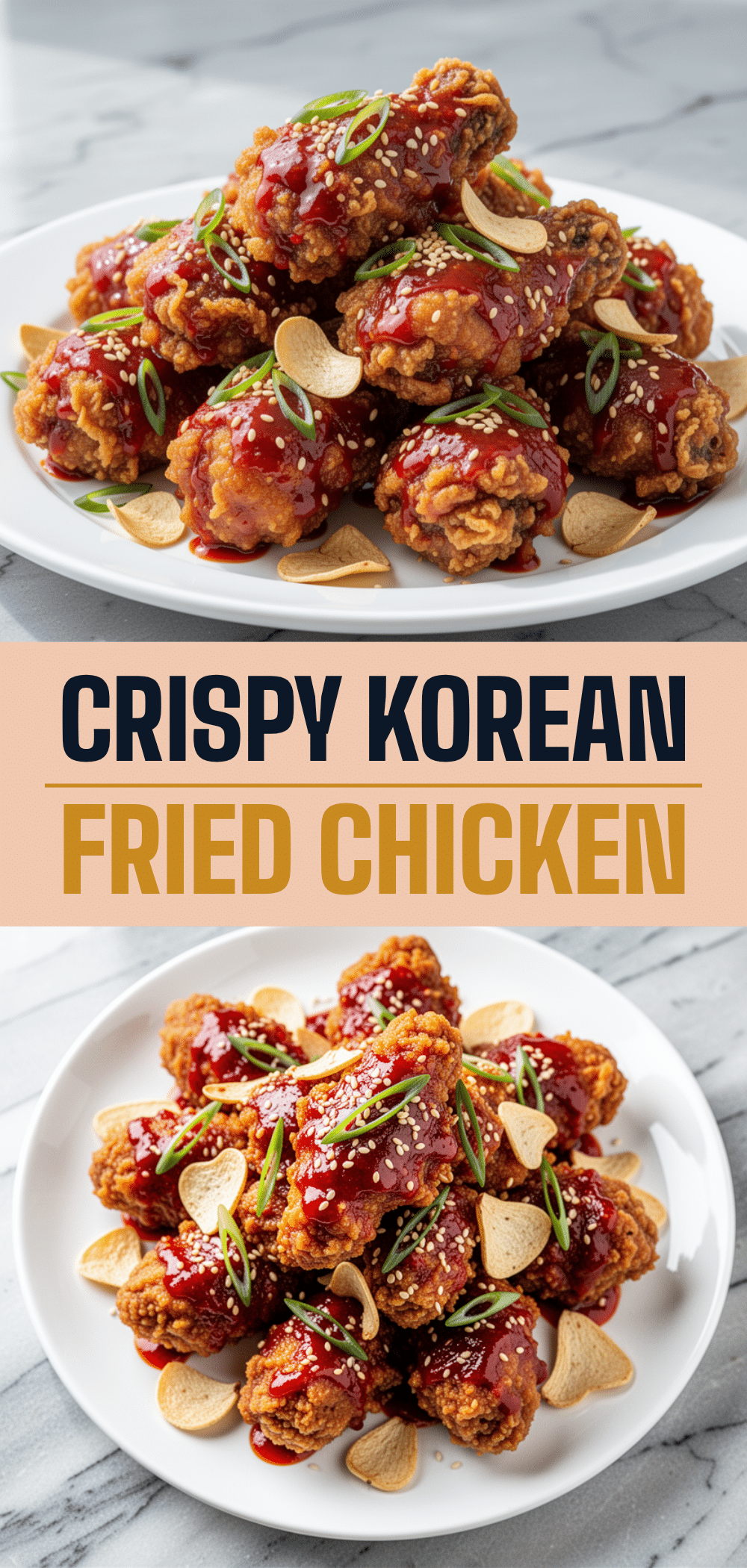
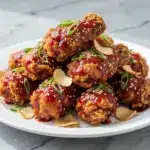
Extra-Crunchy Korean Fried Chicken: Best Homemade Recipe
- Total Time: 30 minutes
- Yield: 6 servings 1x
Description
This homemade Korean fried chicken uses a double-fry method and cornstarch slurry to achieve a shatteringly crisp crust that stays crunchy even after being tossed in a sweet, spicy, and savory glaze.
Ingredients
- 3 pounds boneless, skinless chicken thighs
- 1 tablespoon coarse salt
- 1 teaspoon black pepper
- 4 cloves garlic, minced
- 1 tablespoon ginger, grated
- 1 cup cornstarch
- 4–5 cups vegetable oil (for frying)
- 2 tablespoons gochujang
- 3 tablespoons soy sauce
- 1/4 cup apple juice
- 2 tablespoons rice vinegar
- 1 tablespoon maple syrup
- 1 teaspoon sesame oil
- 1 tablespoon sesame seeds
- 2 stalks green onions, sliced
Instructions
- Pat chicken thighs dry and cut into 1-inch uniform pieces. Season with salt and pepper.
- Mix minced garlic, grated ginger, and cornstarch in a bowl. Toss chicken pieces in the mixture until evenly coated, shaking off excess.
- Heat oil in a large heavy-bottomed pot or Dutch oven to 325°F (160°C).
- Fry chicken in batches for 6-8 minutes until cooked through and lightly golden. Remove and place on a wire rack to rest for at least 5 minutes.
- Increase oil temperature to 375°F (190°C).
- Fry chicken again in batches for 2-3 minutes until deep golden brown and firm. Remove and drain on the wire rack.
- While chicken rests, combine gochujang, soy sauce, apple juice, rice vinegar, maple syrup, and sesame oil in a small saucepan over medium heat.
- Whisk until smooth and simmer for 2-3 minutes until the sauce thickens slightly and becomes glossy.
- Place hot, crispy chicken in a large bowl. Pour glaze over chicken and toss quickly to coat.
- Garnish with toasted sesame seeds and sliced green onions. Serve immediately.
Notes
Ensure oil temperature is maintained by frying in batches. Do not drain chicken on paper towels as this traps steam; use a wire rack instead. For best results, serve immediately after tossing with sauce. Leftovers can be reheated in an air fryer or oven at 400°F to restore crunch.
- Prep Time: 10 minutes
- Cook Time: 20 minutes
- Category: Main Course
- Cuisine: Korean
Nutrition
- Serving Size: Approximately 1/6 of
- Calories: 450
- Sugar: 18
- Sodium: 680
- Fat: 22
- Saturated Fat: 4
- Carbohydrates: 35
- Fiber: 1
- Protein: 28
Keywords: Korean fried chicken, double fry, crispy chicken, homemade fried chicken, gochujang sauce, spicy chicken, comfort food