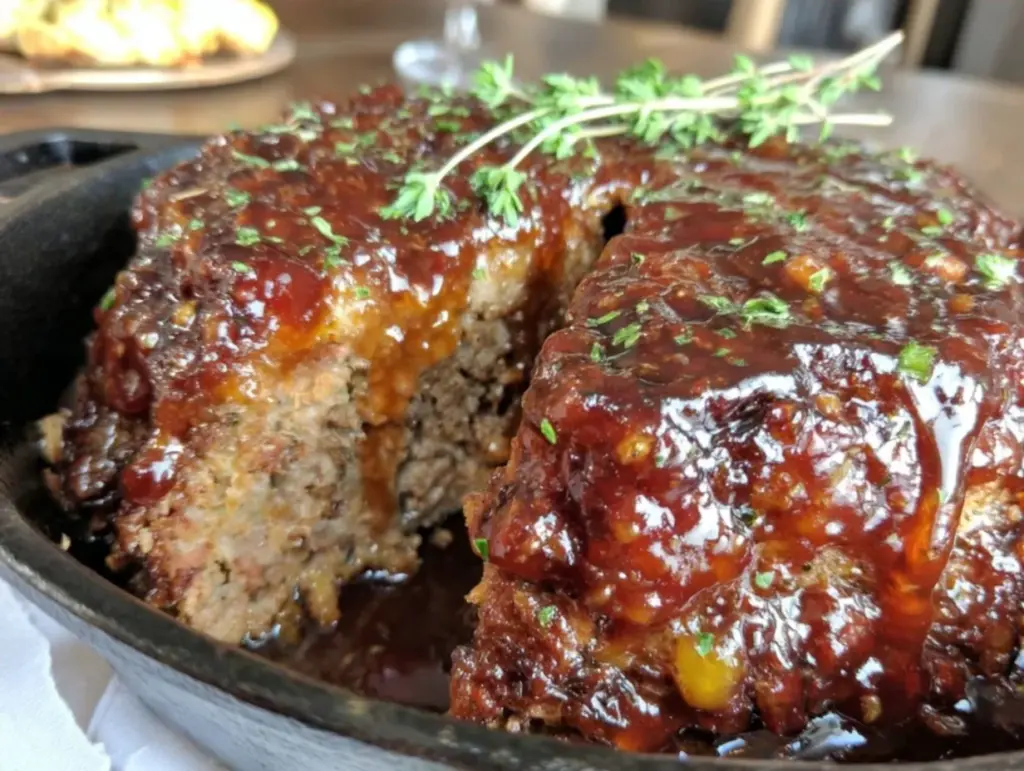
Last Labor Day, I panicked. I had invited twelve people over for dinner, and I was staring at a calendar that said “Sunday” and a brain that was completely empty. I didn’t want to do the usual grilled burgers (too messy, not enough wow factor) and I definitely didn’t want to be stuck at the grill while everyone else was inside laughing and drinking. I wanted something that looked impressive, smelled incredible, and could basically cook itself while I poured drinks and set the table. That’s when I decided to make a meatloaf. But not just any meatloaf. I wanted one that felt special. One that didn’t look like it came from a 1970s cookbook.
I grabbed my oldest cast iron skillet—yes, the one with the handle that’s slightly warped from that time I tried to sear a steak in it—and started experimenting. The goal was simple: a rich, juicy meatloaf with a sticky, sweet-savory brown sugar glaze that would make people stop mid-chew and ask, “Wait, how did you make this?”
The result? It was a disaster at first. Dry. Crumbly. The glaze burned before the center was cooked. But after three failed attempts that week, I finally cracked the code. The secret isn’t just the meat; it’s the pan. Cooking it in a cast iron skillet keeps the edges moist, creates a beautiful crust, and makes the whole thing look rustic and shareable. This Cast Iron Skillet Meatloaf with Brown Sugar Glaze became the star of that dinner party. People were asking for the recipe before the plates were even cleared. Now, it’s my go-to for any time I need to impress without stressing. It’s hearty, it’s comforting, and it smells like heaven from the moment you put it in the oven.
I’ve made this recipe at least a dozen times since that chaotic Sunday. I’ve tweaked the spice blend, adjusted the glaze ratios, and tested different meat mixes. Every time, it comes out tender, flavorful, and absolutely stunning. If you’re looking for a dinner that feels like a hug on a plate, this is it. It’s the kind of meal that brings people together, sitting around a table with warm bread and good conversation. And honestly? It’s easier than you think.
Why You’ll Love This Recipe
There are about ten reasons I keep making this, but here are the big ones. This isn’t your average Tuesday night dinner; it’s a centerpiece.
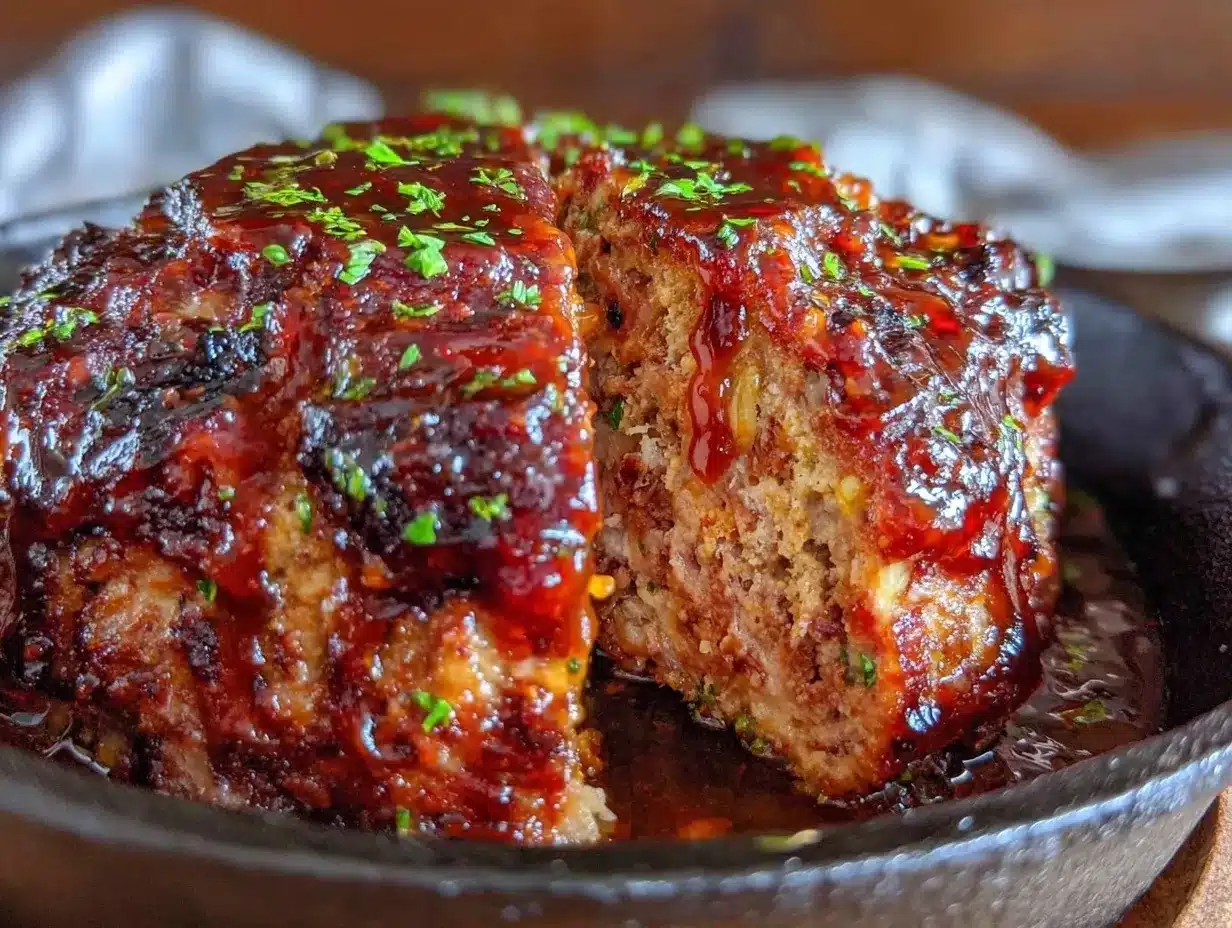
- Looks Like a Showstopper — Seriously, the glaze caramelizes into this gorgeous, sticky mahogany crust that looks like it belongs in a restaurant. I’ve served this to food-snob friends, and they couldn’t believe it was a meatloaf. It looks elegant enough for a dinner party but feels cozy enough for a family Sunday.
- Zero Stress Cooking — Once you mix the meat and put it in the oven, you’re done for an hour. You don’t need to stand over a stove. You don’t need to flip anything. I actually use this time to prepare sides like my spicy chipotle corn on the cob or a simple salad. It’s the perfect low-effort, high-reward main.
- Flavor Bomb — The brown sugar glaze is the star. It’s sweet, tangy, and savory all at once. The cast iron sears the outside, locking in juices, so every slice is moist. I usually add a bit of smoked paprika to the meat mix for depth, but even without it, the glaze does the heavy lifting.
- Perfect for Leftovers — I know, I know, meatloaf leftovers are legendary. But this version? It’s even better the next day. I slice it cold for lunch sandwiches, or reheat it in the skillet for a warm, comforting dinner. It freezes beautifully too, which is a lifesaver for busy weeks.
- Shareable Format — Serving it in the skillet is key. It’s rustic and inviting. People love digging into a big dish together. It feels communal, like a giant pie or a casserole. I’ve noticed it breaks the ice at parties faster than any fancy appetizer.
This recipe has completely changed how I approach dinner parties. It’s reliable, delicious, and makes me look like a genius chef without the hours of prep. It’s my answer to “what’s for dinner?” when I want to treat myself and my guests to something special.
Ingredients You’ll Need
Here’s the best part: you probably have most of this already. I’m particular about three ingredients here, and I’ll tell you exactly why. This isn’t just ground beef and breadcrumbs; it’s a balanced mix of textures and flavors.
For the Meatloaf Base
Ground Beef (2 pounds / 900g) — I use 80/20 fat ratio. Lean meat makes dry meatloaf. You need that fat for flavor and moisture. If you want a slightly lighter version, you can swap half for ground turkey, but beef is classic for a reason.
Ground Pork (1 pound / 450g) — This is my secret weapon. Pork adds a subtle sweetness and keeps the loaf tender. It balances the richness of the beef. If you’re allergic or prefer not to use it, extra beef works, but the pork makes a huge difference in texture.
Yellow Onion (1 large, finely diced / about 200g) — Sweetness and depth. I dice it super fine so you don’t get big chunks in every bite. Sautéing it first removes the raw bite, but I often skip that step for speed and just mix it raw. It cooks through in the oven.
Garlic (4 cloves, minced / about 2 tablespoons) — Fresh only. No jarred garlic in this recipe. It tastes metallic and dulls the flavor. Minced by hand, please.
Eggs (2 large) — The binder. They hold everything together. Room temperature eggs mix better, but cold works fine if you’re in a hurry.
Breadcrumbs (1 cup / 100g) — I use plain dry breadcrumbs. Panko would make it too crispy and airy. You want a soft, tender crumb. If you need gluten-free, use gluten-free breadcrumbs or crushed gluten-free crackers.
Milk (½ cup / 120ml) — Soaks into the breadcrumbs to create a panade, which keeps the meatloaf moist. Whole milk is best, but any milk works.
Worcestershire Sauce (1 tablespoon) — Umami bomb. It adds that deep, savory note that makes you want another slice. Don’t skip it.
Dijon Mustard (1 tablespoon) — Adds a tangy kick that cuts through the richness. It’s subtle but essential.
Dried Parsley (1 teaspoon) — For a fresh, herbal note. Fresh parsley works too, but dried distributes more evenly.
Smoked Paprika (1 teaspoon) — This gives it that subtle smoky flavor that pairs perfectly with the brown sugar glaze. Regular paprika works, but smoked is better.
Salt and Black Pepper (1 teaspoon each) — To taste. Season well; the meat needs enough salt to bring out the flavors.
For the Brown Sugar Glaze
Brown Sugar (½ cup / 100g, packed) — Light or dark brown sugar both work. Dark has a deeper molasses flavor, which I prefer. It caramelizes beautifully in the oven.
Ketchup (½ cup / 120g) — The base of the glaze. I use a good quality ketchup, not the super sweet kind. It adds acidity and body.
Apple Cider Vinegar (1 tablespoon) — Balances the sweetness. It adds a bright tang that prevents the glaze from being cloying. If you don’t have this, white vinegar works in a pinch.
Dijon Mustard (1 teaspoon) — Just a little extra for depth.
Garlic Powder (½ teaspoon) — For a concentrated garlic flavor that stands up to the sugar.
Black Pepper (½ teaspoon) — Freshly cracked is best.
Optional: Hot Sauce (1 teaspoon) — If you like a little kick, a dash of hot sauce or cayenne pepper adds a nice warmth that complements the sweetness. I usually add this for dinner parties where people like a bit of spice.
Equipment Needed
You don’t need fancy equipment for this. Here’s what I actually use.
12-inch Cast Iron Skillet — This is non-negotiable for this recipe. The skillet holds heat evenly and creates that beautiful crust. I use a Lodge skillet that’s seasoned like butter. If you don’t have a 12-inch, a 10-inch works, but the loaf will be taller and might take longer to cook. Make sure your skillet is oven-safe.
Large Mixing Bowl — For combining the meat mixture. A big bowl makes it easier to mix without making a mess.
Small Saucepan or Microwave-Safe Bowl — For heating the glaze. You can also just whisk it in a bowl if you’re in a hurry, but heating it slightly helps the sugar dissolve and spread more evenly.
Measuring Cups and Spoons — Standard stuff. Dollar store versions work fine.
Instant-Read Thermometer — This is the best tool for success. Meatloaf is done when the internal temperature reaches 160°F (71°C). No more guessing or cutting into it to check.
Aluminum Foil — To tent the skillet if the glaze starts to burn too quickly.
Sharp Knife and Cutting Board — For chopping onions and garlic.
Wooden Spoon or Spatula — For mixing the meat and spreading the glaze.
Serving Platter or Direct from Skillet — I prefer serving directly from the skillet for that rustic look. Just let it rest for 10 minutes before slicing so it doesn’t fall apart.
How to Make It: Step-by-Step
Alright, let’s make this! I’m walking you through exactly how I do it, including the little tricks I’ve picked up.
Step 1: Prep Your Oven and Skillet (5 minutes)
Preheat your oven to 375°F (190°C). Make sure your cast iron skillet is clean and dry. If it’s new, season it first. If it’s well-seasoned, you’re good to go. I usually rub the inside of the skillet with a little oil to ensure the meatloaf doesn’t stick, though a well-seasoned pan usually doesn’t need it.
Step 2: Mix the Meatloaf Base (10 minutes)
In a large mixing bowl, combine the ground beef, ground pork, diced onion, minced garlic, eggs, breadcrumbs, milk, Worcestershire sauce, Dijon mustard, dried parsley, smoked paprika, salt, and black pepper. Use your hands to mix everything gently. Don’t overmix! Overmixing makes the meatloaf tough. Just combine until the ingredients are evenly distributed. It should look like a shaggy, moist mixture.
Step 3: Shape the Loaf (5 minutes)
Transfer the meat mixture into the cast iron skillet. Press it down evenly, shaping it into a loaf. Make sure the edges are slightly higher than the center to prevent it from spreading too thin. The loaf should fit comfortably in the skillet with a little room around the edges for the glaze to drip. If the mixture is too wet, add a few more breadcrumbs. If it’s too dry, add a splash more milk.
Step 4: Prepare and Apply the Glaze (5 minutes)
In a small saucepan, combine the brown sugar, ketchup, apple cider vinegar, Dijon mustard, garlic powder, black pepper, and hot sauce (if using). Heat over medium heat, stirring constantly, until the sugar dissolves and the mixture bubbles. This takes about 3-4 minutes. Alternatively, you can microwave it in 30-second intervals, stirring in between. Pour half of the glaze over the top of the meatloaf, spreading it evenly to cover the surface. Reserve the rest for later.
Step 5: Bake the Meatloaf (45-55 minutes)
Place the skillet in the preheated oven. Bake for 45 minutes. After 45 minutes, check the internal temperature with an instant-read thermometer. If it’s not yet 160°F (71°C), continue baking. Every 10 minutes, brush the remaining glaze over the top of the meatloaf. This builds up layers of flavor and creates that sticky, caramelized crust. If the glaze starts to burn, tent the skillet loosely with aluminum foil.
Step 6: Rest and Serve (10 minutes)
Once the meatloaf reaches 160°F (71°C), remove it from the oven. Let it rest in the skillet for 10 minutes before slicing. This is crucial. It allows the juices to redistribute throughout the loaf. If you cut into it immediately, all the juices will run out, and the meatloaf will be dry. After resting, slice it into thick pieces and serve warm.
Total Time: About 1 hour 15 minutes (20 minutes active, 55 minutes baking)
Expert Tips & Tricks
Here’s everything I’ve learned from making this dozens of times. These tips will save you from my mistakes.
Don’t Overmix the Meat — This is the #1 mistake people make. Overmixing develops the proteins, making the meatloaf dense and tough. Mix gently with your hands just until combined. It should look loose, not like a ball of dough.
Use a Thermometer — Guessing is for amateurs. An instant-read thermometer gives you perfect results every time. Pull it at 160°F (71°C). The temperature will rise a few degrees while resting.
Glaze Timing Matters — Don’t add all the glaze at the beginning. The sugar will burn. Add half at the start, and the rest in the last 20 minutes. This keeps the glaze sticky and shiny, not charred and bitter.
Resting is Non-Negotiable — I know it’s tempting to slice it right away. But resting for 10 minutes allows the juices to settle. The meatloaf will hold its shape better and stay moist. If you skip this, you’ll have a crumbly mess.
Skillet Size is Key — A 12-inch skillet is ideal. If you use a smaller pan, the loaf will be too tall and might not cook evenly. If you use a larger pan, it will be too flat and dry. Stick to the 12-inch size for best results.
Leftover Glaze — If you have extra glaze left after baking, don’t throw it away! Brush it over the sliced meatloaf just before serving for an extra glossy finish. Or, serve it on the side as a dipping sauce.
Variations & Substitutions
Once you’ve nailed the basic version, here’s how you can mix it up. I’ve tried all of these.
Turkey Meatloaf — Swap the beef and pork for ground turkey. It’s leaner, so add an extra tablespoon of olive oil to the mix to keep it moist. The glaze works just as well.
Veggie-Loaded — Add 1 cup of finely grated zucchini or carrots to the meat mix. Squeeze out excess moisture from the zucchini first. This adds volume and nutrition without changing the flavor much. My kids love this version.
Spicy Meatloaf — Add 1 teaspoon of cayenne pepper and 1 diced jalapeño to the meat mix. It adds a nice heat that balances the sweet glaze. Great for those who like a kick.
Herb-Infused — Swap the dried parsley for fresh chopped thyme or rosemary. It adds a fragrant, earthy note that pairs beautifully with the brown sugar.
Gluten-Free — Use gluten-free breadcrumbs and ensure your Worcestershire sauce and ketchup are gluten-free. Most brands are, but check the label.
Dairy-Free — This recipe is naturally dairy-free if you use beef and pork. If you’re using turkey, just ensure the meat is plain. The glaze has no dairy, so it’s safe for everyone.
Other Proteins — You can also use ground lamb for a Mediterranean twist, or a mix of beef and bison for a leaner option. The glaze works with almost any ground meat.
Serving & Storage
How to Serve: I usually serve this straight from the skillet at the dinner table. It looks rustic and stays warm. But here are other ways I’ve enjoyed it:
Side Dishes: This pairs perfectly with creamy mashed potatoes, roasted green beans, or a simple green salad with balsamic vinaigrette. I also love it with loaded baked potato salad for a hearty, comforting meal. For a lighter option, try a fresh pear and walnut salad to cut through the richness.
Toppings Bar: When I have guests, I put out: extra glaze, chopped fresh parsley, and hot sauce. Everyone customizes their slice.
Wine Pairing: Not a wine expert, but my wine-snob friend says a Pinot Noir or a Chardonnay works great with this. The acidity in the wine cuts through the richness of the meat.
Storage Instructions:
Refrigerator: Store leftovers in an airtight container for up to 4 days. The meatloaf will keep well, and the flavors actually meld together over time.
Reheating: Best method: Slice the meatloaf and reheat in the skillet with a splash of water or broth over low heat. Cover with a lid to steam it slightly. This keeps it moist. Microwave method: Heat in 30-second intervals, stirring between. Add a splash of water if it’s too dry.
Freezing: This freezes beautifully! Wrap the whole loaf or individual slices in plastic wrap and then aluminum foil. Freeze for up to 3 months. Thaw in the fridge overnight and reheat as described above.
Pro tip: If leftovers are drying out, stir in a tablespoon of butter and a splash of milk when reheating. Brings back that creamy texture.
Nutrition Information
I’m not a nutritionist, but here’s the breakdown if you’re tracking.
Per Serving (based on 8 servings):
- Calories: 450
- Protein: 35g
- Carbs: 18g
- Fiber: 1g
- Sugar: 14g
- Fat: 25g
- Saturated Fat: 9g
- Cholesterol: 120mg
- Sodium: 650mg
What’s Good: High in protein, which keeps you full. The meat provides essential nutrients like iron and B12. The glaze adds some sugar, but it’s balanced by the savory meat.
What to Know: Higher in calories and fat due to the meat and glaze. Contains sodium from the Worcestershire sauce and ketchup. If you’re watching sodium, use low-sodium ketchup and reduce the salt in the meat mix.
My Take: Look, this is comfort food. It’s rich and satisfying. It’s not a diet recipe, but it’s way better than takeout, costs less, and I know exactly what’s in it. When I want to make it lighter, I use more turkey and less beef, and skip the extra glaze. But usually? I just eat a reasonable portion and enjoy it.
Final Thoughts
So that’s my go-to Cast Iron Skillet Meatloaf with Brown Sugar Glaze! I’ve probably talked your ear off at this point, but when you make a recipe this often, you have a lot to say about it.
This has saved dinner parties more times than I can count. It’s my answer to “what’s for dinner?” when I want to impress without stress. My guests are happy, my family is happy, and I’m happy because I’m not stuck in the kitchen all night.
Make it yours! Try different add-ins, swap in your favorite vegetables, adjust the spice level. The best recipes are the ones you adapt to your family’s tastes. If you make this, drop a comment and let me know what you think! I love hearing how recipes turn out in your kitchen. And if something doesn’t work, tell me that too—I’m here to help troubleshoot.
Happy cooking! And I hope your kitchen smells half as good as mine does right now.
Frequently Asked Questions
Can I use a loaf pan instead of a cast iron skillet?
You can, but the texture and crust will be different. A loaf pan makes the meatloaf taller and denser, and it won’t get that beautiful caramelized edge. The cast iron skillet is essential for this specific recipe. If you must use a loaf pan, grease it well and reduce the baking time by 10-15 minutes, checking the temperature frequently.
Why did my meatloaf crumble when I sliced it?
This usually means it wasn’t cooked long enough or didn’t rest. The internal temperature needs to reach 160°F (71°C) for the proteins to set properly. Also, resting for 10 minutes allows the juices to redistribute. If you cut into it immediately, it will fall apart. Let it rest!
Can I make this ahead for a dinner party?
Yes! You can mix the meat and shape it in the skillet up to 24 hours ahead. Cover it tightly with plastic wrap and store in the fridge. When you’re ready to cook, take it out of the fridge 30 minutes before baking to take the chill off. Add the glaze right before putting it in the oven.
Why did my glaze burn?
Brown sugar burns easily. If your oven runs hot, tent the skillet with foil after the first 30 minutes of baking. Also, make sure you’re adding the glaze in stages, not all at once. The second application should go on when the meatloaf is nearly done, so it just caramelizes without burning.
Can I use ketchup instead of brown sugar for the glaze?
You can, but it won’t have the same sticky, caramelized texture. The brown sugar is key for that glossy, sweet-savory crust. If you’re out of brown sugar, you can use honey or maple syrup, but the flavor will be different.
How do I reheat leftovers without it getting dry?
Add a splash of water or broth to a skillet, add your leftover meatloaf, and heat gently over low heat, covered. The steam keeps it moist. Microwave sort of works but tends to dry it out. If you do microwave, definitely add a splash of water first and heat in short bursts, stirring between.
Can I double this recipe?
Absolutely! Double everything and use your biggest cast iron skillet. The cooking times stay roughly the same, but check the temperature a few minutes earlier. I do this when I’m meal-prepping or feeding a crowd. Just make sure your skillet is big enough for the meatloaf.
Pin This Recipe!
Cast Iron Skillet Meatloaf with Brown Sugar Glaze
- Total Time: 1 hour 15 minutes
- Yield: 8 servings 1x
Description
A juicy, impressive meatloaf cooked in a cast iron skillet with a sticky sweet-savory brown sugar glaze. Perfect for dinner parties and easy to make.
Ingredients
- 2 pounds ground beef (80/20 fat ratio)
- 1 pound ground pork
- 1 large yellow onion, finely diced
- 4 cloves garlic, minced
- 2 large eggs
- 1 cup plain dry breadcrumbs
- 1/2 cup milk
- 1 tablespoon Worcestershire sauce
- 1 tablespoon Dijon mustard
- 1 teaspoon dried parsley
- 1 teaspoon smoked paprika
- 1 teaspoon salt
- 1 teaspoon black pepper
- 1/2 cup packed brown sugar
- 1/2 cup ketchup
- 1 tablespoon apple cider vinegar
- 1 teaspoon Dijon mustard
- 1/2 teaspoon garlic powder
- 1/2 teaspoon black pepper
- 1 teaspoon hot sauce (optional)
Instructions
- Preheat oven to 375°F (190°C).
- In a large mixing bowl, combine ground beef, ground pork, diced onion, minced garlic, eggs, breadcrumbs, milk, Worcestershire sauce, 1 tablespoon Dijon mustard, dried parsley, smoked paprika, salt, and black pepper. Mix gently with hands until just combined; do not overmix.
- Transfer the meat mixture to a 12-inch cast iron skillet. Press down evenly to shape into a loaf, ensuring edges are slightly higher than the center.
- In a small saucepan, combine brown sugar, ketchup, apple cider vinegar, 1 teaspoon Dijon mustard, garlic powder, 1/2 teaspoon black pepper, and hot sauce (if using). Heat over medium heat until sugar dissolves and mixture bubbles.
- Pour half of the glaze over the meatloaf, spreading it evenly. Reserve the rest.
- Bake for 45 minutes. Check internal temperature with an instant-read thermometer.
- If temperature is not yet 160°F (71°C), continue baking. Every 10 minutes, brush the remaining glaze over the top.
- If glaze starts to burn, tent loosely with aluminum foil.
- Once internal temperature reaches 160°F (71°C), remove from oven and let rest in the skillet for 10 minutes before slicing.
- Slice into thick pieces and serve warm.
Notes
Do not overmix the meat to avoid a tough texture. Use a thermometer to ensure the internal temperature reaches 160°F (71°C). Resting for 10 minutes is crucial to keep the meatloaf moist and allow it to hold its shape. If using a smaller skillet, the loaf will be taller and may take longer to cook.
- Prep Time: 20 minutes
- Cook Time: 55 minutes
- Category: Main Course
- Cuisine: American
Nutrition
- Serving Size: 1 slice
- Calories: 450
- Sugar: 14
- Sodium: 650
- Fat: 25
- Saturated Fat: 9
- Carbohydrates: 18
- Fiber: 1
- Protein: 35
Keywords: meatloaf, cast iron skillet, brown sugar glaze, dinner party, easy dinner, comfort food, ground beef, pork