
It was one of those late October evenings where the wind was rattling the windowpanes, and I had just realized I was hosting eight people for dinner in three hours. My husband was already at the store, but I was standing in my kitchen, staring at a half-peeled butternut squash and feeling that familiar spike of panic. I needed something that looked impressive, tasted like autumn, and could sit on the stove while I changed my outfit and set the table. That was the night I finally stopped being afraid of risotto.
For years, I treated risotto like a high-maintenance relationship. I thought it required constant stirring, a PhD in patience, and a sacrifice of my evening. But this butternut squash and sage risotto changed everything. It’s creamy, deeply savory, and smells like a warm hug. The sweetness of the roasted squash balances perfectly with the salty Parmesan and the earthy, buttery sage leaves. It’s the kind of dish that makes people close their eyes and sigh after the first bite.
I’ve tested this recipe dozens of times—sometimes with fresh sage, sometimes with dried, sometimes with pumpkin puree in a pinch. Each time, the result is the same: a luscious, restaurant-quality meal that you can make at home. This butternut squash risotto is my go-to for cozy dinner parties, date nights, or just when the weather turns cold and you need something that fills your soul. It’s easier than you think, and the aroma alone will have your guests asking for the recipe before they’ve even finished their first glass of wine.
Why You’ll Love This Butternut Squash Risotto
There are a few reasons this dish has earned a permanent spot in my weekly rotation, especially when I’m trying to impress. It’s not just about the taste (though that’s a big part of it). It’s about the experience.
It Feels Like a Hug in a Bowl — Seriously. The moment you take that first spoonful, it’s warm, creamy, and comforting. It’s the ultimate fall comfort food. I’ve served this to picky eaters and food snobs alike, and everyone leaves the table happy. It’s rich without being heavy, and savory enough to feel like a real meal.
The Aromas Fill Your Whole House — When you’re frying those crispy sage leaves in butter, your kitchen will smell like a fancy Italian restaurant. It’s intoxicating. I’ve had neighbors ask what I was cooking just by the smell drifting through the door. It sets the mood for the entire evening.
It’s Surprisingly Forgiving — Yes, risotto requires attention, but it’s not as finicky as I thought. If it’s too thick, you add broth. If it’s too thin, you stir a bit longer. There’s no way to truly “ruin” it. I’ve made this recipe while juggling a toddler on my hip, and it still turned out creamy and delicious. It’s forgiving in a way that other starches, like paella, just aren’t.
Perfect for Sharing — This dish is made for gathering. I usually serve it in a large communal bowl or individual wide-rimmed plates that look stunning. It’s elegant enough for a dinner party but simple enough for a Tuesday night. Plus, the leftovers are incredible the next day, reheated with a splash of milk.
Seasonal and Sustainable — Using butternut squash means you’re eating with the seasons. It’s inexpensive, widely available in the fall, and stores well. I love that I can make this dish feel luxurious without breaking the bank or relying on out-of-season ingredients.
This is the recipe I reach for when I want to slow down and enjoy the process of cooking. It’s not just dinner; it’s an event. And the best part? It tastes like you spent hours in the kitchen, even though you’re really just stirring and waiting.
Ingredients You’ll Need
Here’s the thing about risotto: the quality of your ingredients matters more than the technique. You don’t need anything fancy, but you do need good stuff. I’m particular about three things here: the rice, the broth, and the sage. Let’s break it down.
Arborio Rice (2 cups / 400g) — This is non-negotiable. Arborio has that high starch content that creates that creamy texture. Carnaroli rice is even creamier but harder to find. If you can’t find Arborio, short-grain sushi rice works in a pinch, but the texture will be slightly different. Don’t use long-grain rice; it won’t get creamy.
Butternut Squash (1 large / about 1.5 lbs / 700g) — Look for one that feels heavy for its size with a dull stem. You want the flesh to be deep orange and firm. I usually buy it pre-peeled and cubed from the store to save time, but roasting it fresh makes a huge difference in flavor.
Chicken or Vegetable Broth (6-8 cups / 1.5-2 liters) — I use low-sodium broth so I can control the salt. Homemade broth is best, but a good quality store-bought carton works fine. Keep it hot! Adding cold broth to the rice stops the cooking process and makes the rice grainy. I keep my broth simmering in a separate pot the entire time.
Butter (4 tablespoons / 60g) — Unsalted butter is best so you can control the saltiness. I use European-style butter when I have it because it’s richer and creamier. This goes into the risotto and also into the pan for the sage leaves.
Shallots (2 medium, finely minced / about 100g) — Shallots are sweeter and more delicate than onions. They melt into the risotto and add a subtle background flavor. If you don’t have shallots, yellow onion works, but add a pinch of sugar to balance the sharpness.
Garlic (3 cloves, minced) — Fresh garlic only. Jarred garlic has a metallic taste that clashes with the delicate squash. Mince it finely so it distributes evenly.
White Wine (½ cup / 120ml) — Dry white wine like Sauvignon Blanc or Pinot Grigio. Don’t use cooking wine! Use something you’d actually drink. The wine deglazes the pan and adds acidity to cut through the richness. If you don’t drink alcohol, use extra broth and a splash of lemon juice.
Fresh Sage Leaves (1 large bunch / about 30-40 leaves) — This is where the magic happens. Fresh sage is essential for that earthy, peppery flavor. Dried sage is too powdery and lacks the aromatic oils. Look for bright green leaves, not yellow or slimy ones.
Parmesan Cheese (1 cup / 100g, freshly grated) — Buy a block of Parmigiano-Reggiano and grate it yourself. Pre-grated cheese has anti-caking agents that prevent it from melting smoothly. It takes two minutes to grate, and the difference is night and day.
Extra Virgin Olive Oil (2 tablespoons) — For sautéing the aromatics. Use a good quality oil here; it adds a fruity note to the dish.
Salt and Black Pepper — To taste. I season in layers, so I add a pinch at each stage.
Optional Add-ins: Toasted pecans or walnuts for crunch, a drizzle of truffle oil for extra luxury, or a sprinkle of red pepper flakes for heat.
Equipment Needed
You don’t need a fancy kitchen to make this, but having the right tools helps. Here’s what I actually use.
Heavy-Bottomed Saucepan — For keeping the broth hot. I use a 4-quart pot. It needs to hold 8 cups of liquid comfortably.
Large Skillet or Dutch Oven — I use a 12-inch stainless steel skillet. It needs to be wide enough to spread the rice out so it cooks evenly. A Dutch oven works too if you want to keep everything in one pot.
Wooden Spoon — For stirring. Silicone works too. Avoid metal spoons if you’re using a non-stick pan.
Measuring Cups and Spoons — Standard stuff. I keep a set right by my stove.
Microplane or Box Grater — For grating the Parmesan and the squash (if you’re grating raw squash, which I don’t recommend for this recipe). I use a microplane for the cheese because it’s finer and melts better.
Slotted Spoon — For removing the crispy sage leaves from the butter. A regular spoon works if you’re careful.
Optional but Nice: A ladle for adding broth. It makes the process smoother than pouring from a cup.
How to Make It: Step-by-Step

Alright, let’s make this! I’m walking you through exactly how I do it, including the little tricks I’ve picked up over the years. This butternut squash risotto is all about timing and attention.
Step 1: Roast the Squash (20-25 minutes)
Preheat your oven to 400°F (200°C). Peel and cube the butternut squash into ½-inch pieces. Toss them with 1 tablespoon olive oil, salt, and pepper. Spread them on a baking sheet in a single layer. Roast for 20-25 minutes until tender and slightly caramelized. This step builds flavor. Raw squash doesn’t have the same depth. Let them cool slightly while you start the risotto.
Step 2: Start the Broth
Pour your broth into a saucepan and bring it to a simmer. Keep it on low heat. It needs to stay hot throughout the cooking process. If it’s cold, your risotto will be gummy. This is the #1 mistake beginners make.
Step 3: Sauté the Aromatics
In your large skillet, melt 1 tablespoon butter with 1 tablespoon olive oil over medium heat. Add the minced shallots and cook for 3-4 minutes until soft and translucent. Add the minced garlic and cook for 1 more minute until fragrant. Don’t let the garlic brown—it’ll turn bitter.
Step 4: Toast the Rice
Add the Arborio rice to the pan. Stir constantly for 2-3 minutes until the rice is coated in fat and the edges become translucent. This toasting step is crucial. It seals the grain and helps it hold its shape while releasing starch. You’ll hear a slight clicking sound as the rice hits the pan.
Step 5: Deglaze with Wine
Pour in the white wine. It will sizzle and steam. Stir constantly until the wine is almost completely absorbed. This takes about 2 minutes. The alcohol cooks off, leaving behind a bright acidity that balances the richness.
Step 6: Add Broth Gradually
Start adding the hot broth, one ladle at a time. Stir frequently. Wait until each ladle is mostly absorbed before adding the next. This process takes about 18-20 minutes. The rice should be tender but still have a slight bite (al dente). Don’t rush this. Stirring releases the starch, which creates the creamy texture. I usually put on a podcast or chat with my guests while I stir.
Step 7: Fold in the Squash
When the rice is almost done (still a little firm), gently fold in the roasted butternut squash. Some of the squash will break down, thickening the risotto. Stir it in carefully so you don’t mash it completely. You want chunks of squash in every bite.
Step 8: Finish with Cheese and Butter
Remove the pan from the heat. This is called “mantecatura.” Stir in the remaining 3 tablespoons of cold butter and the grated Parmesan cheese. The cold butter emulsifies with the hot rice, creating a glossy, creamy sauce. Stir vigorously until everything is combined and smooth.
Step 9: Fry the Sage Leaves
While the risotto finishes, heat 1 tablespoon butter in a small skillet over medium heat. Add the sage leaves one by one. Fry for 30-60 seconds until crisp and dark green. Remove with a slotted spoon and drain on paper towels. These are your garnish.
Step 10: Serve
Serve immediately in warm bowls. Top with the crispy sage leaves, a crack of black pepper, and an extra sprinkle of Parmesan. Drizzle with a little extra virgin olive oil if you want. Eat right away—risotto waits for no one.
Expert Tips & Tricks
Here’s everything I’ve learned from making this dozens of times. These tips will save you from my mistakes.
Keep the Broth Hot — I can’t stress this enough. Cold broth shocks the rice and stops the cooking process. Keep your broth simmering on the back burner the entire time.
Stir, But Don’t Agitate — Stirring releases starch, which is good. But don’t stir like you’re whipping cream. Gentle, consistent stirring is key. I stir every 30 seconds or so, scraping the bottom of the pan.
Don’t Overcook the Rice — Arborio rice should be tender but still have a slight resistance in the center. If it’s mushy, you’ve gone too far. It will continue to cook slightly after you remove it from the heat.
Use Cold Butter for Finishing — Adding cold butter at the end creates an emulsion. It makes the risotto glossy and rich. If you add hot butter, it just melts into the sauce without creating that creamy texture.
Fry the Sage in Butter — Fried sage leaves are a game-changer. They add a crunchy, aromatic contrast to the soft risotto. Don’t skip this step. It’s the signature of this dish.
Adjust Consistency — Risotto should be “all’onda,” or waving. It should flow slowly when you tilt the pan. If it’s too thick, add a splash of hot broth. If it’s too thin, stir it longer.
Make Ahead Strategy — You can roast the squash and prep the aromatics ahead of time. Start the risotto when your guests arrive. It takes about 25 minutes of active cooking, which is perfect for entertaining.
Variations & Substitutions
Once you’ve nailed the basic version, here’s how you can mix it up. I’ve tried all of these.
Vegan Version — Use vegetable broth and vegan butter. Replace Parmesan with nutritional yeast or a vegan Parmesan alternative. The texture won’t be quite as creamy, but it’s still delicious. I use vegan techniques I’ve learned from other dishes to help here.
Mushroom Risotto Twist — Add 8oz sliced cremini mushrooms when you sauté the shallots. Cook until golden brown. Add them with the squash. This makes it even more earthy and savory.
Spicy Sage — Add ½ teaspoon red pepper flakes when you fry the sage leaves. It adds a nice kick that balances the sweetness of the squash.
Truffle Oil — Drizzle 1 teaspoon of truffle oil over the finished risotto. It’s expensive but adds an incredible aroma. Great for special occasions.
Pumpkin Substitute — If you can’t find butternut squash, use canned pumpkin puree. Reduce the amount of broth slightly because the puree is wetter. It’s not the same texture, but it’s still tasty.
Gluten-Free — Arborio rice is naturally gluten-free. Just make sure your broth and wine are certified gluten-free. This dish is safe for most gluten-sensitive guests.
Serving & Storage
How to Serve: I usually serve this straight from the pan in a large communal bowl, or in individual wide-rimmed plates. It looks stunning with the green sage leaves on top. Pair it with a simple green salad and some crusty bread. I also love it alongside grilled lamb chops for a hearty meal.
Side Dishes: A crisp arugula salad with lemon vinaigrette cuts through the richness. Roasted Brussels sprouts or garlic green beans are great too. For drinks, a Pinot Noir or a spiced apple cider pairs beautifully.
Storage: Store leftovers in an airtight container in the fridge for up to 3 days. The rice will absorb more liquid and become thicker.
Reheating: Add a splash of milk or broth to the rice when reheating. Heat gently on the stove, stirring frequently. The microwave works too, but add liquid first or it will dry out. It’s best eaten fresh, but leftovers are still good.
Freezing: I don’t recommend freezing risotto. The texture changes and becomes grainy. It’s best made fresh.
Nutrition Information
I’m not a nutritionist, but here’s the breakdown if you’re tracking. This is a calorie-dense dish due to the butter, cheese, and rice, but it’s also satisfying.
Per Serving (based on 4 servings):
- Calories: 450
- Protein: 12g
- Carbs: 65g
- Fiber: 4g
- Sugar: 6g
- Fat: 16g
- Saturated Fat: 9g
- Sodium: 580mg
It’s higher in carbs and fat, but the fiber from the squash and the protein from the cheese make it balanced. If you want to lighten it up, use less butter and more broth. But honestly? This is a treat. Enjoy it.
Final Thoughts
So that’s my take on butternut squash and sage risotto. It’s a dish that celebrates the best of fall—warm, earthy, and comforting. I’ve made it for dinner parties, date nights, and quiet evenings at home, and it never fails to impress. The key is to enjoy the process. Stirring the rice is meditative. The smell of frying sage is intoxicating. And the result? Pure comfort.
Don’t be intimidated by the technique. Just keep the broth hot, stir occasionally, and trust the rice. You’ve got this. And when you’re done, sit down, take a bite, and savor it. You’ve earned it.
If you make this recipe, I’d love to hear how it turns out! Drop a comment below and let me know your favorite add-ins. Do you add mushrooms? Truffle oil? Extra sage? I’m always looking for new ideas. Happy cooking!
Frequently Asked Questions
Can I use instant rice?
No. Instant rice doesn’t have the same starch content or texture. You need Arborio, Carnaroli, or Risotto rice. Instant rice will turn to mush and won’t get that creamy consistency.
Why is my risotto watery?
You probably didn’t cook it long enough, or you added too much broth. Keep adding broth gradually and stir until the rice is tender and the sauce is creamy. If it’s still watery, cook it a bit longer over low heat.
Can I make this ahead of time?
Not really. Risotto is best eaten immediately. You can prep the squash and aromatics ahead, but cook the risotto right before serving. If you must make ahead, reheat with extra broth or milk.
What wine should I use?
Use a dry white wine like Sauvignon Blanc, Pinot Grigio, or Vermentino. Don’t use a sweet wine. You don’t need to spend a lot—just something you’d drink.
Can I use dried sage?
You can, but it won’t be as flavorful. Fresh sage is essential for frying. If you only have dried, use 1 teaspoon, but you won’t get those crispy leaves for garnish.
How do I know when the rice is done?
Taste it. It should be tender but still have a slight bite in the center (al dente). It should take about 18-20 minutes. If it’s still hard, add more broth and cook longer.
Can I add protein?
Absolutely. Add cooked chicken, sausage, or shrimp in the last few minutes of cooking. It makes the dish more filling and hearty.
Pin This Recipe!
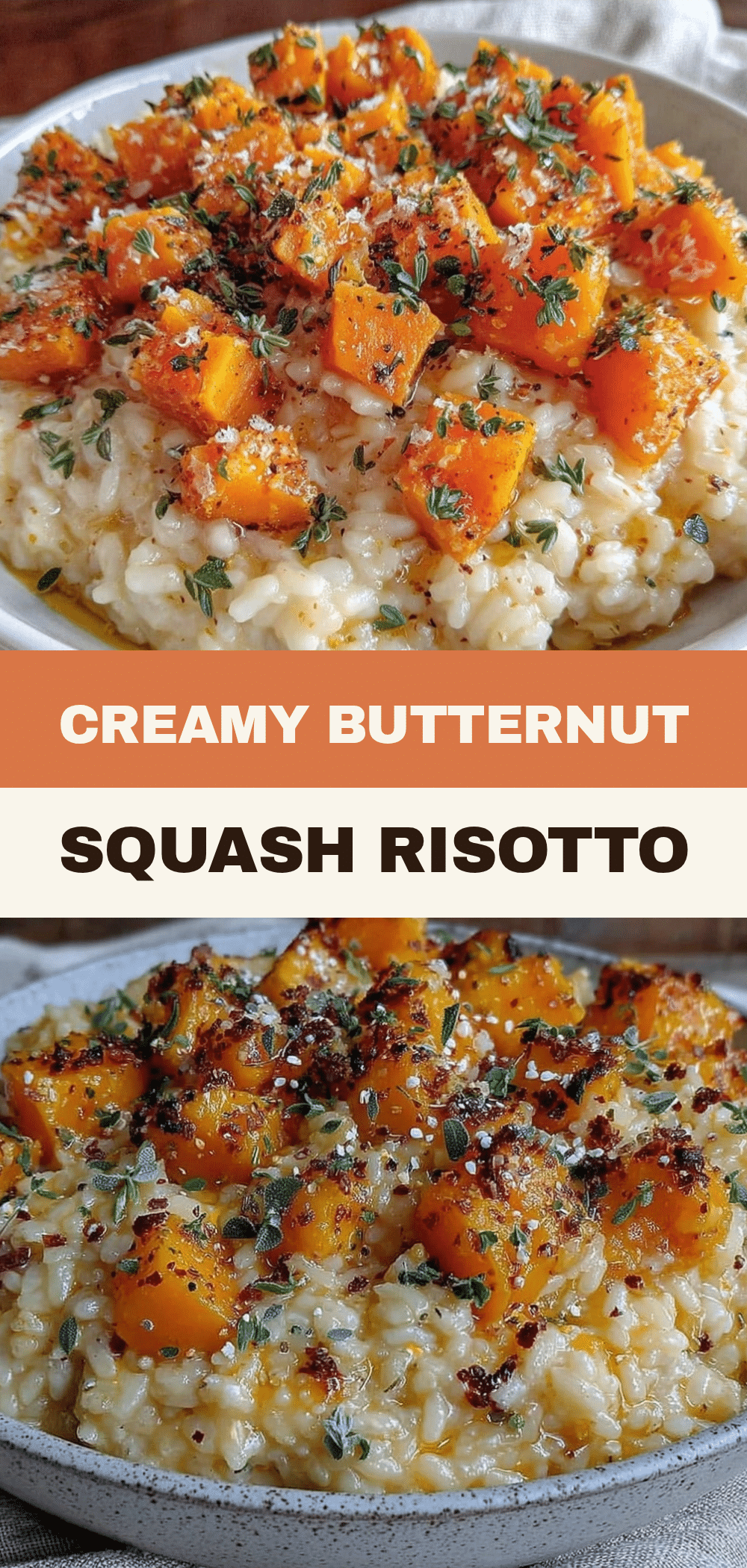

Butternut Squash Risotto: Best Easy Comforting Recipe
- Total Time: 65 minutes
- Yield: 4 servings 1x
Description
A creamy, deeply savory butternut squash and sage risotto that balances the sweetness of roasted squash with salty Parmesan and earthy sage leaves. This comforting autumn dish is surprisingly forgiving and perfect for dinner parties or cozy weeknight meals.
Ingredients
- 2 cups Arborio rice (400g)
- 1 large butternut squash (about 1.5 lbs / 700g), peeled and cubed
- 6–8 cups chicken or vegetable broth (1.5–2 liters), kept hot
- 4 tablespoons unsalted butter (60g), divided
- 2 medium shallots, finely minced (about 100g)
- 3 cloves garlic, minced
- ½ cup dry white wine (120ml) like Sauvignon Blanc or Pinot Grigio
- 1 large bunch fresh sage leaves (30–40 leaves)
- 1 cup freshly grated Parmesan cheese (100g)
- 2 tablespoons extra virgin olive oil, divided
- Salt and black pepper to taste
Instructions
- Preheat oven to 400°F (200°C). Toss cubed squash with 1 tablespoon olive oil, salt, and pepper. Roast on a baking sheet for 20-25 minutes until tender and caramelized. Set aside to cool slightly.
- Pour broth into a saucepan and bring to a simmer. Keep on low heat to maintain temperature throughout cooking.
- In a large skillet or Dutch oven, melt 1 tablespoon butter with 1 tablespoon olive oil over medium heat. Add shallots and cook for 3-4 minutes until soft. Add garlic and cook for 1 minute until fragrant.
- Add Arborio rice to the pan. Stir constantly for 2-3 minutes until rice is coated in fat and edges become translucent.
- Pour in white wine and stir until almost completely absorbed (about 2 minutes).
- Add hot broth one ladle at a time, stirring frequently. Wait until each ladle is mostly absorbed before adding the next. Continue for 18-20 minutes until rice is tender but al dente.
- Gently fold in the roasted butternut squash, allowing some to break down to thicken the risotto.
- Remove pan from heat. Stir in remaining 3 tablespoons of cold butter and grated Parmesan cheese vigorously until smooth and creamy.
- In a small skillet, heat 1 tablespoon butter over medium heat. Fry sage leaves for 30-60 seconds until crisp and dark green. Remove with a slotted spoon and drain.
- Serve immediately in warm bowls, topped with crispy sage leaves, black pepper, extra Parmesan, and a drizzle of olive oil.
Notes
Keep the broth hot throughout cooking to prevent the rice from becoming gummy. Stir gently but consistently to release starch for creaminess. Use cold butter at the end to create a glossy emulsion. Risotto is best eaten immediately; leftovers can be reheated with a splash of milk or broth. Do not freeze risotto as the texture becomes grainy.
- Prep Time: 20 minutes
- Cook Time: 45 minutes
- Category: Main Course
- Cuisine: Italian
Nutrition
- Serving Size: 1 bowl
- Calories: 450
- Sugar: 6
- Sodium: 580
- Fat: 16
- Saturated Fat: 9
- Carbohydrates: 65
- Fiber: 4
- Protein: 12
Keywords: butternut squash risotto, fall recipes, comfort food, vegetarian risotto, sage risotto, easy dinner party food, autumn cooking